
by Luca Fiore
It seems impossible, but it happened. The most cited book in the history of Italian photography—the one most studied, discussed, debated, and even mythologized—had been out of print for decades, long before the debate around it even began. Anyone who wanted to leaf through a copy had to fork out a four-figure sum. Last year, on the fortieth anniversary of its publication, the auction house Finarte sold two copies: one went for €3,096 in April (initial estimate €1,000–1,500), the other for €1,806 in December (estimate: €1,200–1,800). Almost no one among those who had studied or discussed it could actually afford it. Its title is Viaggio in Italia (Journey through Italy), and it is the catalogue of the eponymous group exhibition that, in 1984, brought together around twenty photographers at the Pinacoteca of Bari (the exhibition later traveled to Genoa, Ancona, Rome, Naples, and Reggio Emilia). Half of those photographers are now regarded as the founding generation of the so-called “new Italian landscape.”
The project was orchestrated by Luigi Ghirri, who gathered the best talents around and selected their work. The contributors, listed alphabetically as they appeared beside the physical map of Italy on the cover, were: Olivo Barbieri, Gabriele Basilico, Gianantonio Battistella, Vincenzo Castella, Andrea Cavazzuti, Giovanni Chiaramonte, Mario Cresci, Vittore Fossati, Carlo Garzia, Guido Guidi, Luigi Ghirri, Shelley Hill, Mimmo Jodice, Gianni Leone, Claude Nori, Umberto Sartorello, Mario Tinelli, Ernesto Tuliozi, Fulvio Ventura, and Cuchi White. The 86 photographs were introduced by essays from Carlo Arturo Quintavalle and Gianni Celati.
It’s as if, for forty years, anyone wanting to read and study The Betrothed (I Promessi Sposi) had been unable to buy a copy. The comparison with Manzoni is no accident: Viaggio in Italia bears witness to the birth of a new Italian visual language. It’s a literary language—cultivated yet accessible—formed not by washing the Alinari postcards “in the Arno,” but in the waters of the Hudson or the Mississippi. An alphabet of deeply Italian images, seen with a different gaze, informed by trends that had already solidified in the United States by the early 1970s. Less Henri Cartier-Bresson, more Walker Evans. As the book’s dust jacket puts it: Viaggio in Italia was born of the need to embark on a journey into the new Italian photography, specifically to see how a generation of photographers—having put aside the myths of exotic travel, sensational reportage, formalistic analysis, and presumed or forced creativity—turned their gaze toward the reality and landscape around them.”

From the outset, it’s made clear that the journey was not through Italy as a territory, but through the new kind of photography being made in the country at that time. A new way of seeing.
Today, the book is back in bookstores, reissued by Quodlibet as an anastatic reproduction of the 1984 edition, originally printed by Il Quadrante in Alessandria. The cover price is remarkably accessible for a book of this kind: €42. The initiative was promoted and realized by the General Directorate for Contemporary Creativity of the Italian Ministry of Culture and the Museum of Contemporary Photography in Cinisello Balsamo, in collaboration with the Luigi Ghirri Estate. The volume quickly became mainstream, climbing Amazon rankings and proudly appearing on Feltrinelli bookstore shelves across Italy, ready to become a Christmas gift. The challenge now is to ensure that, having finally made it back to bookstores, it stays there—as it should, for any great classic. Anyone beginning to study photography—or even simply hoping to understand that crucial episode in Italy’s visual culture—must be able to access this book, even after the hype fades.
That’s how it works for the great books of the American canon. New York’s MoMA keeps in print American Photographs by Walker Evans, The Family of Man curated by Edward Steichen, William Eggleston’s Guide edited by John Szarkowski. This year, for the centenary of Robert Frank’s birth, Aperture republished The Americans and, for under $50, offers Diane Arbus: An Aperture Monograph, Uncommon Places by Stephen Shore, and The Ballad of Sexual Dependency by Nan Goldin—all cornerstones of American photographic history. A few months ago, a new edition of Images à la Sauvette by Henri Cartier-Bresson came out, published by the Fondation HCB, along with its American twin The Decisive Moment, from Thames & Hudson. In recent years, London-based publisher MACK has reissued, among other classics, Paul Graham’s “English trilogy”: A1 – The Great North Road, Beyond Caring, and Troubled Land. All of them—at least as far as photography books allow—are priced affordably.
These are almost always publications that faithfully replicate the original editions: not just the number and sequence of the photographs, but also the format and—if present—the critical apparatus. That may sound obvious, but it’s not. A book allows an artist to definitively fix a body of work, conceived not as a “best of” selection, but as a coherent visual sequence—a true text in its own right. It’s true that photography has seen more Arbasinos—revising their own works over time—than Manzonis. With today’s advances in printing technology, high-quality editions are much more affordable, and artists are tempted to revisit earlier work and present a “more definitive” version than what they published years earlier, when money and visibility were limited. And yet, the great masterpieces endure. With rare exceptions—like The Family of Man or William Eggleston’s Guide—these are not exhibition catalogues, but works intended to be experienced in the privacy of one’s home, in a tête-à-tête that resumes each time the book is taken off the shelf.
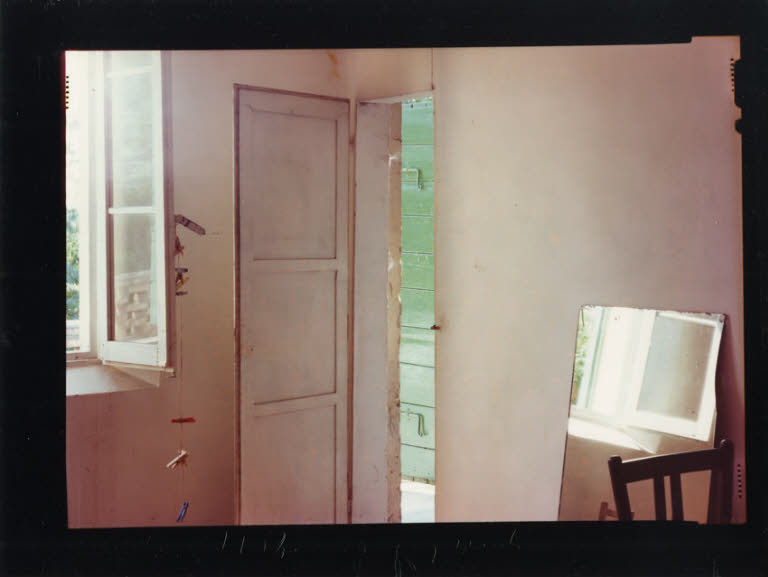
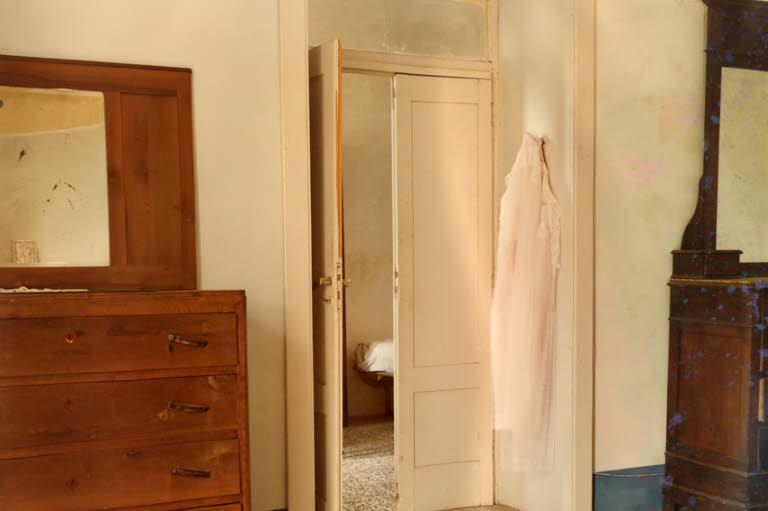
Technically, Viaggio in Italia would fall under the category of exhibition catalogue, as we’ve said. However, one of the participating photographers, Giovanni Chiaramonte—one of Ghirri’s closest friends at the time—was convinced that the exhibition, and thus the book that resulted from it, originated “as a personal poetic intention—unique, singular, unrepeatable, like all poetic intentions.” Chiaramonte recalled that, in the May 1982 supplement of Progresso Fotografico, Ghirri had written a text made entirely of quotations, titled “After Ten Years of Photography” (now included in Nothing Ancient Under the Sun – Writings and Interviews, Quodlibet, 2021), pulling from Hofmannsthal, Novalis, Fielding, Canetti, Lichtenberg, Hobbes, and Karl Kraus. “With the same method and the same spirit,” Chiaramonte wrote, “Luigi also composed the different visual chapters of Viaggio in Italia, selecting and sequencing the images from various photographers—not a single one of them made under the obligation of public or private commissions, but solely from an inner poetic necessity.” The artist-as-curator’s hand (a sort of player-coach) is evident even in the titles of the exhibition and book’s sections, such as: “As Far as the Eye Can See,” “Of Place,” “No One in Particular,” “Closed at Sunset,” “Giotto’s O.” Ghirri skillfully mixed black-and-white and color images from artists with vastly different backgrounds, yet the result is a harmonious whole. Mario Cresci was known for his black-and-white experiments in Basilicata, almost the opposite of Olivo Barbieri’s Emilian interiors and nocturnes. Basilico’s Enlightenment-inspired portraits of Milanese factories were, in theory, miles apart from the Mediterranean and ancestral sensibility of Mimmo Jodice. What could Chiaramonte’s mysticism have in common with Castella’s cool, formal photography? Or Guidi’s quest for revelation with Ventura’s love for mystery? Each artist’s trajectory before and after Viaggio seems entirely personal. This wasn’t a school like Düsseldorf—no common masters to be found. The closest parallel is perhaps the so-called New Topographics, a group of American photographers brought together in a 1975 exhibition in Rochester, NY, subtitled “Photographs of a Man-Altered Landscape.” Like Viaggio in Italia, that show shaped more than one generation—despite the fact that hardly anyone actually saw it. And like in Italy, some of the American photographers later diverged sharply from those original premises (Nicholas Nixon, for example). There, too, strange alchemies. Unpredictable artistic and human journeys.
Guido Guidi—now the most internationally recognized living photographer from the group—recently said of Ghirri: “Luigi deserves to have every photographer today kiss his feet. But hagiographies only do him harm.” It’s a quip that, while expressing affectionate respect for a friend and colleague, also reveals a kind of unease—perhaps born from the success of Viaggio in Italia itself. Many of the photographers involved seem burdened by the sense that their work was flattened into the framework Ghirri conceived. The tendency to turn a lucky episode into a critical category. The institutional obligation to show up every ten years (last year was the third round) for commemorative events—exhibitions, documentaries, debates about a bygone time. The discomfort of waiting until you’re 80 for a contemporary art museum to take notice of your work.
But such is the fate of pioneers. Those who blaze trails never have it easy. And the news that Viaggio in Italia is back in bookstores—and selling well—is the best thing that could have happened in the small, underfunded world of contemporary Italian photography. It means that this chapter has been historicized, acknowledged, passed on to future generations. Now we can say: “Want to understand Italian photography? Start here.” And having, at last, drawn public attention beyond the niche, we can move on—to what came after. To identifying those who, in the murky and disheartening limbo of “mid-career,” are worth watching. Those who learned from the extraordinary generation of Viaggio in Italia and then moved beyond it, developing a personal style. Those who turned to other sources and succeeded in creating a new language capable of communication. Because another problem with Viaggio in Italia’s success is that it may have unintentionally strengthened the idea that Italian photography can only be about landscape. True, the golden men who led the revolution brought something special to that genre. But not all of them practiced it consistently. The near-obsessive emphasis on the “Italian landscape” hasn’t helped the generations that followed. So let’s move forward—without falling into the trap of thinking we need a new Ghirri or a new Viaggio in Italia to keep going.




 Luca Fiore | Writing on Contemporary Art and Photography