Debi Cornwall: Photography Exposing America’s Fictions

Debi Cornwall Necessary Fictions

by Luca Fiore

For twelve years, she worked as a civil rights lawyer. She sought compensation for the innocent exonerated through DNA testing, worked on behalf of families of shooting victims, cross-examined detectives, and pursued justice where the system had failed. A successful but draining career. So she gave it all up. Debi Cornwall, born in 1973, is now an internationally recognized photographer known for images that—through a disorienting grace—explore the thin line between reality and fiction in post-9/11 America. Last month, she presented Necessary Fictions and Model Citizens at Fotofestiwal Łódź in Poland, following the success of last year’s presentation at the Rencontres d’Arles.

Speaking of her life as a lawyer, she says: “I was always angry. I fed on indignation. My private life no longer existed,” she tells Domani. After an exhausting trial, she took a three-month leave of absence. She went to Mexico, then to Myanmar, where she discovered meditation—and started sleeping again at night. Back in New York, she left the firm where she had been a partner. She took a year off, living all the things she had denied herself as a Harvard student. And she returned to an old passion: photography.

“One evening I was having dinner with a friend and former colleague who had assisted Guantánamo detainees who were exonerated and released, but who by law could not enter the United States. I thought I’d like to photograph them.” That’s how Welcome to Camp America: Inside Guantánamo Bay was born, her first book, published in 2017. For it, she visited the prison on Cuban territory three times and met with 14 former detainees in nine countries. The result? A sequence of images of the prison’s interiors, taken under the strict rules imposed by the U.S. military (no portraits, no wide shots, nothing that could reveal procedures or layouts), as well as images of leisure spaces used by military personnel (pools, bowling alleys, supermarkets), and photographs of souvenirs sold at the base’s gift shop. These images are interspersed with testimonies from former detainees and former guards. An emotional rollercoaster. The stories of survivors and key witnesses of torture cases alternate with depictions of sterile environments staged specifically to be photographed. What emerges is a system of performance, a self-representation of the State that begins to fascinate Cornwall and becomes a recurring theme in her later work.

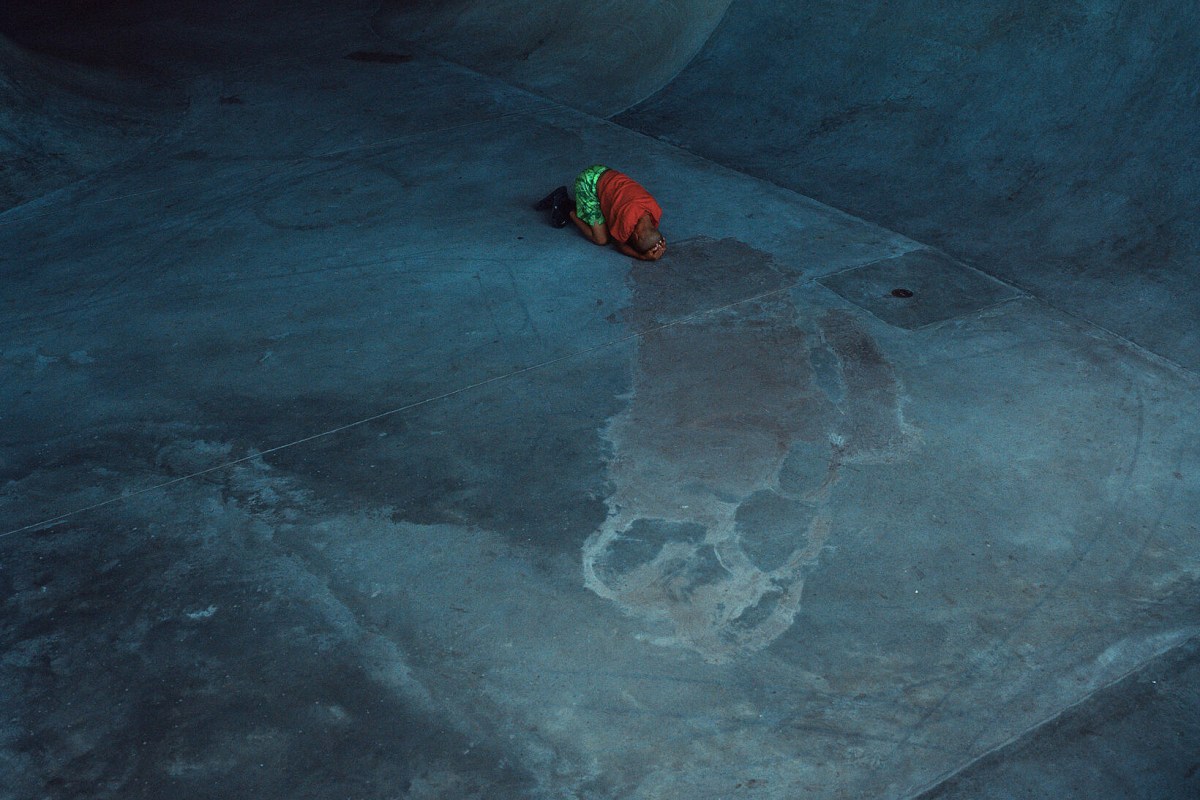
“I was interested in the disconnect between the official message and the hidden truth.” That’s how she discovered the military bases on U.S. soil where mock villages are built to simulate battle conditions in the Middle East. She later learned that these “games” employ “cultural role players,” American citizens of Arab descent who act the part of potential enemies. This became the subject of Necessary Fictions, her 2020 book, in which Cornwall presents urban landscapes that at first glance seem to be in Iraq or Afghanistan but, on closer inspection, appear too clean, orderly, and deserted to be real. “The idea is that when our soldiers arrive overseas, their bodies will already have an embodied experience of what awaits them. Their bodies will already know what could happen. Behind this are psychological studies suggesting that by staging war, one can prevent the trauma that so many veterans suffer from. But I ask: at what cost? What does it mean to train for trauma through another trauma?” The photographer doesn’t mince words: “Today in the United States, war is staged every day. Not only by the military but also by a network of private contractors. What does it mean that wars fought abroad actually begin—geographically, financially, culturally—on domestic soil, without citizens being aware of it?” Part of Necessary Fictions is also dedicated to portraits of National Guard members who are made up by Hollywood professionals to help train medical personnel in triaging fatal wounds. Cornwall asks: “What does it mean, for these young people, to play out the death they might actually face?”

Cornwall’s latest work, Model Citizens, published in 2024, stems from another question and reflects not on government attitudes but on those of civil society: “How is the idea of citizenship influenced by staged performances, role-playing, and simulations in a violent country where citizens no longer agree on what is true?” The project addresses three different scenarios. The first are the training environments at the U.S. Border Patrol Academy: here, “crisis actors” (civilians who play potential threats, many of whom are Mexican immigrants) recreate scenarios in which future border agents train to track, arrest, and use force against “illegal aliens.” Then there are the historical museum dioramas: installations portraying events from the Civil War to 9/11, which present American history through static scenes, often depicting soldiers as heroes and civilians as victims or stereotypes. Finally, there are the “Save America” rallies (usually Donald Trump rallies), where Cornwall documents the “performance of citizenship,” with participants often arriving in costume to “perform” with patriotic symbols. One image shows a Hispanic-American woman, with a border wall in the background, about to throw a large rock at a mannequin dressed as a border patrol agent. Cornwall explains: “The trend is to train only for the worst-case scenario, whether it’s a traffic stop or a border crossing. If you’re conditioned to fear the worst, you’re likely to act out of fear. With potentially disastrous consequences.”

So what kind of photography does Debi Cornwall make? It’s called “conceptual documentary.” She doesn’t reject the label, but she qualifies it. “Definitions are dangerous. I don’t think of myself as an ‘old school’ documentarian, someone who makes photographs just to inform. I’m interested in using images as one tool among many to invite people to look at and think critically about the world and systems of power—and how they operate on us and our role in society, possibly complicit in those systems.” But what do photographs themselves add to her intent? “People tend to ignore what doesn’t align with their worldview. Technology amplifies this polarization. But if something is right in front of you, you can’t unsee a photo. My goal is to create images that hit physically, that make the body react. When you feel something in your gut or your heart, you remember it. And that reaction can be the beginning of a conversation. If two people with opposing views both respond to the same image, that’s common ground. Maybe even the beginning of a connection.”

Domani, 21 July 2025

Debi Cornwall Necessary Fictions

Debi Cornwall Necessary Fictions

Debi Cornwall Necessary Fictions

Debi Cornwall Necessary Fictions

“LotsOfLots”: The Most Fulfordian Book Yet

Jason Fulford LotsOfLots

by Luca Fiore

“Just as they [the Greeks] taught that all knowing is a recollecting, modern philosophy will teach that all life is a repetition. Repetition and recollection are the same movement, except in opposite directions, for what is recollected has been, is repeated backward, whereas genuine repetition is recollected forward. Repetition, therefore, if it is possible, makes a person happy, whereas recollection makes them unhappy.” This quote by Constantin Constantius, a pseudonym of Søren Kierkegaard, is the only text featured in LotsOfLots (MACK, 2025), the latest book by American photographer Jason Fulford. It needs to be read several times. And even on the third or fourth reading, you may still not be sure you’ve really understood it.

Fulford is one of the brightest minds in contemporary photography. He’s a kind of Brian Eno of the art invented by Niépce, Daguerre, and Talbot: he explores new directions on his own and helps others bring out the best in their work. He produces enigmatic and fascinating images, but his real strength lies in how he makes photographs speak to each other. It’s the art of editing: when you place two seemingly unrelated images side by side and something new emerges. In this, he is—if not the very best—certainly among the best around. Fellow photographers often turn to him for advice. In some cases, he’s been instrumental to the success of others’ work (the most notable example being ZZYZX by Gregory Halpern). He believes photographers fall into two categories: sculptors and gatherers. The former start with a clear idea and seek to express it through images. He, instead, identifies with the second type: he shoots intuitively, without a specific reason, aside from the choice of subject. For him, photographing is like collecting words—a visual vocabulary that he later tries to organize through editing, creating meaning, even if ambiguous. With this process, he has made books that are very different from one another and unlike anything by anyone else: Raising Frogs for $$$, The Mushroom Collector, Picture Summer with Kodak Film, and The Heart Is a Sandwich. And yet his latest release, LotsOfLots, is something else entirely—and feels like the most “Fulfordian” work of all: a summing-up of thirty years of photography.

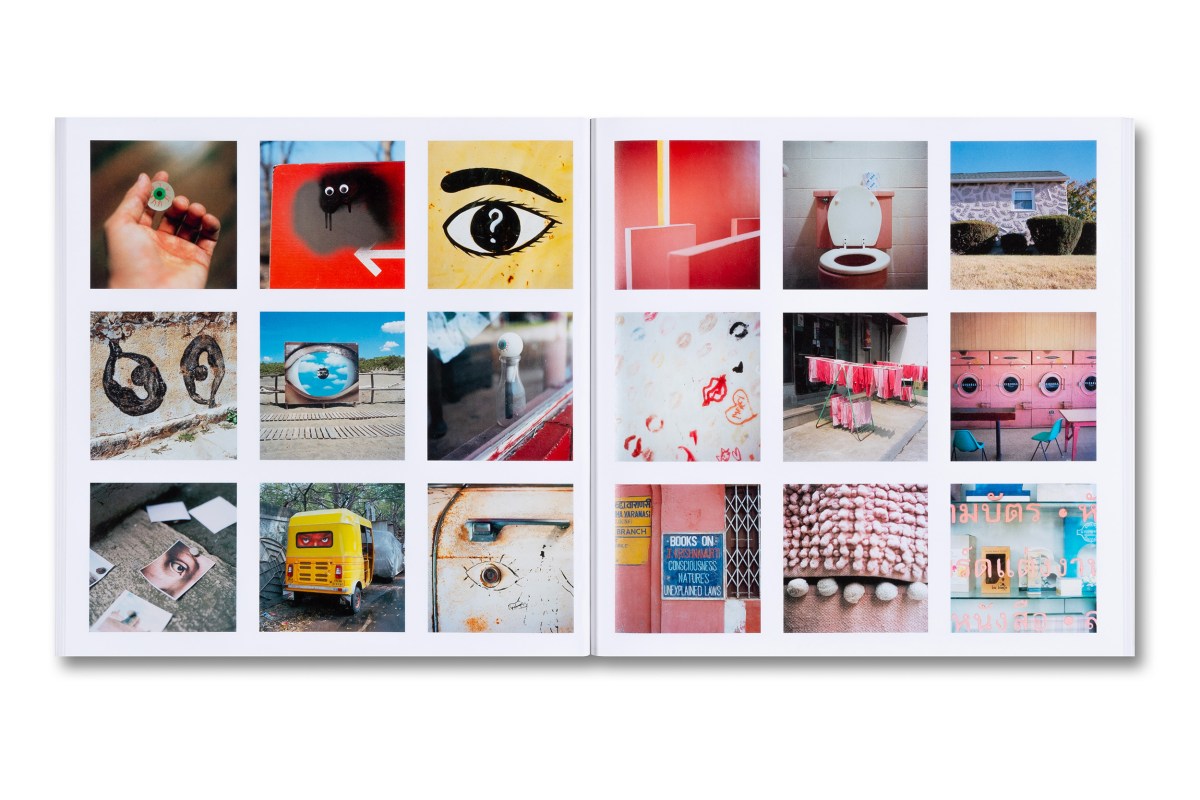
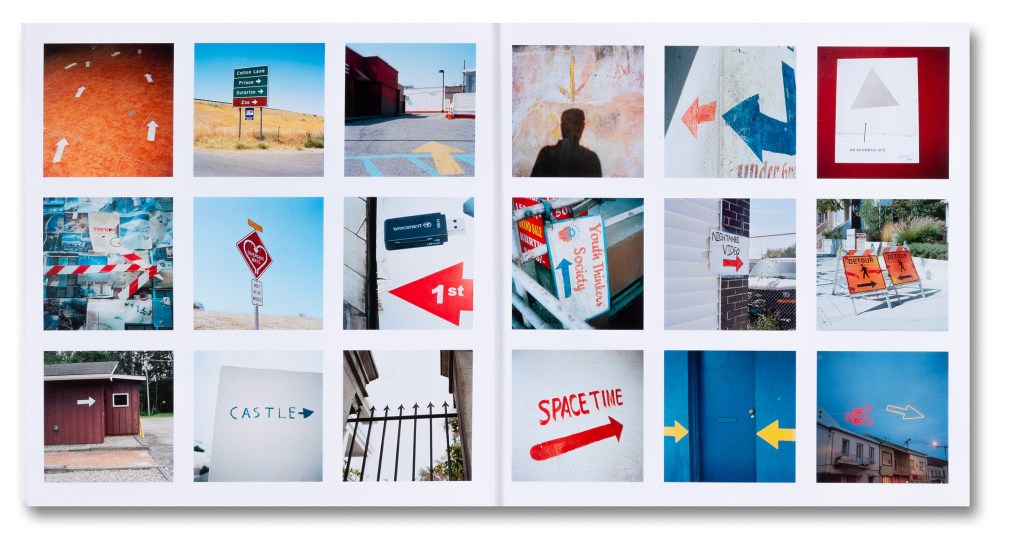
The format, design, and structure pay homage to a photography book published by Sol Lewitt in 1977, titled PhotoGrids. That book was a collection of Lewitt’s photographs arranged in grids of nine images per page. They depicted architectural elements: doors, gates, floors, manhole covers. Each grid presented a typology. Similarly, Fulford worked through his archive to create 76 grids, totaling 684 photographs. As he explains: “I had never used this way of showing my work before. I’ve always aimed for open associations. Here, the structure is very simple—it almost feels like a children’s book. Some themes are elementary—for example, images where red is the dominant color. In other cases, the themes are more subtle, like ‘wet’ or ‘not wet,’ or ‘not perfectly straight.’ What I like about this method is that when you apply a categorization system to an archive, the results are often surprising.”
It’s something, he notes, like what Canadian writer Sheila Heti did with Alphabetical Diaries, where she reorganized her diary entries alphabetically by the first word of each entry rather than chronologically. The result is that a book review might be followed by a reflection on her father’s death, which in turn is paired with a note on what she ate that day. “It’s a combination that feels much more faithful to how life actually works, made up of scheduled events, unexpected things, quirky details, things tied to the body or the mind. That’s what happens in my book too.”

The first grid in the book gathers images that all feature one or more arrows. It’s a classic theme in American photographic tradition—just think of some of Walker Evans’s iconic Polaroids (which, perhaps, also inspired their recurrence in the work of Guido Guidi). Fulford shows arrows painted haphazardly on a floor, embedded in road signs, made with red-and-white tape stuck to a shop window, or placed atop an iron fence. Later on, we encounter a grid dedicated to the symbol “X”: iron pipes, pine branches, slashes on the canvas of an abandoned painting, the crossed legs of a Buddha statue. A few pages further, we see nine photos themed around sunset: on a beach, on the open sea, seen through frosted glass, or as red neon letters spelling “Sunset Lounge.”
Fulford’s game is a cultured one, operating on multiple levels: “First, there’s the level of the grid, which can be seen as a self-contained work of art. The book, in that sense, is a sequence of 76 complete works. But then, within each image, there’s a world of its own—full of small visual puzzles. And there’s also the aspect that relates to me personally, because each of the shots was taken in a specific moment of my life.”

It’s fascinating how a rigid, mathematical structure—a grid of nine images—combined with a loose, idiosyncratic method, can ultimately speak about life: encounters, surprises, epiphanies, comic or serious moments (like when the portal of Carlo Scarpa’s Brion Tomb appears in a grid dedicated to chains). “The goal of each of my books is to create something you want to come back to. I can’t explain exactly how the game works, but I know when it’s working. It’s like a kind of chain reaction that propagates thought.”

When asked whether, after all these years of thinking about editing, he ever finds himself, while looking through the viewfinder of his Hasselblad, imagining how a picture might be used later, Fulford is firm: “Even now, it all happens in the moment. I never think about what’s going to come next. That’s the goal of life in general: to wake up every morning and keep looking at the world with alertness.”
When editing a book, he says, the aim is to keep the viewer engaged through the entire sequence. “I think about rhythm, about how to begin something and end something else. It’s a way to keep the reader in an active state of looking. It’s human nature to drift off—no one can stay fully attentive all the time. But I believe we should strive for that. I really love that quote by Louis Pasteur: ‘Chance favors the prepared mind.’ I couldn’t put it better.”

Fulford’s photography might seem anything but autobiographical. And yet LotsOfLots has become a way to grapple, in a very personal manner, with his own biography. “Digging into my archive like this made me think about past versions of myself. As we live, we change. And the images I took serve as markers of those previous selves. I look at a photo I made in Thailand and remember what I was working on at the time, what I was learning, what I was seeing for the first time. All those past versions of me contributed to who I am now. The Jasons of the past have left me these images, and now I get to do something new with them.”

All 684 photographs from LotsOfLots, printed as a single monumental sheet, are on view for the first time in Milan, at Micamera, until May 3.

Domani, 1 May 2025

Exploring Vasantha Yogananthan’s Photography Journey

Vasantha Yogananthan, Mystery Street

by Luca Fiore

Vasantha Yogananthan is the golden boy of French photography. Born in Grenoble in 1985 to a Sri Lankan father and a French mother, he is now one of the most compelling voices on the international scene. Mystery Street, his latest body of work, published in 2022 by Chose Commune, was exhibited at the Fondation Henri Cartier-Bresson in Paris and the International Center of Photography in New York. In 2023, one of the images from the project was chosen as the poster for Paris Photo, the most important photography fair in the world. His work is represented by The Photographers’ Gallery, the UK’s first public gallery dedicated to photography, founded in 1971. Last summer, Les Rencontres d’Arles dedicated a solo exhibition to him: Le Passé Composé.

Yogananthan is self-taught. He first picked up a camera at 16 and has never put it down since. After graduating with a degree in History from Grenoble, he cut his teeth as an editor at a photo agency in Paris. Then, in 2009, he took the leap and devoted himself full-time to his personal work. His first project was titled Piémanson, after the name of the last wild beach in Europe, where thousands of people would spend their summers camped out, creating a sort of utopian city. “I was trying to find my voice as an artist and had in mind the documentary photography of Paul Strand and Chris Killip. I was after that same clarity and precision, which doesn’t need gimmicks to captivate the viewer.” For four years, Vasantha returned to the Camargue and, using a large-format camera, made color images of the camp and its inhabitants in the soft light of dawn and dusk. Once the work on Piémanson was finished, he decided to head to India. He didn’t know it then, but it would be an adventure that would last eight years and lead him to publish seven books.

“Everyone thinks I went East in search of my roots, but that’s not the case,” the artist explains. “The truth is, I’m one hundred percent French, both culturally and in lifestyle. My father arrived in France as a child, and at that time, immigrants were forbidden from speaking their native language to their children.” And yet, the Yogananthan household was full of books on Indian art, which fascinated Vasantha as a boy. “I was drawn to that kind of imagery, so different from anything you could see in the museums of my city. The trip to India probably came from the desire to understand better a visual language that felt both familiar and foreign to me.”

He packed many books of history and literature for the trip. Among them was the Rāmāyana, the ancient epic poem that is a pillar of Indian culture. He began reading it and discussing it with the people he met: “Everyone I spoke with referred to the story in a very interesting and personal way.” Something clicked for him, and he decided that his images would be his own version of the Rāmāyana. That is, the work on India wouldn’t be a documentary effort but a work of imagination. His journey thus took a new direction, as he began visiting the towns, villages, and small cities mentioned in the poem. This led to the first three books—chapters in a project titled A Myth of Two Souls: Early Times, The Promise, and Exile. These are ethereal landscapes, scenes of everyday life, men, women, and children of contemporary India. The photographs alternate with a text that narrates the mythical story of Prince Rama. The palette of the images is made up of pastel colors. Many of the images are staged. Sometimes the portraits echo the look of vintage photographs—black-and-white images hand-colored. “Halfway through the project, I wondered whether I had exhausted the material and should stop,” Yogananthan continues. “It could have easily remained a trilogy, but I realized the work wasn’t finished yet.” So four more chapters and corresponding books were born: Dankara, Howling Winds, Afterlife, and Amma.

By the end of his ten-year Indian journey, the photographer’s approach had been completely transformed: “As I delved deeper into the work, I realized that a documentary approach couldn’t capture what I had before me, or the experience I was having.” It’s a conclusion shared by several photographers who come from photojournalism—two names among many: Magnum Photos members Gregory Halpern and Carolyn Drake. “To talk about the real world, you can’t just document. If what you do is too close to reality, you fail. What you get is a document tied to a place and a moment in time. I’m not saying that’s not interesting or doesn’t have value. But for me, it’s not enough.” Vasantha gives the example of another major figure in contemporary photography, the British photographer Paul Graham: “If you look at A Shimmer of Possibility, it becomes very clear. Apparently, he’s documenting a slice of American life—for example, a man walking to the supermarket. It’s a Cartesian approach. Sure, it speaks of society and its problems. It tells a piece of daily life. And yet it’s not just that—it manages to say something more.”

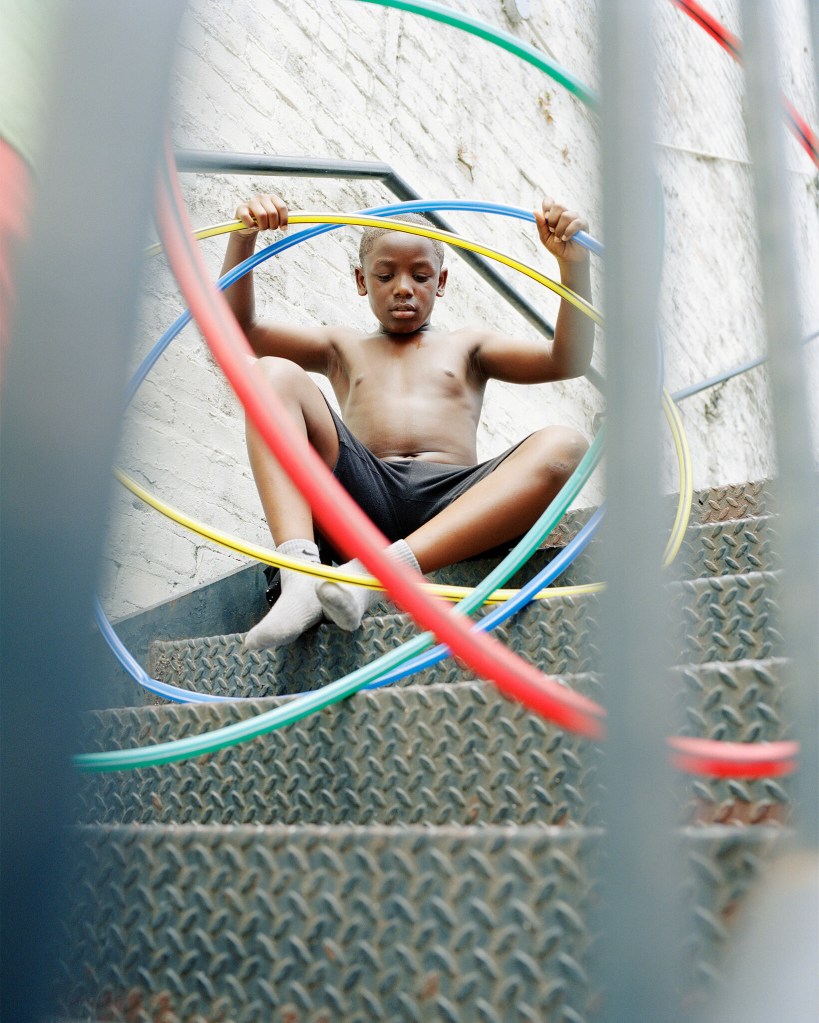
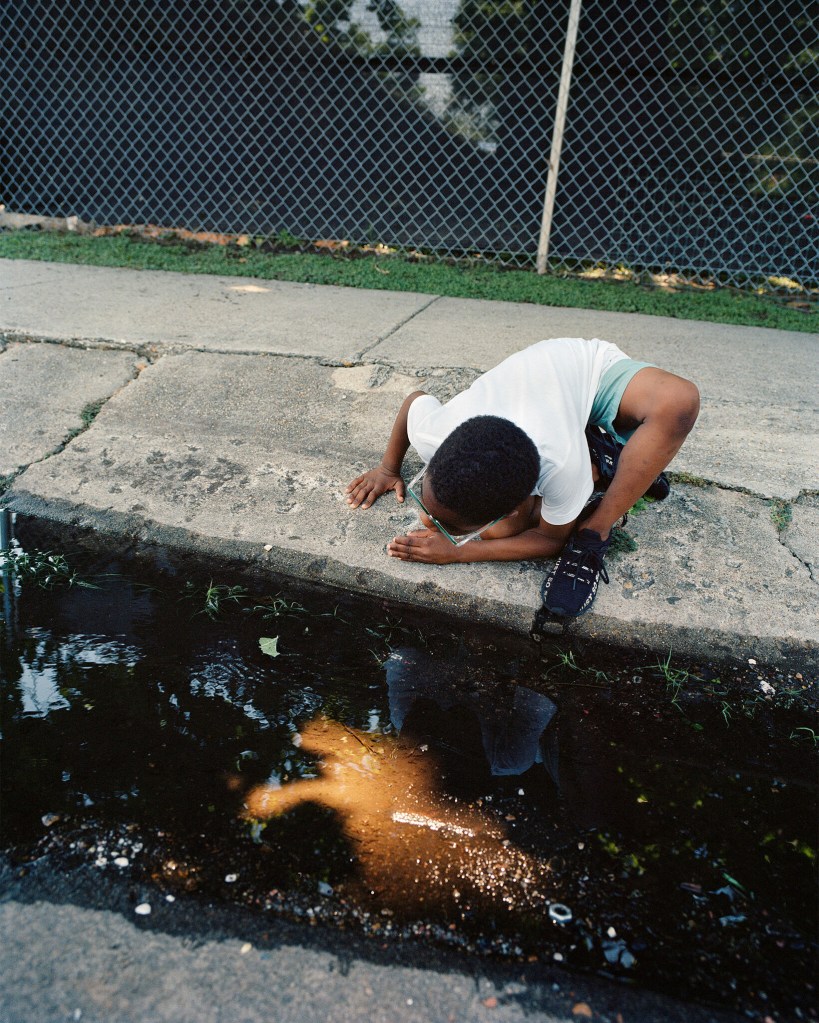
Looking at Mystery Street, his latest book, Yogananthan’s work seems to have taken yet another step. It is no longer a long-term project, but rather the result of a three-month residency funded by the Fondation d’Entreprise Hermès, which invites French photographers to work in the United States, and American photographers to develop projects in France. Vasantha chose to go to New Orleans with an idea he’d had for some time: working with children. For the first time, he did not use a large-format view camera, but a medium-format one, which can be used without a tripod. “When I tell colleagues what camera and lenses I used, they don’t believe me. Technically, shooting handheld at such close distances is very difficult. You risk coming back with nothing. But I did it on purpose. I wanted to go there with the wrong equipment to force myself out of my comfort zone.” The result is not a project about the city, but about the experience of childhood. Games, running, being outdoors. The artist’s gaze avoids the typical sentimentality of images of children, and yet it is far from impassive. There is energy, physicality, the freshness of a gang of kids roaming the streets. There is no ambition to analyze the social or urban wounds of a city that had to recover after Hurricane Katrina. But there is something more: it offers the possibility to feel what, once we grow up, we know will never come back. “It may sound banal, but the question I ask myself while working is: how can I speak about my experience of the world? The challenge is to create images that are both specific and universal. Rooted in a particular reality, yet timeless.”

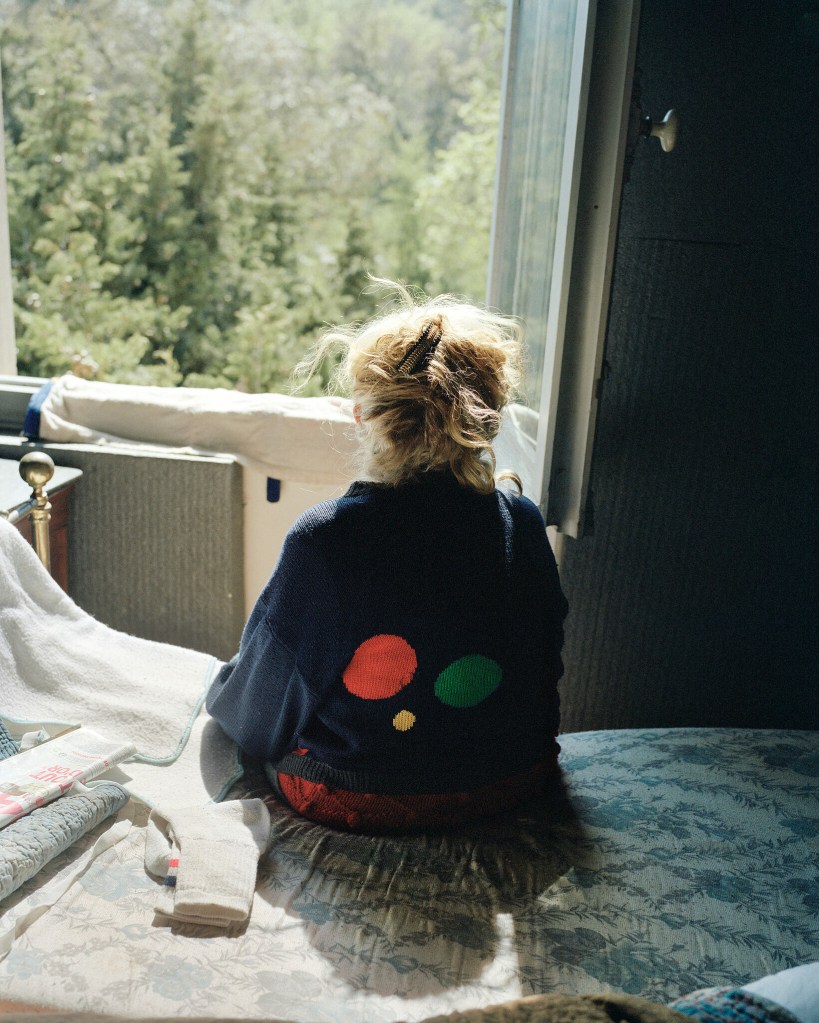
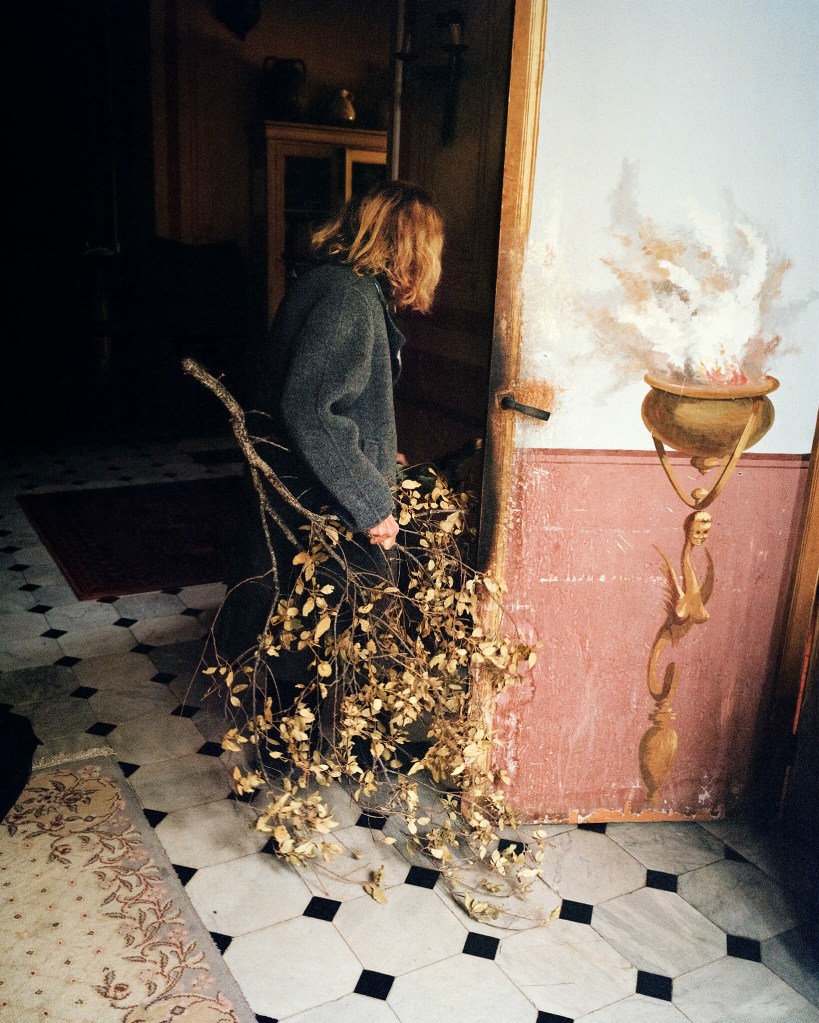
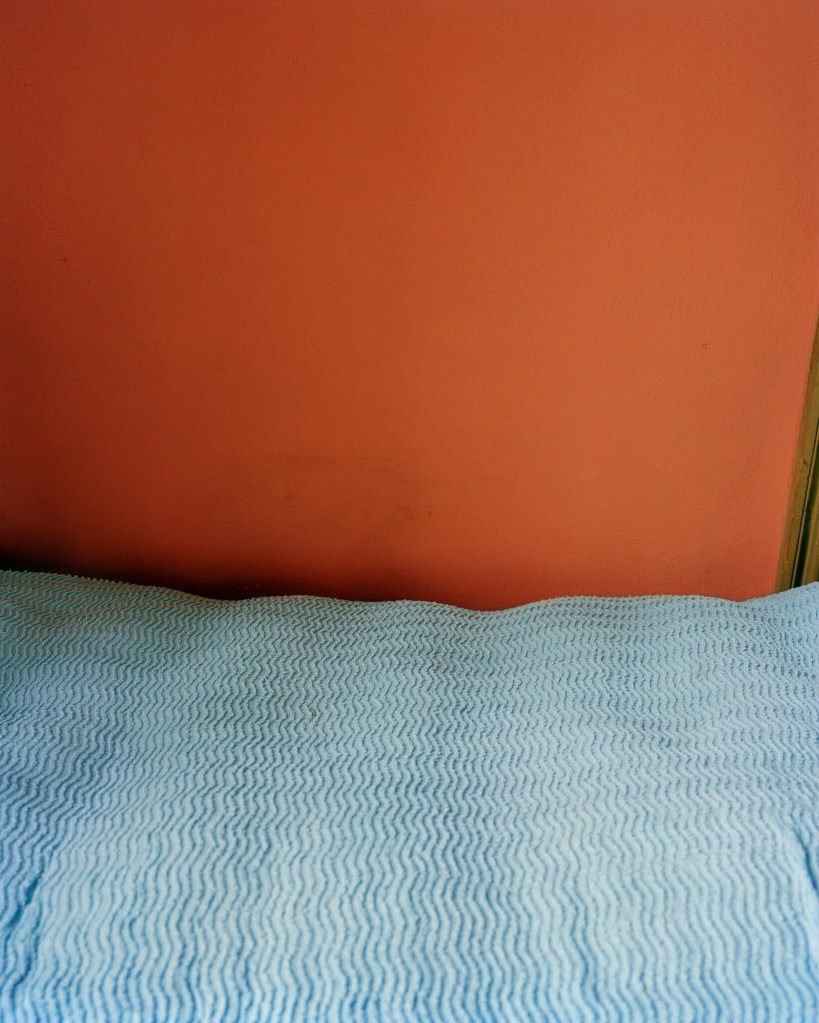
His latest project, Le Passé Composé, marks the beginning of another long-term journey, this time close to home, in Provence (the photographer now lives in Marseille). Here, the artist focuses on an elderly woman who lives in a near-fairytale house. The lights, colors, and atmospheres tell a story that is as real as it is a product of the photographer’s imagination. And yet so real… In literature, where invention has always reigned supreme, if the subject matter is real, we call it “non-fiction.” Photography, a much younger discipline, built its status on its privileged relationship with reality. Now, however, some want to use it as the written word has long been used—where, to truly express the truth of things, the stories must be invented. What name should we give to this kind of practice? This—and much more—is what Vasantha Yogananthan will discuss at Gallerie d’Italia, on Tuesday, January 28 at 6 PM.

Domani, 27 January 2025