Debi Cornwall: Photography Exposing America’s Fictions

Debi Cornwall Necessary Fictions

by Luca Fiore

For twelve years, she worked as a civil rights lawyer. She sought compensation for the innocent exonerated through DNA testing, worked on behalf of families of shooting victims, cross-examined detectives, and pursued justice where the system had failed. A successful but draining career. So she gave it all up. Debi Cornwall, born in 1973, is now an internationally recognized photographer known for images that—through a disorienting grace—explore the thin line between reality and fiction in post-9/11 America. Last month, she presented Necessary Fictions and Model Citizens at Fotofestiwal Łódź in Poland, following the success of last year’s presentation at the Rencontres d’Arles.

Speaking of her life as a lawyer, she says: “I was always angry. I fed on indignation. My private life no longer existed,” she tells Domani. After an exhausting trial, she took a three-month leave of absence. She went to Mexico, then to Myanmar, where she discovered meditation—and started sleeping again at night. Back in New York, she left the firm where she had been a partner. She took a year off, living all the things she had denied herself as a Harvard student. And she returned to an old passion: photography.

“One evening I was having dinner with a friend and former colleague who had assisted Guantánamo detainees who were exonerated and released, but who by law could not enter the United States. I thought I’d like to photograph them.” That’s how Welcome to Camp America: Inside Guantánamo Bay was born, her first book, published in 2017. For it, she visited the prison on Cuban territory three times and met with 14 former detainees in nine countries. The result? A sequence of images of the prison’s interiors, taken under the strict rules imposed by the U.S. military (no portraits, no wide shots, nothing that could reveal procedures or layouts), as well as images of leisure spaces used by military personnel (pools, bowling alleys, supermarkets), and photographs of souvenirs sold at the base’s gift shop. These images are interspersed with testimonies from former detainees and former guards. An emotional rollercoaster. The stories of survivors and key witnesses of torture cases alternate with depictions of sterile environments staged specifically to be photographed. What emerges is a system of performance, a self-representation of the State that begins to fascinate Cornwall and becomes a recurring theme in her later work.

“I was interested in the disconnect between the official message and the hidden truth.” That’s how she discovered the military bases on U.S. soil where mock villages are built to simulate battle conditions in the Middle East. She later learned that these “games” employ “cultural role players,” American citizens of Arab descent who act the part of potential enemies. This became the subject of Necessary Fictions, her 2020 book, in which Cornwall presents urban landscapes that at first glance seem to be in Iraq or Afghanistan but, on closer inspection, appear too clean, orderly, and deserted to be real. “The idea is that when our soldiers arrive overseas, their bodies will already have an embodied experience of what awaits them. Their bodies will already know what could happen. Behind this are psychological studies suggesting that by staging war, one can prevent the trauma that so many veterans suffer from. But I ask: at what cost? What does it mean to train for trauma through another trauma?” The photographer doesn’t mince words: “Today in the United States, war is staged every day. Not only by the military but also by a network of private contractors. What does it mean that wars fought abroad actually begin—geographically, financially, culturally—on domestic soil, without citizens being aware of it?” Part of Necessary Fictions is also dedicated to portraits of National Guard members who are made up by Hollywood professionals to help train medical personnel in triaging fatal wounds. Cornwall asks: “What does it mean, for these young people, to play out the death they might actually face?”

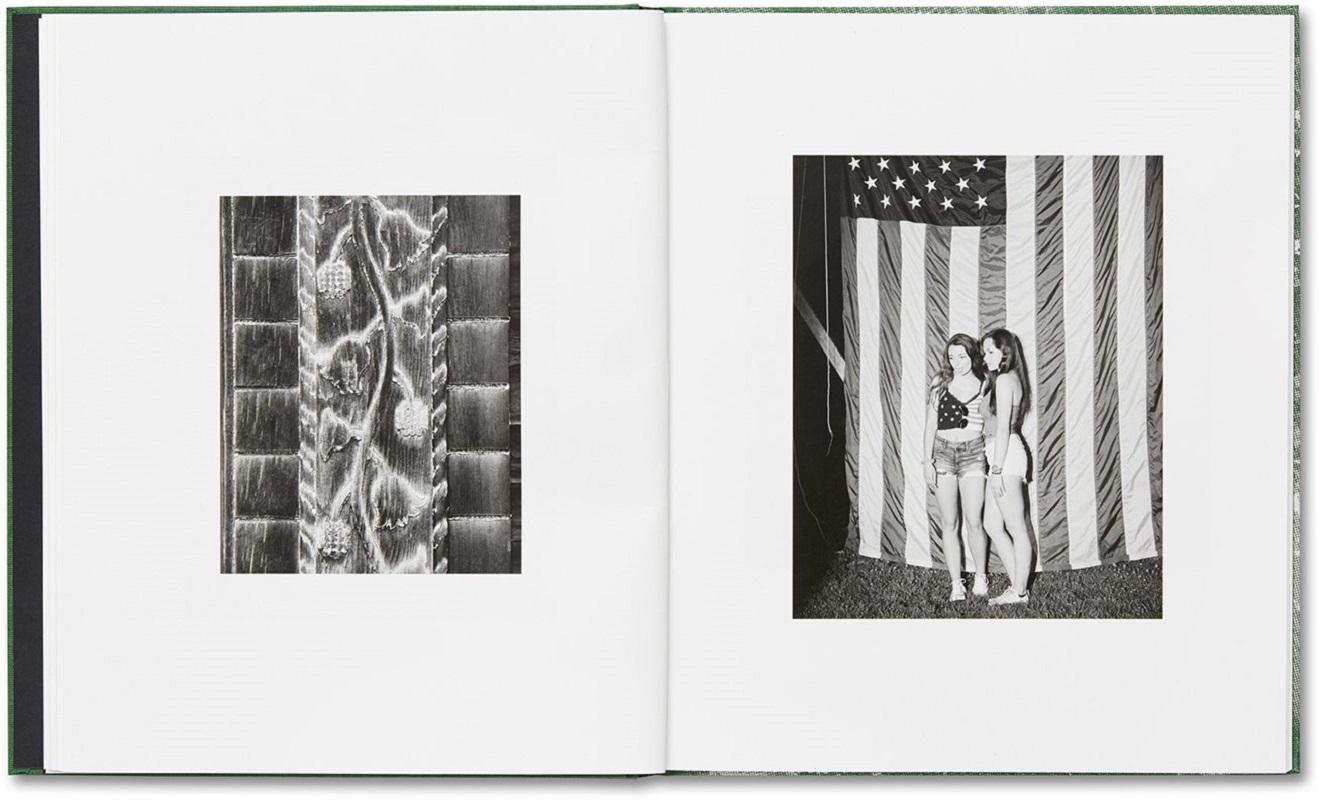
Cornwall’s latest work, Model Citizens, published in 2024, stems from another question and reflects not on government attitudes but on those of civil society: “How is the idea of citizenship influenced by staged performances, role-playing, and simulations in a violent country where citizens no longer agree on what is true?” The project addresses three different scenarios. The first are the training environments at the U.S. Border Patrol Academy: here, “crisis actors” (civilians who play potential threats, many of whom are Mexican immigrants) recreate scenarios in which future border agents train to track, arrest, and use force against “illegal aliens.” Then there are the historical museum dioramas: installations portraying events from the Civil War to 9/11, which present American history through static scenes, often depicting soldiers as heroes and civilians as victims or stereotypes. Finally, there are the “Save America” rallies (usually Donald Trump rallies), where Cornwall documents the “performance of citizenship,” with participants often arriving in costume to “perform” with patriotic symbols. One image shows a Hispanic-American woman, with a border wall in the background, about to throw a large rock at a mannequin dressed as a border patrol agent. Cornwall explains: “The trend is to train only for the worst-case scenario, whether it’s a traffic stop or a border crossing. If you’re conditioned to fear the worst, you’re likely to act out of fear. With potentially disastrous consequences.”

So what kind of photography does Debi Cornwall make? It’s called “conceptual documentary.” She doesn’t reject the label, but she qualifies it. “Definitions are dangerous. I don’t think of myself as an ‘old school’ documentarian, someone who makes photographs just to inform. I’m interested in using images as one tool among many to invite people to look at and think critically about the world and systems of power—and how they operate on us and our role in society, possibly complicit in those systems.” But what do photographs themselves add to her intent? “People tend to ignore what doesn’t align with their worldview. Technology amplifies this polarization. But if something is right in front of you, you can’t unsee a photo. My goal is to create images that hit physically, that make the body react. When you feel something in your gut or your heart, you remember it. And that reaction can be the beginning of a conversation. If two people with opposing views both respond to the same image, that’s common ground. Maybe even the beginning of a connection.”

Domani, 21 July 2025

Debi Cornwall Necessary Fictions

Debi Cornwall Necessary Fictions

Debi Cornwall Necessary Fictions

Debi Cornwall Necessary Fictions

“Sagacity” by Fulvio Ventura

Fulvio Ventura Sagacity

by Luca Fiore

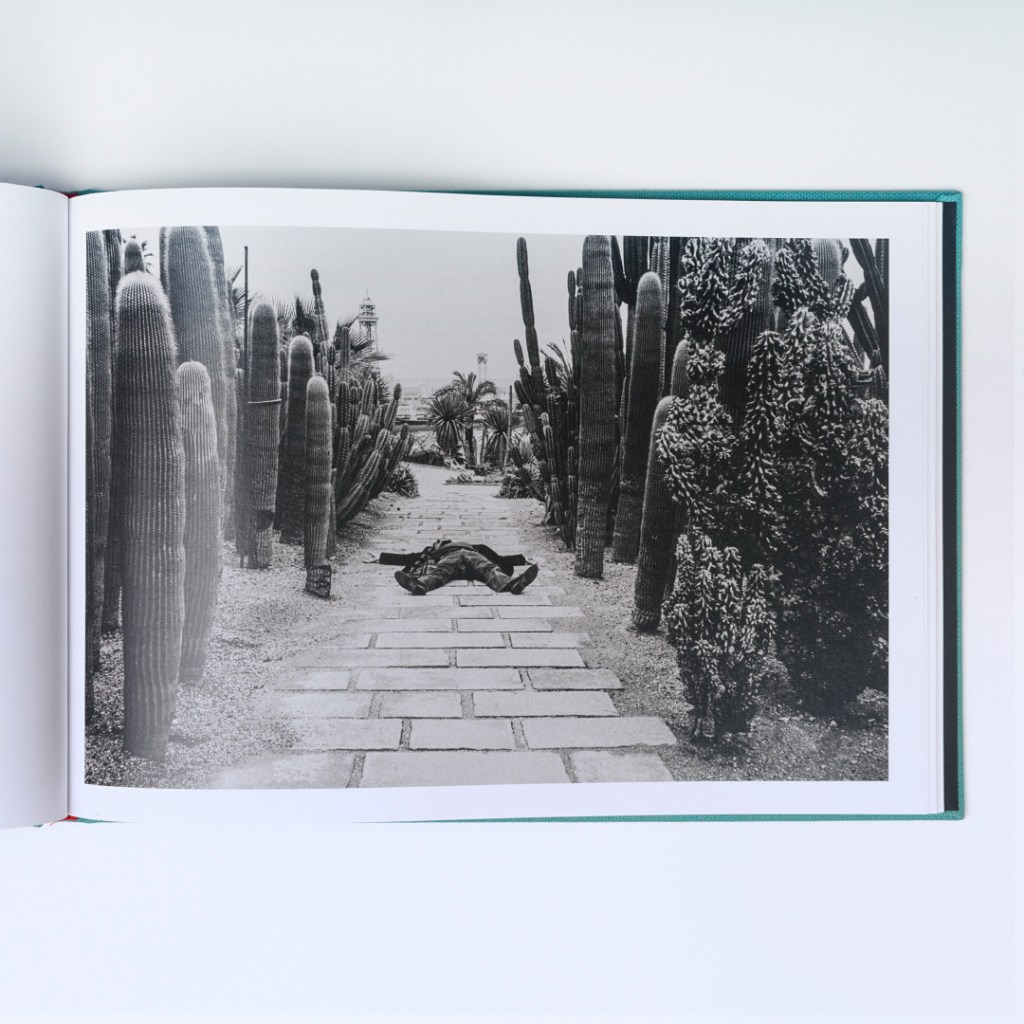
Fulvio Ventura was a master in the shadows of Italian photography. A compatriot of the more famous Ghirri, Guidi and Basilico, he participated, with the best of that generation, in the two pivotal projects “Viaggio in Italia” (1984) and “Archivio dello spazio” (1987-1997). Ventura, who died last year at the age of 79, was a man of culture and depth, with a sensitivity that expressed itself in photographs of high quality and charm, but also had what many would call a “bad temperament” — a sort of misanthropy that contributed to his not-so-generous critical and editorial fortune.

It seems impossible that only now, after nearly fifty years, is “Sagacity” seeing the light of day — a book the artist originally conceived in 1975 and returned to for the rest of his life. Initially the book was to be published in 1978 by Punto e Virgola, Ghirri and Chiaramonte’s publishing house, with the title “Souvenirs” and a text by Jean-Claude Lemagny, founder of the photography gallery at the Bibliothèque Nationale in Paris. But because of Ventura’s stubborn dissatisfaction with the proofs — and then the bankruptcy of the imprint itself — the publication was indefinitely postponed.

The book now arriving in stores from the Californian publisher The Ice Plant is, in fact, Ventura’s first ever monograph. The graphic design is by famed New York photographer Jason Fulford. The pictures were edited by Giulia Zorzi, curator and founder of Micamera, the Milan bookshop and gallery — one of the few spaces in Italy truly devoted to international contemporary photography.

But the significance of “Sagacity” lies not just in its curious editorial story. It is a seminal book, comparable in importance to “Kodachrome” or “Milan: Portraits of factories” in the careers of Ghirri and Basilico. It holds, in embryonic form, the key to reading all of Ventura’s work, and helps clear up any misconception that, from the ’80s onward, he was merely the “photographer of gardens.”

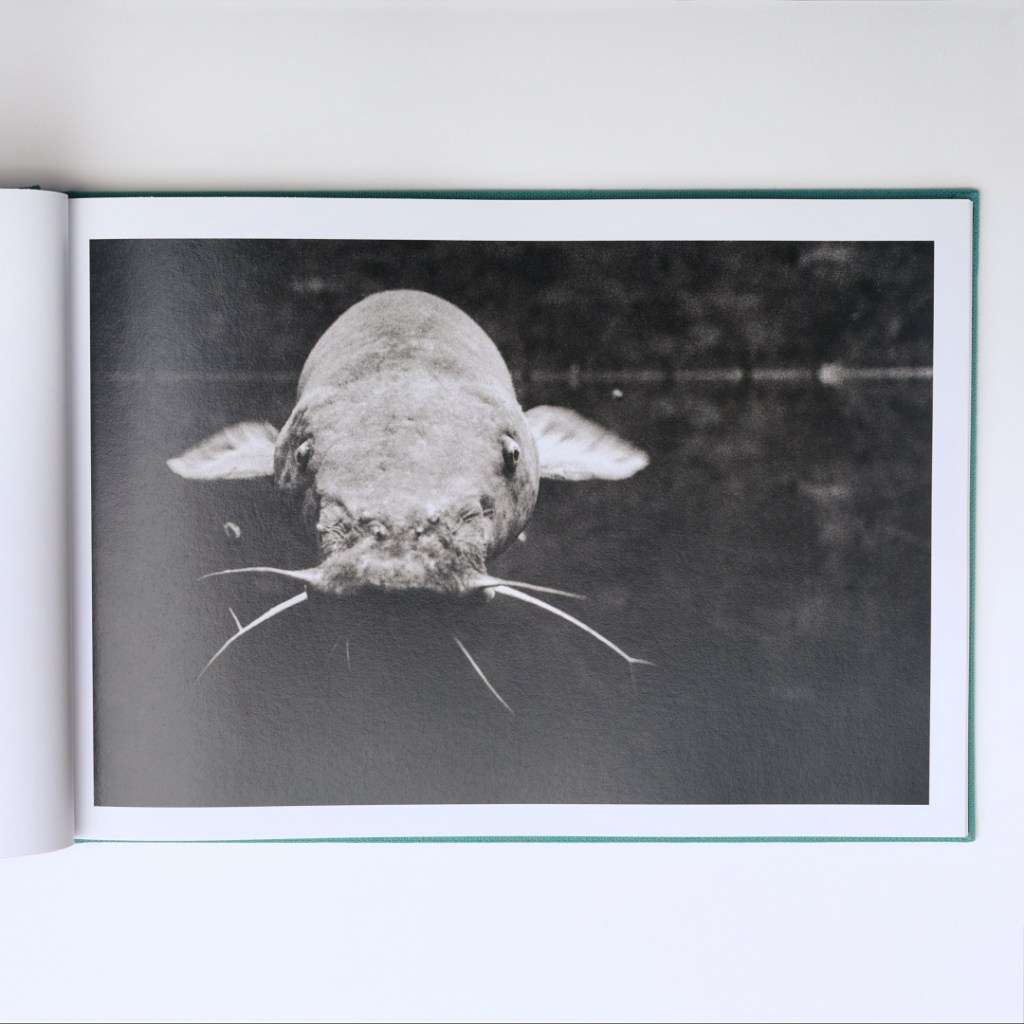
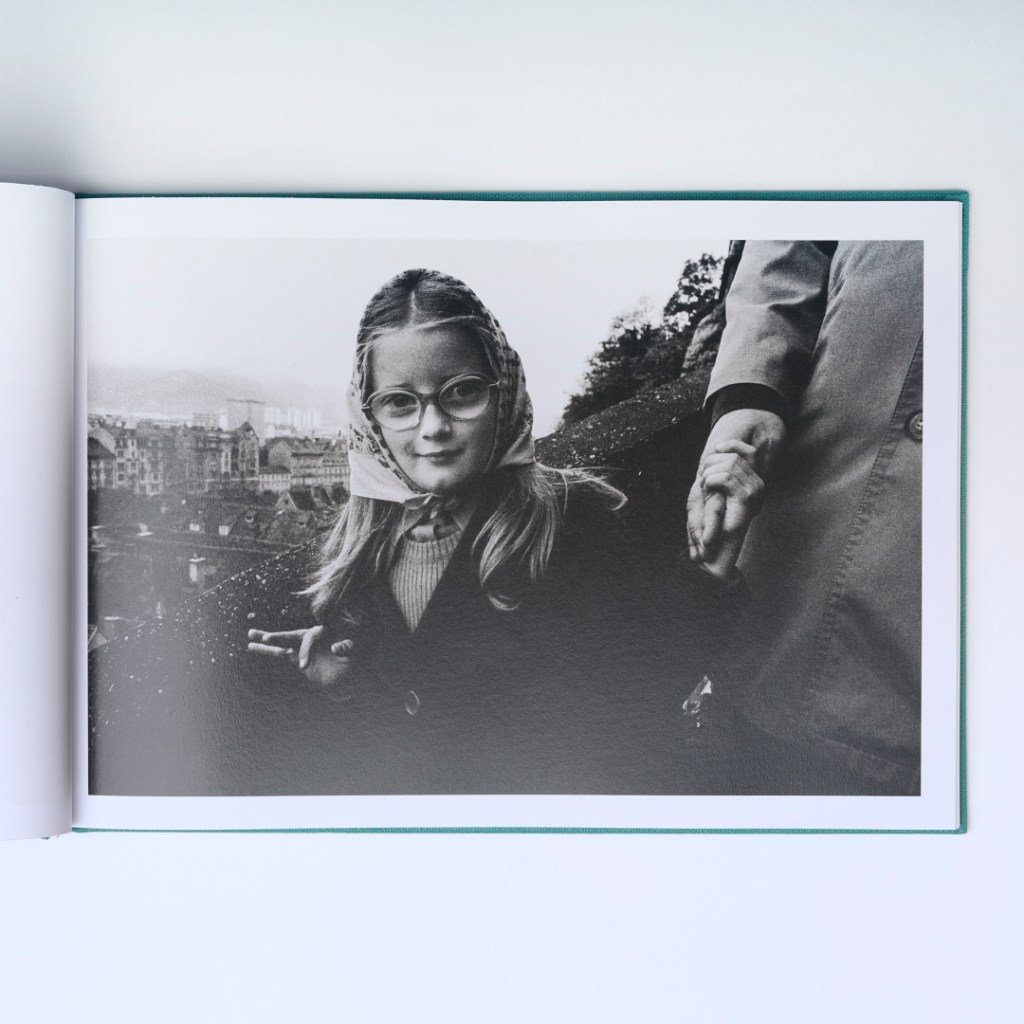
The full title of the book, a sequence of 33 black and white images, is “Sagacity, Sunstar and Salamandra,” a phrase engraved on a brass plate discovered by Ventura, as a found object, in a printer’s shop window. They are the names of three horses: daughter, father and mother – related words that are a declaration of his poetics: intuition, light, and the alchemical symbol that connotes an ability to live in flames. The artist drew inspiration from a diversity of cultural sources, among them a spy film, seen late at night (the memory of the title has been lost), in which the protagonist, betrayed by his superiors and abandoned by his colleagues, begins a personal search for the truth. Then there is “Atalanta Fugiens,” a seventeenth century book compiling musical compositions, poems and engravings, through which – using the image of the woman, in Greek mythology, who outruns her suitors – the author tries to reveal the secrets of alchemy. Another influence is “Nadja,” the surrealist novel by André Breton, whose protagonist falls in love with the woman who gives the book its title, captivated by the charm of her vision of the world.
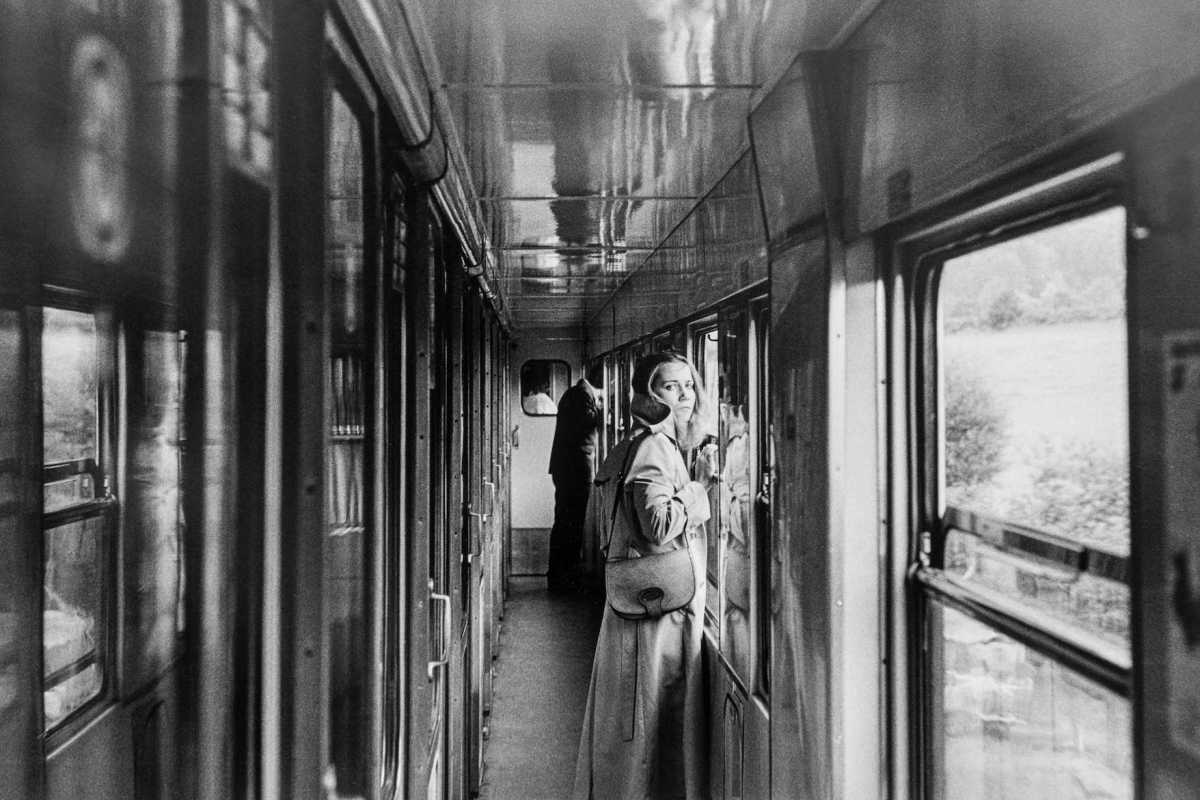
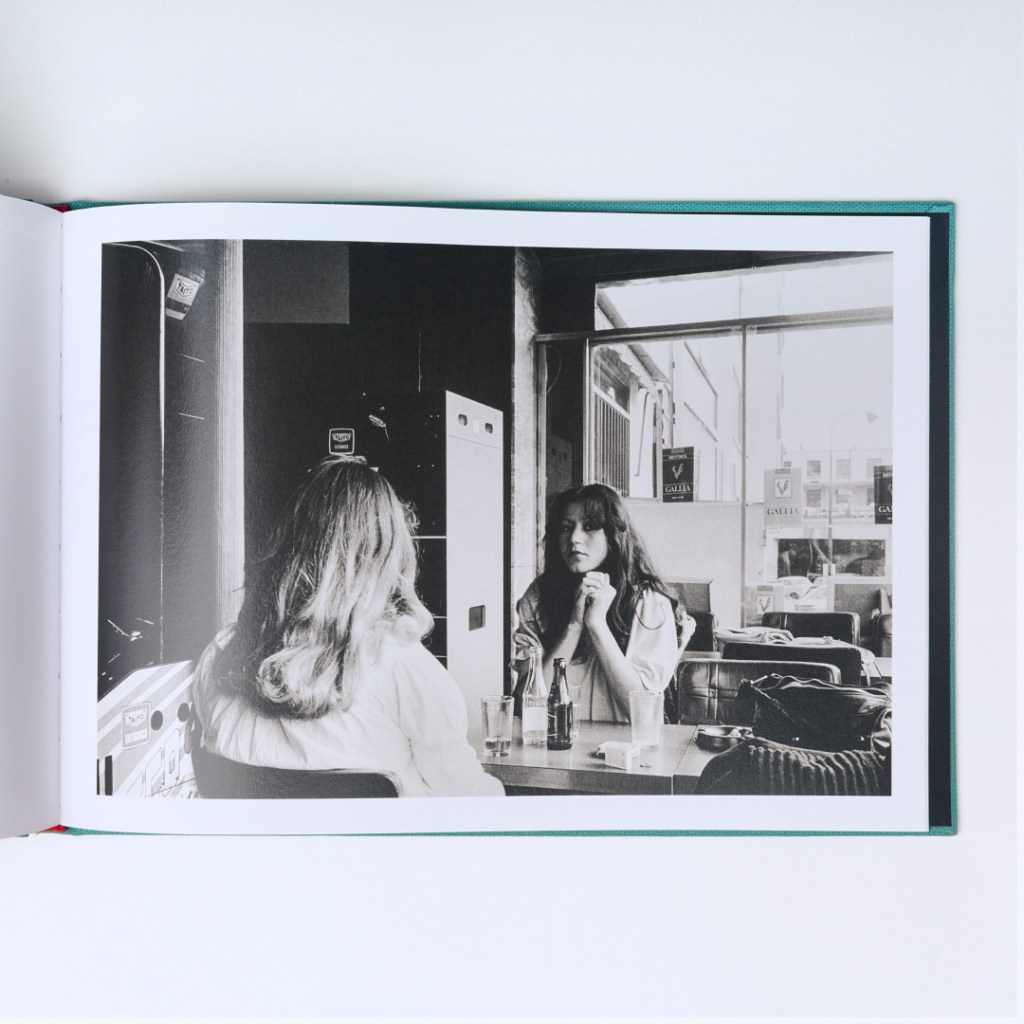
Ventura sees Atalanta/Nadja on the subway, or intent on pushing a baby carriage, or appearing in the form of a statue illuminated by a ray of light in the shrubbery. She sits at a coffee table. She escapes the gaze of a man in a raincoat searching for her in a dilapidated house. We meet her in the corridor of a train: she turns around and, staring into the lens, surprises the photographer who is following her. And there are hints of the spy story: the dialogues between informants and even the dead man.

Throughout the book, together with the author, we find ourselves on the trail of not only this woman but also, from a meta-photographic point of view, the revelatory nature of the image and, above all, the sense of things hidden in the folds of the visible.

“Sagacity” will be presented by Anna De Lorenzi, Giovanni Chiaramonte, Roberta Valtorta, Mike Slack and Giulia Zorzi, on Tuesday, October 20 at 6:30 p.m., at Galleria San Fedele in Milan.

Il Foglio, 13th October 2021

“Rooted,” by Henk Wildschut

Rooted Henk Wildschut

By Luca Fiore

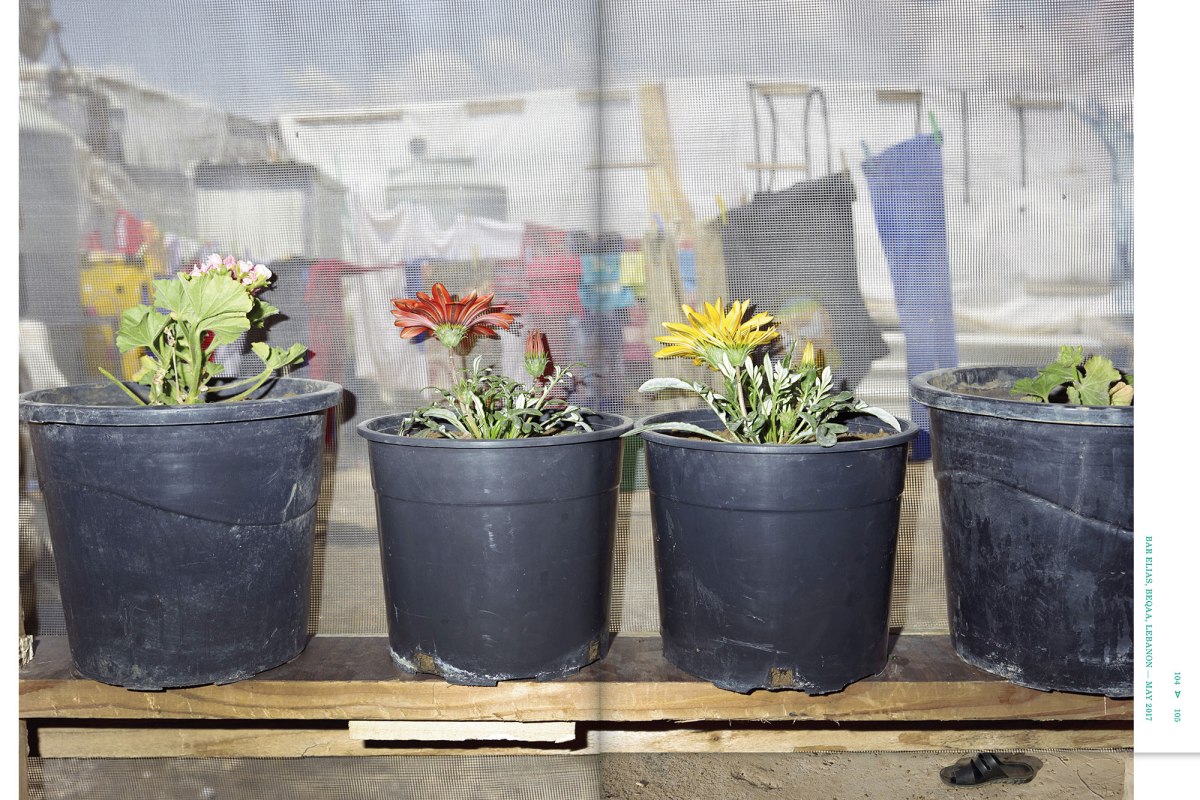
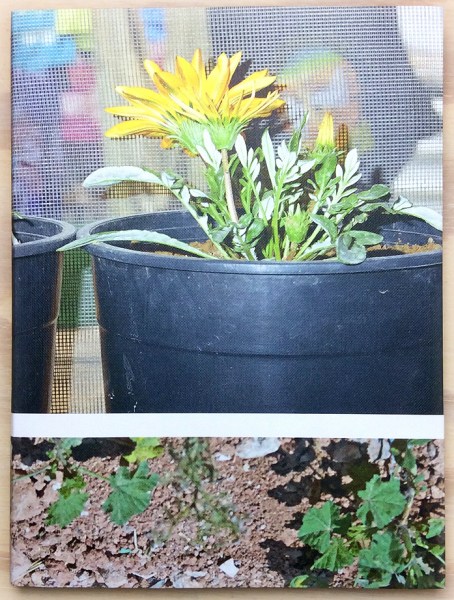
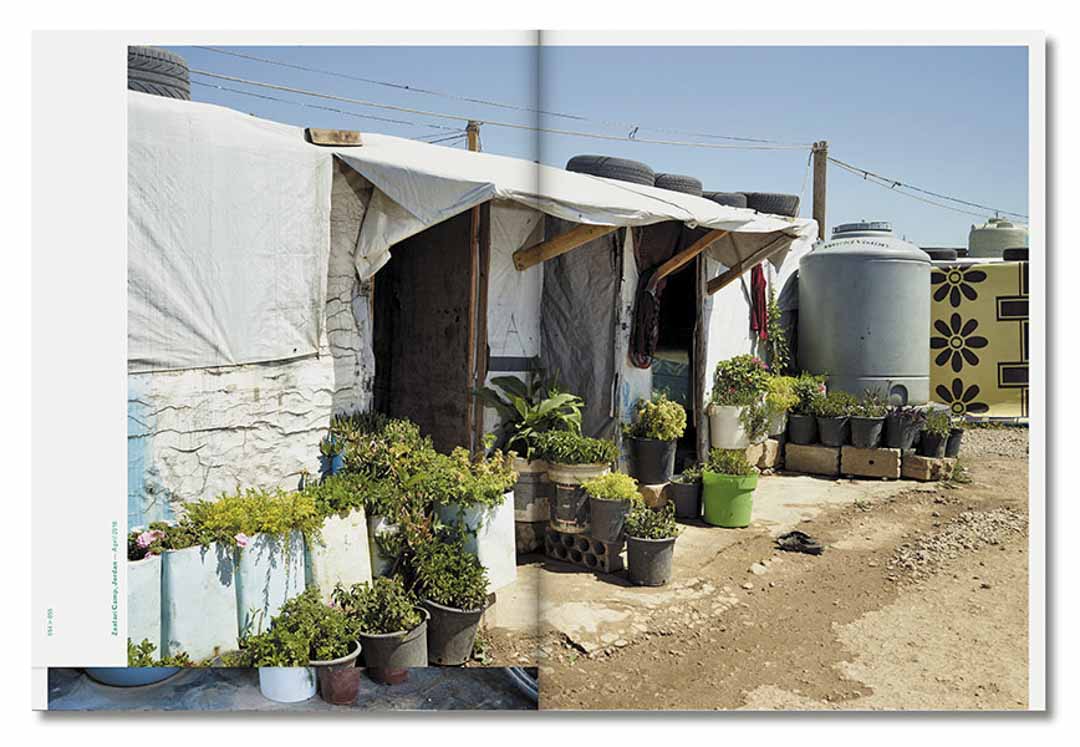
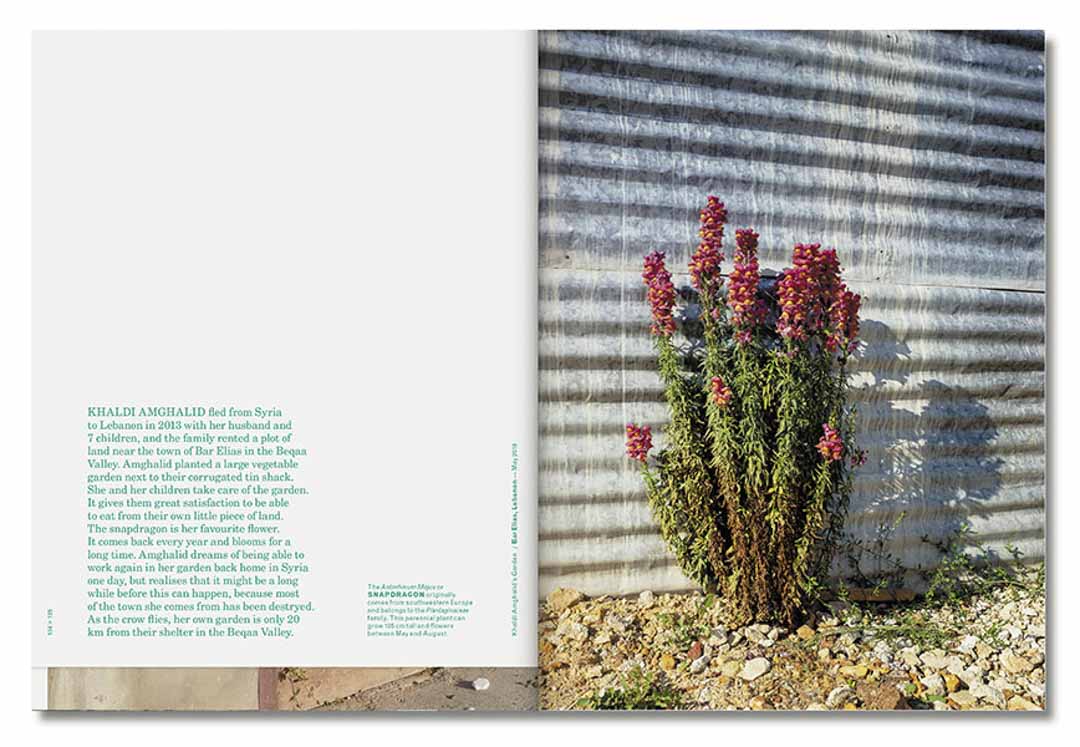
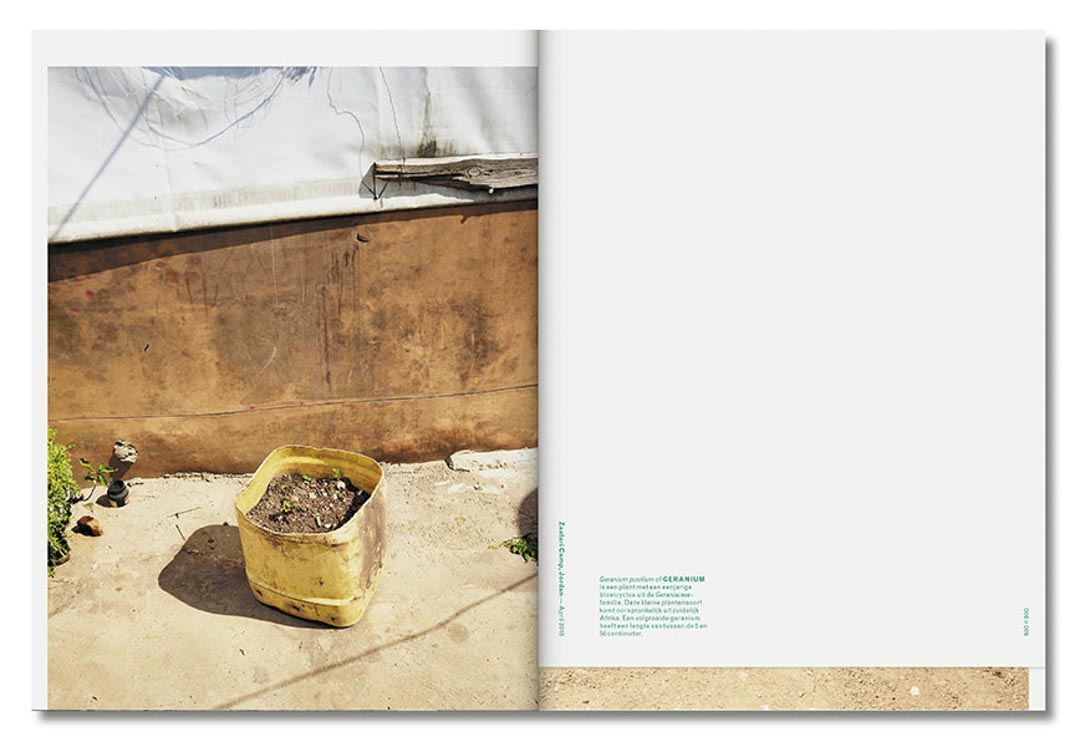
The Dutch photographer Henk Wildschut, 52, has been photographing refugee camps for 15 years. His latest book is the final instalment in what he defines an “unintentional trilogy.” He began in 2005 by depicting the makeshift living conditions of those who had fled their home countries (“Shelter,” 2010). He then focused on the history and social dynamics of the settlement that has emerged on the coast of the English Channel, baptized The Jungle (“Ville de Calais, 2017–awarded the Arles Prix du Livre). “Rooted,” published a few weeks ago and–like the other works–produced by Wildschut himself, depicts plants sown and cared for by refugees next to tents and makeshift homes in France, Tunisia, Jordan and Lebanon.

rooted henk wildschut

In plastic bottles, tin jars, makeshift containers, or flower beds protected by improvised fences, spaces are made for small plants, colourful flowers, bunches of spices, and entire allotments. The book opens with a quote from a young Syrian boy: “When I see green, I remember home.” It continues by alternating between colour photos and something approximating the pages of a diary, kept by the Dutch photographer in order not to forget the circumstances he found, the conversations he overheard, and the changes witnessed in these strange dwellings over the course of time.

The photographs depict only the plants themselves, never the people who planted them. Great attention is paid to this, adding a particular potency to the images; as if to show, if ever it were needed, that the humanist photographer is not necessarily he or she who always includes humans as subjects–a woman in tears, or a child with a dirty face. Here, in its simplicity, the photographic language is more sophisticated. It moves the viewer, but does so in an honest manner, appealing to various stages of thought. Thus, a deeper, more visceral reaction is solicited; but one that is more stable and less prone to manipulation.

This is the power of true documentary photography, shot in large format with a tripod, which requires different shutter speeds–and speeds of thought–to those necessitated by the snapshot. At first glance, as in “Rooted,” one feels faced with mute images. The framing is rather ordinary; the colours and tones are flat; there is no momentarily arrested action. The photographer’s hand is here at work to remove any artifice; yet artifice is nevertheless there. Every effort is made to render, on the film, the scene as it is. What is sought is a naturalism which, far from scientific, suggests that the world, in the way it presents itself, speaks to the viewer already.

In “Rooted,” an ancestral gesture is portrayed; human beings themselves sown into the earth. It is a metaphor not only of the historical plight of these individuals uprooted by the storm of destiny–often families and entire villages–but of mankind as a whole. It foregrounds the need for stability that was already felt at the beginning of modern civilization, by the first nomads who settled as farmers. A shift from nomadic to sedentary which set the preconditions for the development of civilization. It is a metaphor of roots, of the earth itself that is both mother and father; the homeland. Yet the images of roots in these photographs are contrasted with what resides beyond the frame: the refugee, the fugitive. These are themes which even we, despite our modern comfort in peaceful Western democracies, can empathise with. Some years ago, Father Mauro Lepori, General Abbot of the Cistercian order, said: “This miserable humanity arrives with the tide to show us our own situation, as if in a mirror. Refugees, ultimately, reveal to us the very lack of stability that does not allow us to offer them a home.”

Il Foglio, 5th September 2019

rooted henk wildschut
rooted henk wildschut 5
rooted henk wildschut 6
rooted henk wildschut 7

“Driftless,” by Jason Vaughn and Brad Zellar

Drifless Jason Vaughn

by Luca Fiore

The opening of Driftless, a photobook created by Jason Vaughn with the journalist and writer Brad Zellar, seems lifted from a Raymond Carver novel. Zellar tells us “I once set my GPS to take me to a trout stream that bubbled up out of a series of springs back in one of the valleys. Instead it led me up to a flat, treeless plateau, where the road dead-ended at the trailer of an old man who told me his family had been up there for 75 years. I told him I was looking for the stream, and he said he had a handful of confused people end up at his trailer every year. ‘Even the fancy machines get mixed up when they get off the State highway and onto these gravel roads’, he said.” The man then led the disappointed fisherman to the fence line at the edge of his property. Zellar continues, “the land suddenly plunged several hundred feet down into a hidden and heavily-forested valley. ‘It’s down there’, he said, ‘but there are easier ways to get to it’. Back at my car, after he gave me a complicated series of directions to get down to the stream, he said, ‘Ain’t nobody know where I am but people who don’t know where the hell they are’.”

“Driftless,” by Jason Vaughn and Brad Zellar

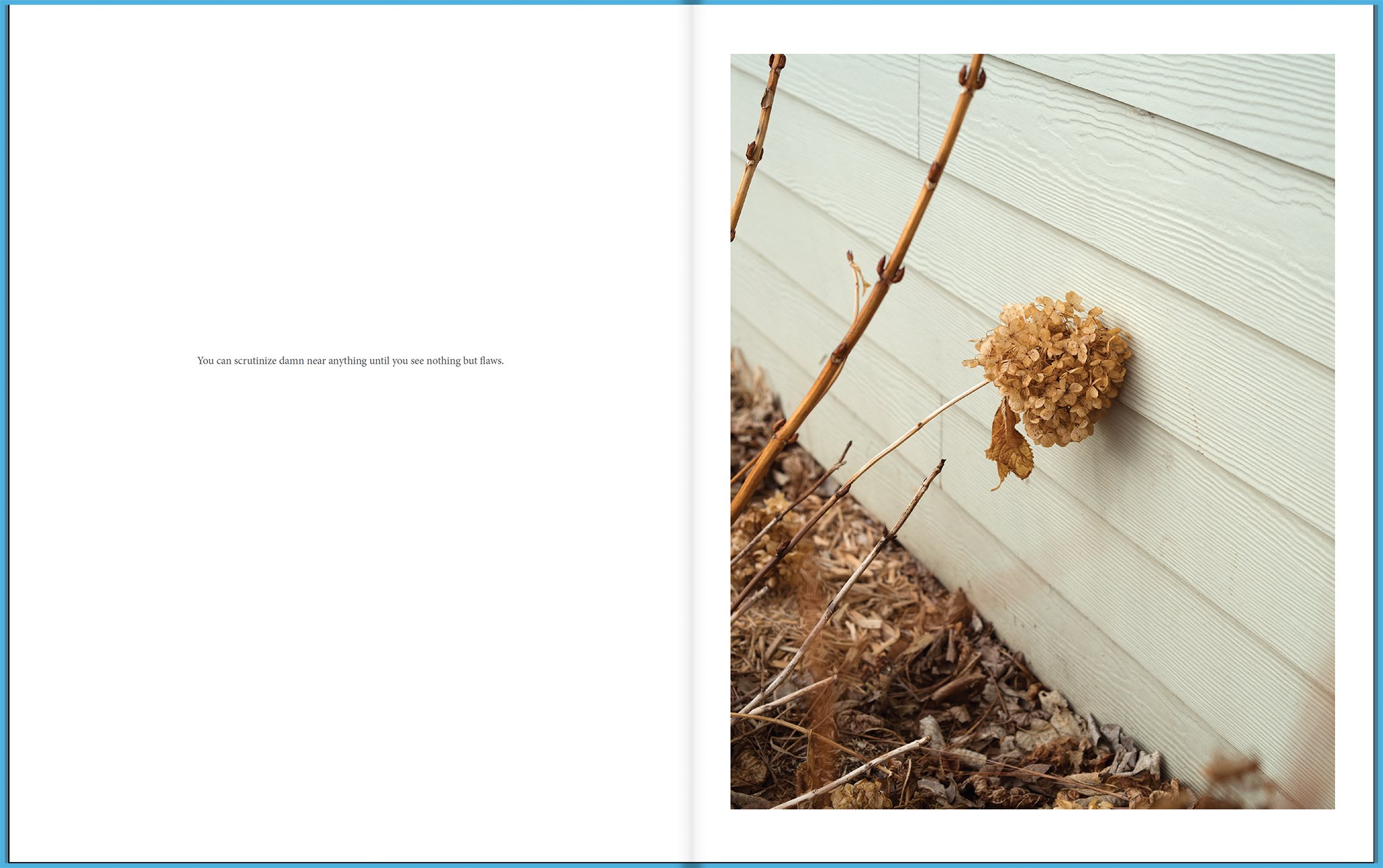
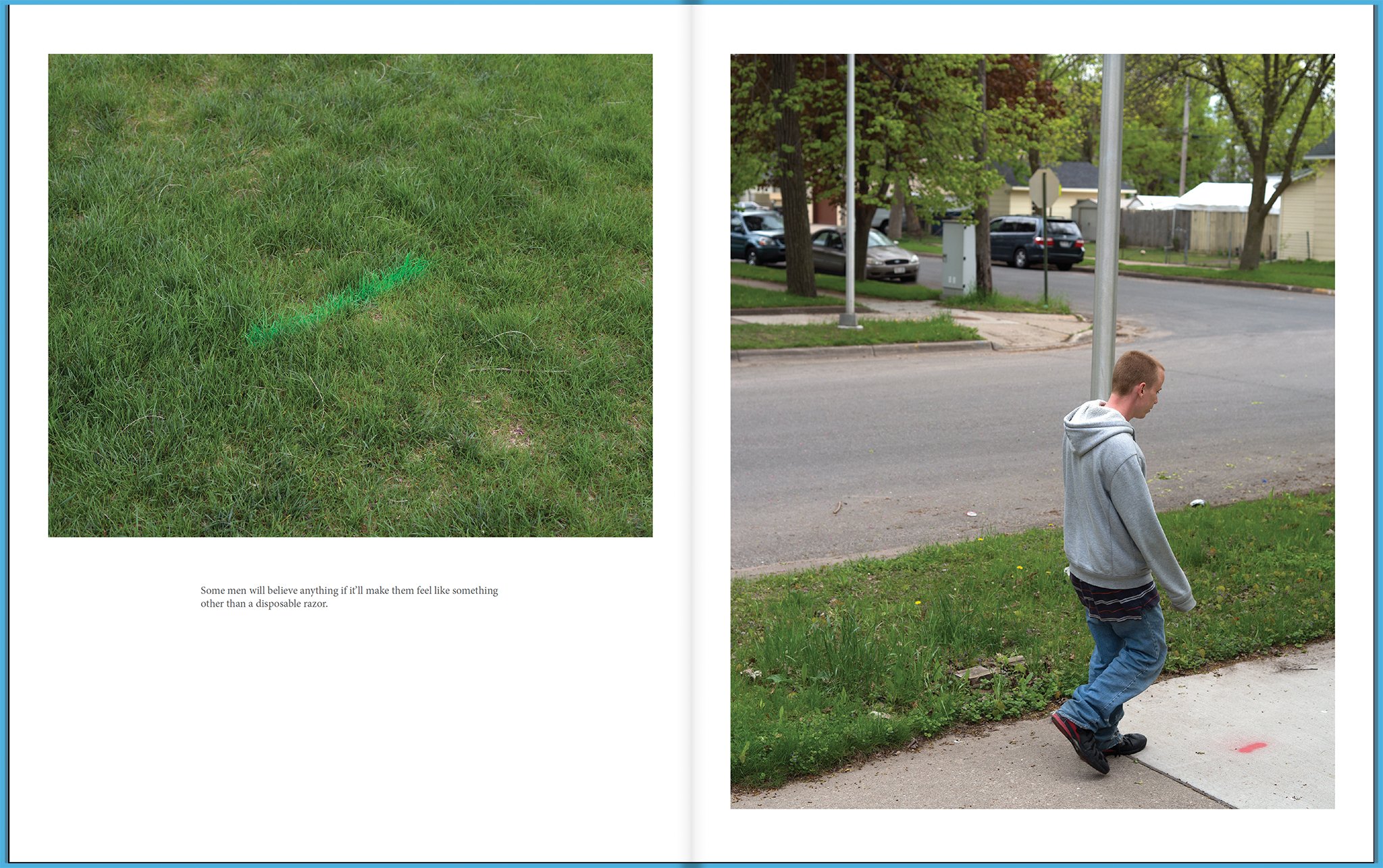
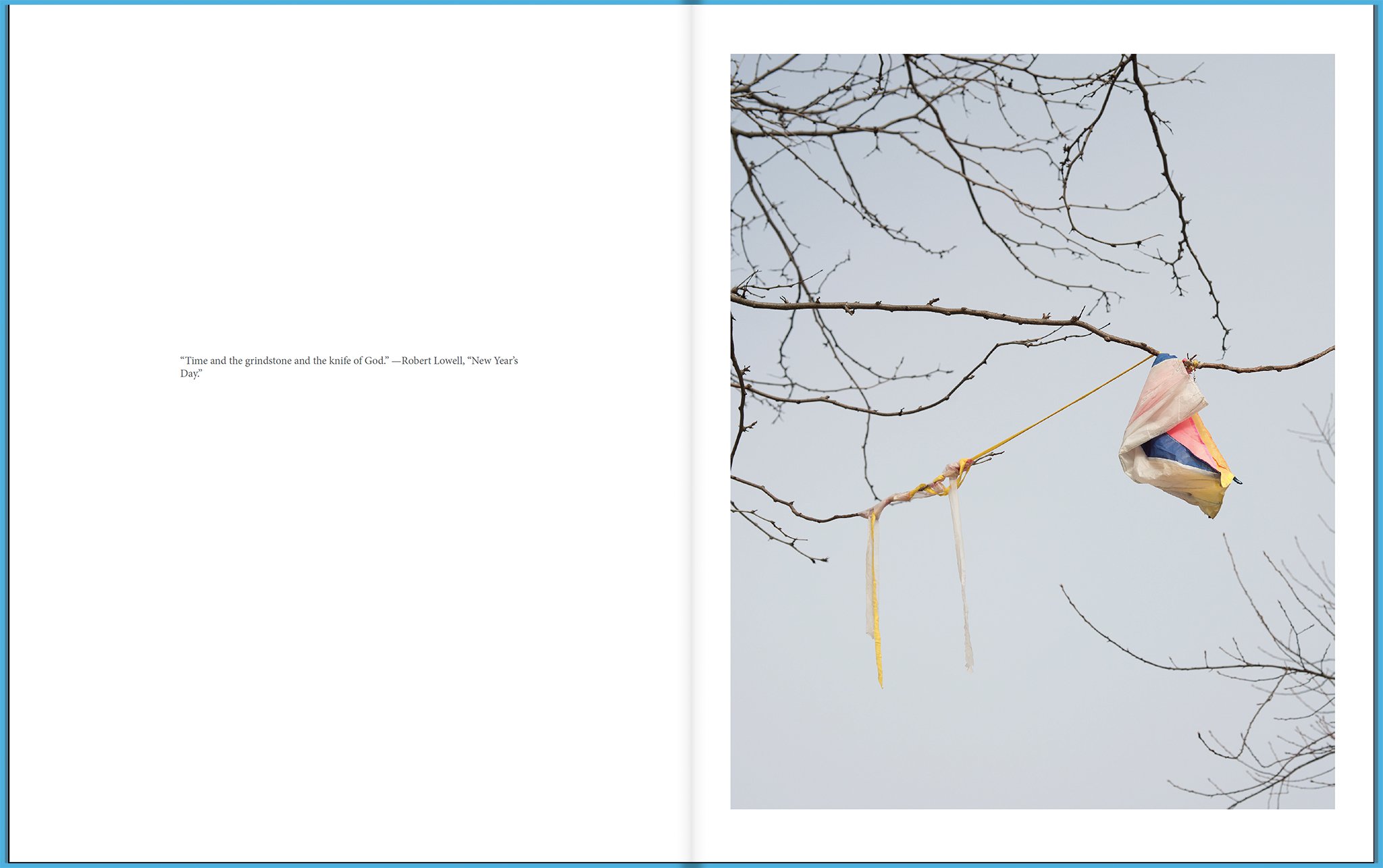
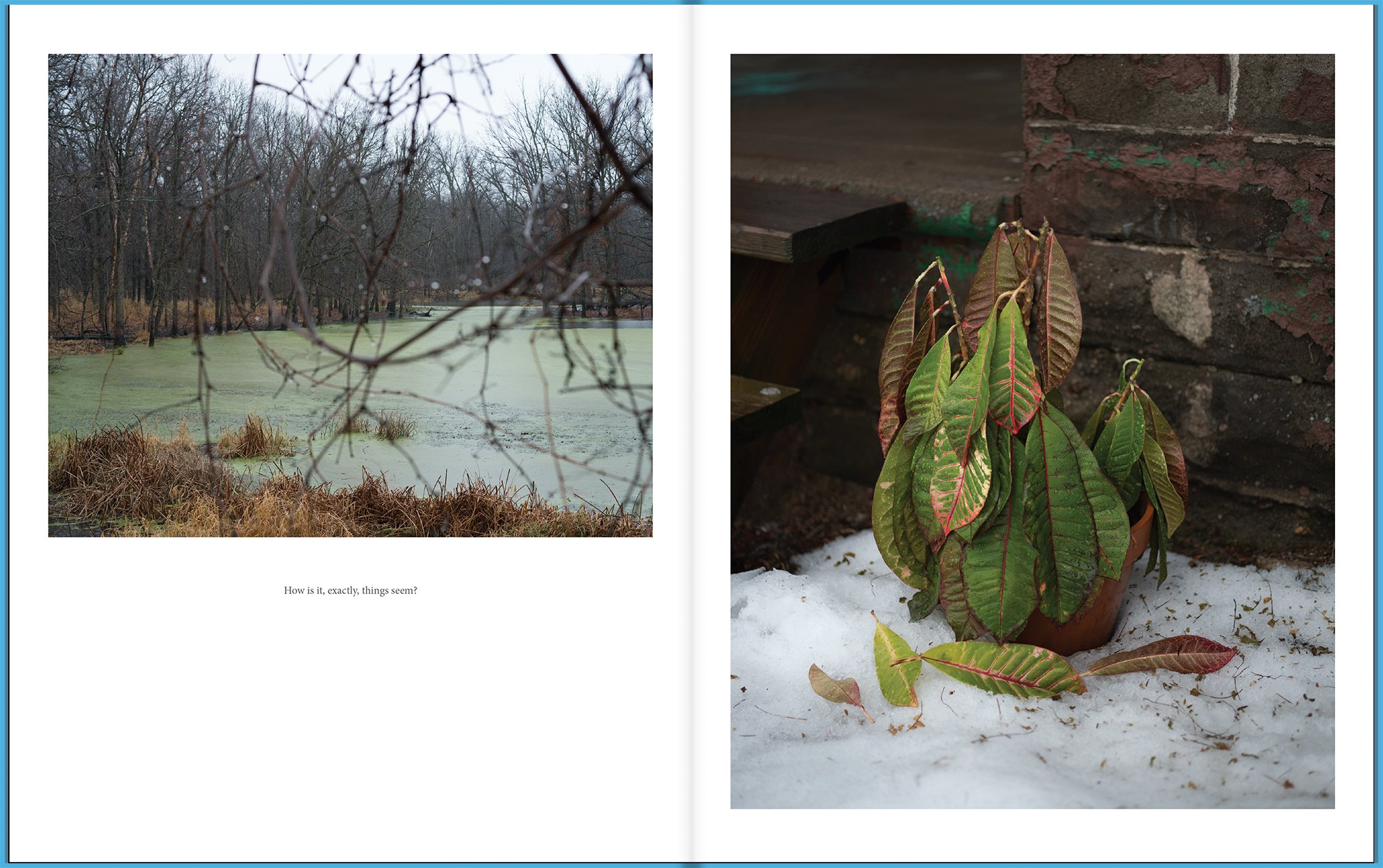
The book, published by the independent American publishers TBW Books, includes images shot by Vaughn in a very peculiar period of his life. Having just overcome the nightmare of cancer, and awaiting the birth of his second child, the photographer rented an apartment next to the Mississippi river, going on to live there for a year. The location is called the “Driftless area,” a region in south west Wisconsin, seemingly preserved from the last ice age, and characterized by particularly rugged terrain, void of any residue from glacial retreat (in English, “drift”). The verb “to drift”, however, can also mean “to wander”. The photographs taken during daily walks in this small area of the Midwest attempt to capture “the process by which people wander in a space, sometimes deciding to stop, perhaps forever, sometimes disengaging and moving elsewhere.”

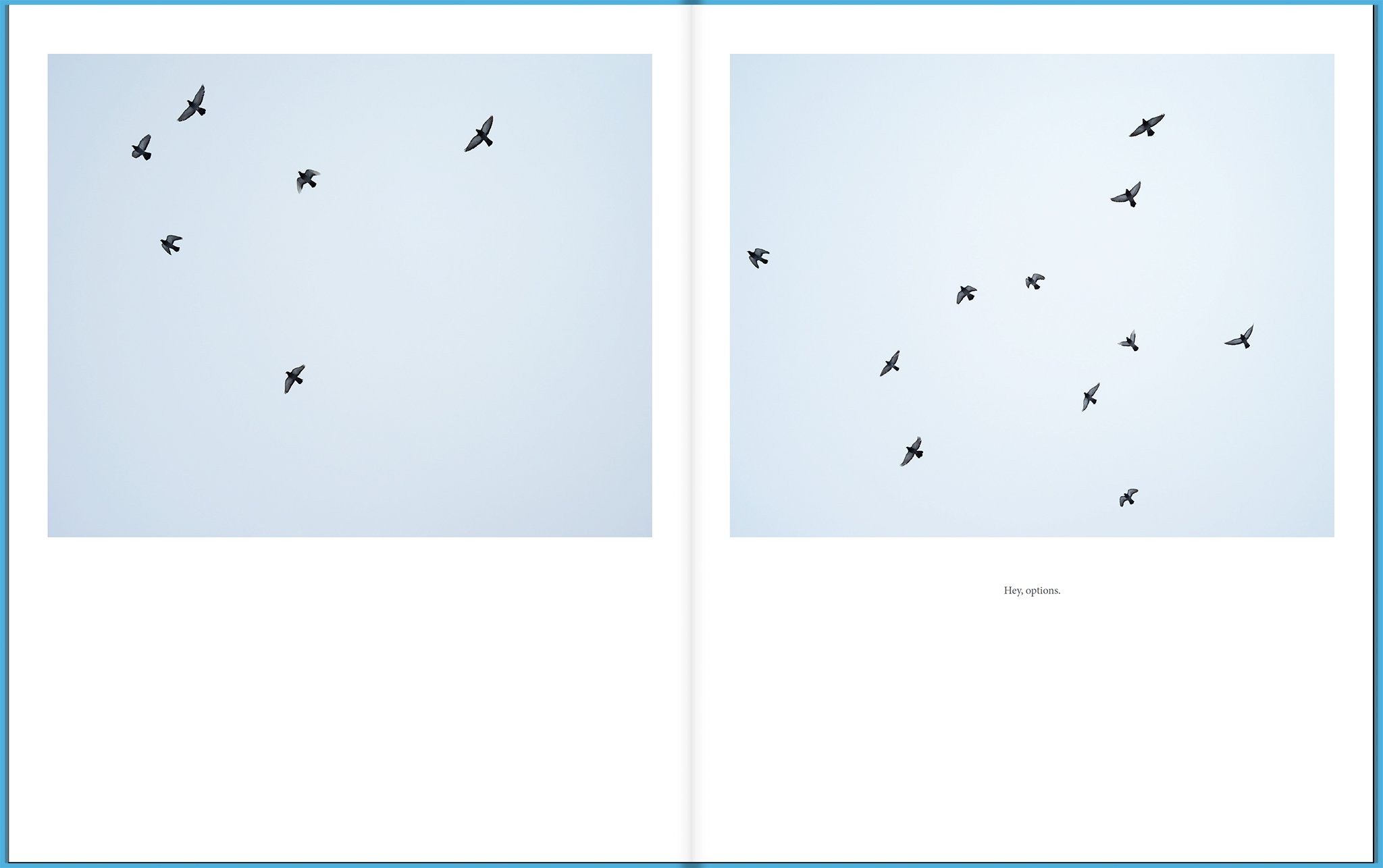
Black and white colours are alternated in a poetic and unrhetorical style, itself contrasted with Zellar’s non-didactic captions. A nest amid branches. Different types of reflection on the surface of a stream, webs of branches, a hydrangea bush at different times of the year. A child walking. An adult walking. An old man walking. A waterfall of ice. Flocks of black birds. Photographs that, very slowly–requiring patience–become metaphors, and improvised thoughts. They open and close like the action of an accordion, alternating epiphany with riddle.

Next to an image of a section of frozen lake, its rippled surface illuminated by a ray of light, Zellar writes: “Some people would just as soon leave the jigsaw puzzle pieces scattered on the table.” Next to a night shot of some branches lit by the camera’s flash: “The voice of one more exhausted foreigner: ‘There are so many reasons’.” Or elsewhere: “Nobody moves and nobody gets hurt. Oh, the cold stone panic of never…”

The last photograph is of a sheet of ice floating on water, a large stone on top of it, seemingly suspended on the surface of the water. On the page to the left of the image is the quote: “We are alive. We are burning. We are libraries one fire.” Under the photo, meanwhile, the Italian of a music score: “Con fuoco. Con brio. Deciso.”

The book concludes with three quotations; one from the American poet Robert Hass, one from Samuel Beckett and one from Sophie Scholl, the German dissident murdered by the Nazis in 1943, aged 22. This last quotation reads: “A little candle burns itself out just like a flaming torch does.”

Il Foglio, 18th July 2019

“Driftless,” by Jason Vaughn and Brad Zellar
Driftless Jason Vaughn 3
Driftless Jason Vaughn 4
Driftless Jason Vaughn 5
Driftless Jason Vaughn 6
“Driftless,” by Jason Vaughn and Brad Zellar
Driftless Jason Vaughn 8
“Driftless,” by Jason Vaughn and Brad Zellar

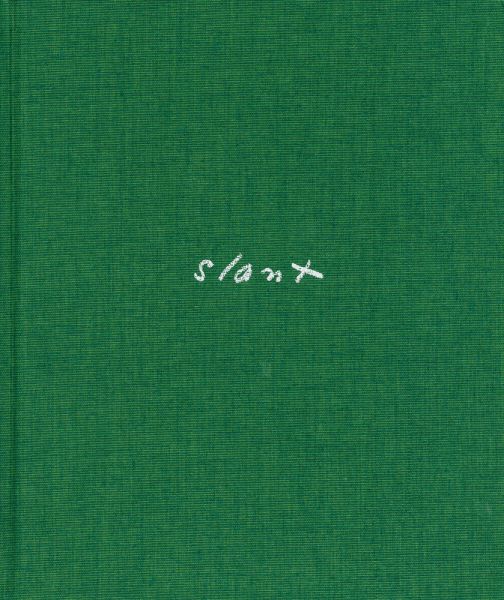
“Slant,” by Aaron Schuman

Slant Aaron Schuman

By Luca Fiore

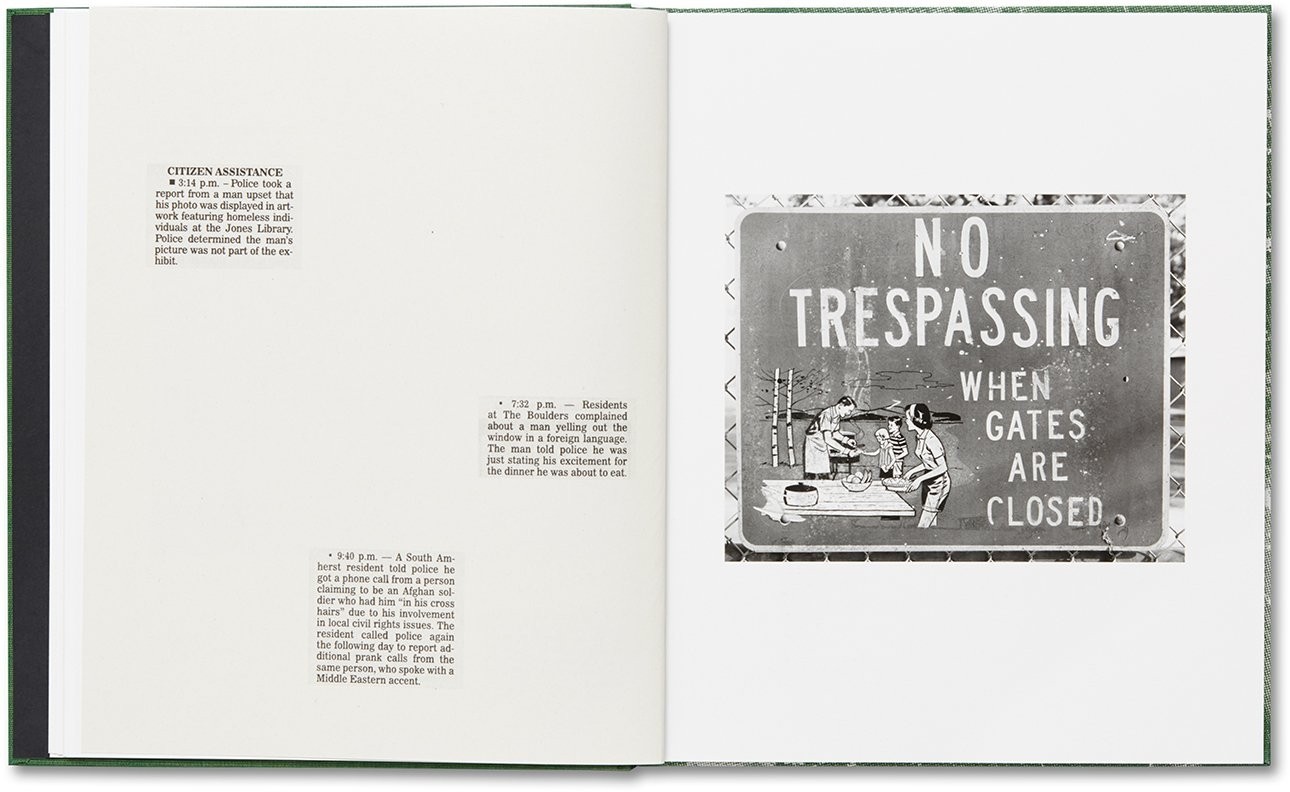
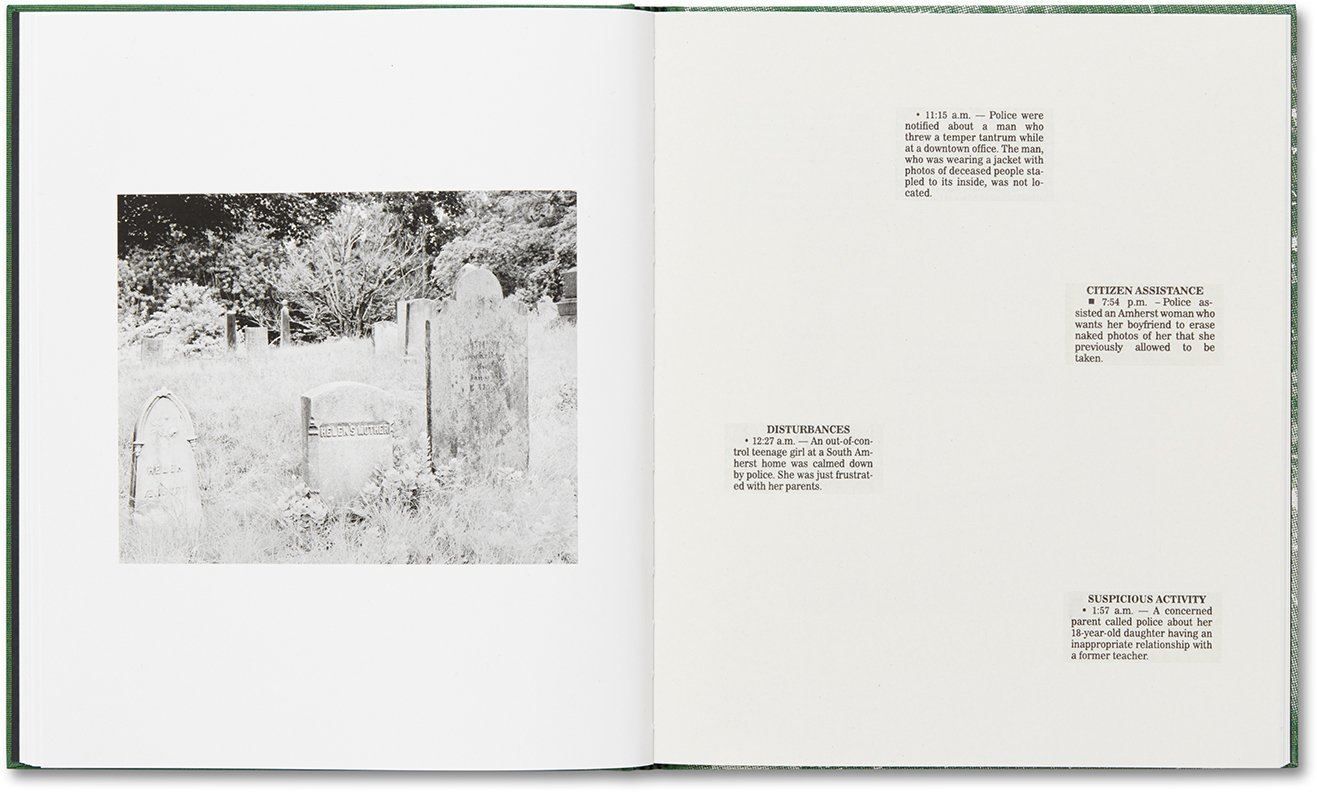
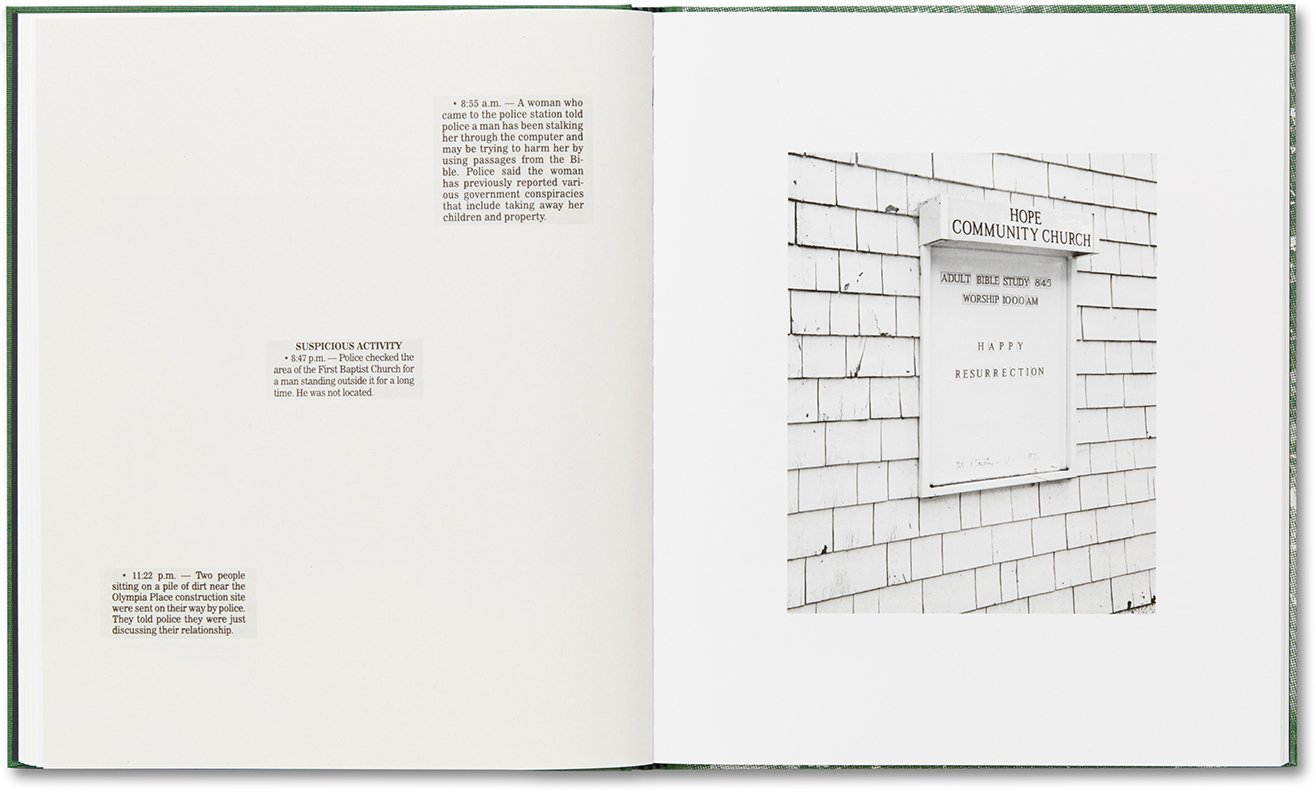
Amherst is a New England city with a population of 38,000, in the state of Massachusetts. It is the birthplace of Aaron Schuman, photographer, writer, curator; a man with a CV befitting his 42 years. The city is known above all for being the home of Emily Dickinson. Schuman now lives in Bristol, England, and every now and then returns to visit his parents. It was during one of these visits that he developed an interest in reading police reports from the local “Amherst Bulletin”. “CITIZEN ASSISTANCE: 4.14am–A man shovelling snow on State Street told police he saw a strange orange glow coming from the eastern sky that might have been something on fire. Police determined the glow was probably the sun coming up for the day. Or: “SUSPICIOUS ACTIVITY: 5.53pm–A woman called police after being approached by a photographer in downtown who asked if he could take pictures of her feet. The photographer was not located”. And so on: “NOISE COMPLAINTS: 7.19pm–Residents at The Boulders reported a loud argument between a man and a woman and banging on the walls that caused a painting in their apartment to fall to the floor. Police determined that the neighbours were engaged in what was described as “overzealous copulation”, and were not arguing”.

Slant Aaron Schuman

Schuman was, at first, struck by the comic quality of these short snippets, and decided to collect more Police reports. However, the more he read, the more he became fascinated by the contrast between the bureaucratic style of the reporting, and the mundanity and irrelevance of the events described. The clippings began to evoke images in the style of Walker Evans, Lee Friedlander or Diane Arbus: “ANIMAL COMPLAINTS: 6.30pm–Police took a report that four dogs were sitting on top of a vehicle parked on Pray Street. Police were unable to find the dogs or the vehicle”. Two years later, Schuman returned to Amherst with his Yamiya Rz67, but left his clippings in Bristol, on purpose; he did not want his images to be solely their faithful visual projections.

The book generated by this work (Slant, Mack, €35), collates 46 photographs and 50 clippings, and opens with an Emily Dickinson poem which says: “Tell all the Truth/but tell it slant”. For Dickinson, “slant”–also the title of Schuman’s book–is the term for half rhymes which lack a perfect coherency between sounds, and toy with assonance or consonance. In English prosody, the term is generally considered to offer an effect of disharmony. Similarly, Schuman’s images of Amherst become a black-and-white poetic account of a city afeared, where neat whitewashed villas harbour an underlying tension–of which the police reports are but one manifestation.

A barn on which someone has scribbled “In Border Patrol we trust”; a child’s slide erected on the roof of a house overlooking a street; dark skid marks on an asphalt road in the middle of a wood; a giant spider’s web among trees illuminated by sunlight. These are all oblique references to the text of the police reports, and the relationships between the images offer an outlook which is, by turns, ironic, concerned, sarcastic or empathetic. Why is that child dressed as a policeman? What are we to make of two gravestones in a cemetery, one engraved with “Helen” and the other with “Helen’s Mother”? The book concludes with a police report about people sleeping in their cars, pretending to look at the stars, and with a photograph of a “drive-in” sign surrounded by stars. The very final image looks like a starry sky, but cannot be; perhaps, it shows the last remnants of light from a firework.

Il Foglio, 7th June 2019

Slant Aaron Schuman
Slant Aaron Schuman 5
Slant Aaron Schuman 6
Slant Aaron Schuman 7
Slant Aaron Schuman 8
Slant Aaron Schuman 9
Slant Aaron Schuman 10