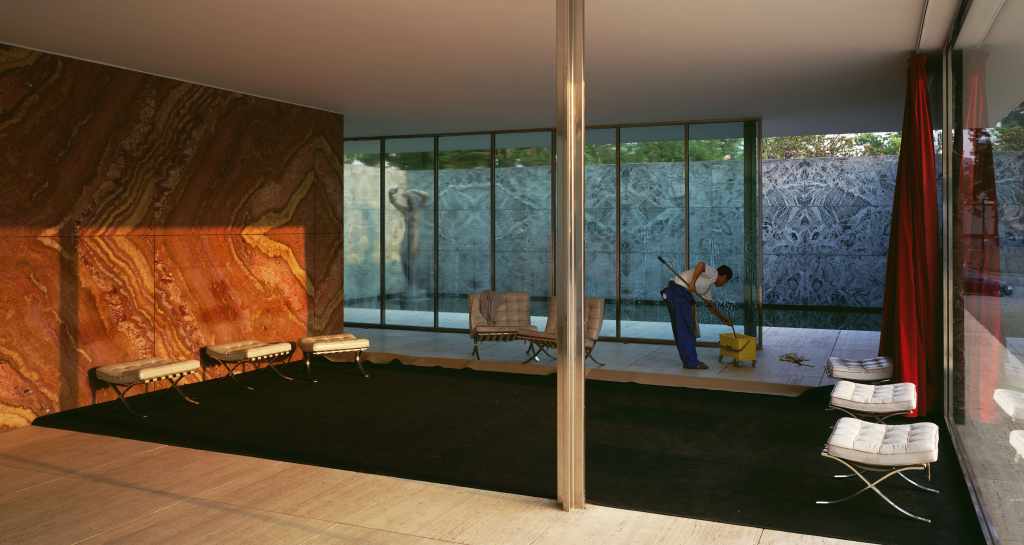
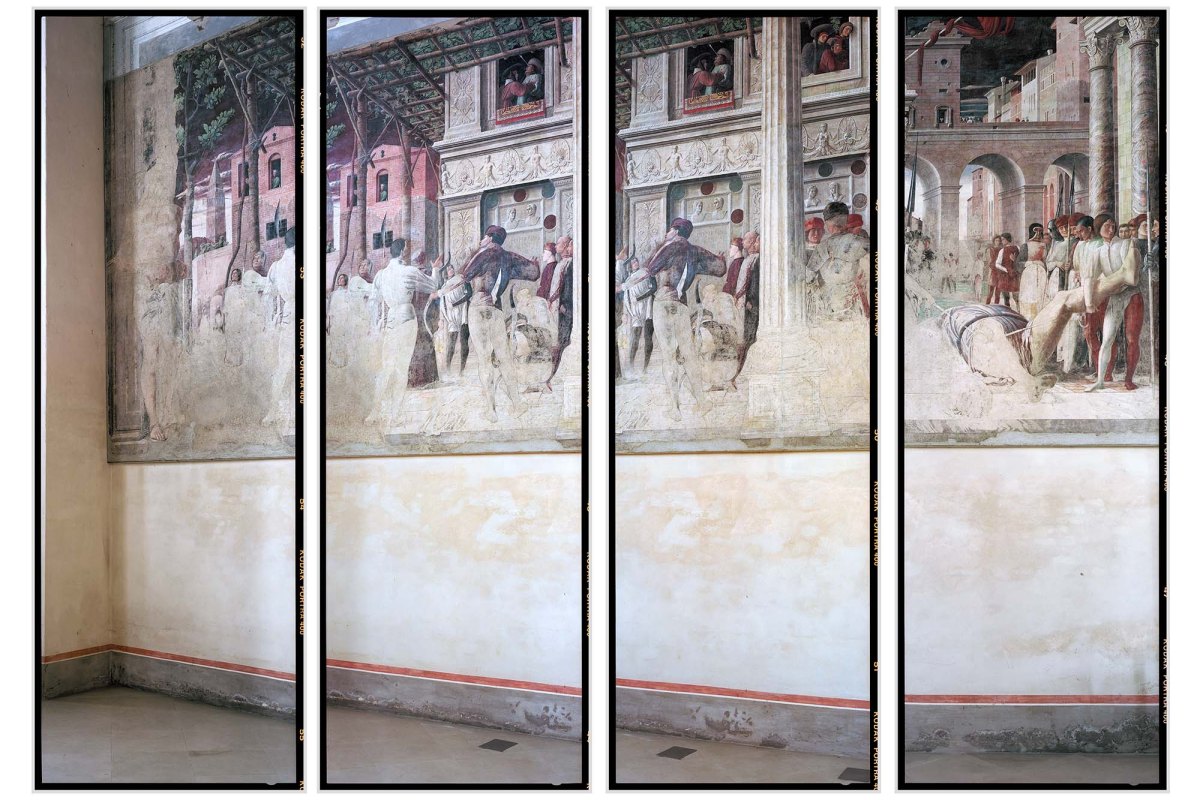
Alessandra Sanguinetti – An Interview

Alessandra Sanguinetti On The Sixth Day

by Luca Fiore

The welcome republication of her debut book, On The Sixth Day, offers an opportunity to retrace, in perspective, the work of one of the great names in contemporary photography: Alessandra Sanguinetti. The volume, which first appeared in 2005 and soon went out of print, greatly contributed to the success of the Argentine photographer, born in New York and raised in Buenos Aires, who is now a prominent member of the Magnum Photos agency. From this first and important work stem the two subsequent projects that earned her true notoriety: The Adventures of Guille and Belinda and The Enigmatic Meaning of Their Dreams and The Adventures of Guille and Belinda and The Illusion of an Everlasting Summer. All three books, published by the British publisher MACK, were made in the Argentine countryside, on a farm near the one where the photographer spent her summer holidays for twenty-five years. Guille and Belinda are two cousins, granddaughters of Juana, the keeper of the animals to whom On The Sixth Day is dedicated.

The book, square in format like the images it contains, has on the cover a photo of two white lambs tied together by a thin rope around their necks. The one on the left has its head covered by a hood and veers toward the edge of the photo. The other is being tugged by its companion and seems to be trying to break free. The two pale figures emerge from a completely out-of-focus background. Their heads and limbs are in motion; only the woolen fleece is clearly visible in detail. The horizon divides the yellow-green plain from the gray-purple sky. The lens frames the two animals tightly. The point of view is at the animals’ eye level. This is the key stylistic choice that supports the entire book, which is, in Sanguinetti’s intention, a tribute to the domestic and wild creatures that enliven rural life on the vast Argentine plain. The dedication, at the end of the long sequence of images, reads: “This book is dedicated to the extraordinary lives of farm animals everywhere. For all they go through, all they give us and all we take from them.”

Alessandra Sanguinetti On The Sixth Day Cover

“I wanted to show a reality that is rarely told,” Sanguinetti explains to Domani: “And it is never told by looking at the true protagonists, which are the animals themselves. Mine is a tribute, but I wanted to make it without concessions, without sentimentality or idealization. No matter how well you know an animal, you will never be able to truly understand it. It’s already hard enough with a human being. My partner, the person I know best, remains a mystery. Let alone an animal.”

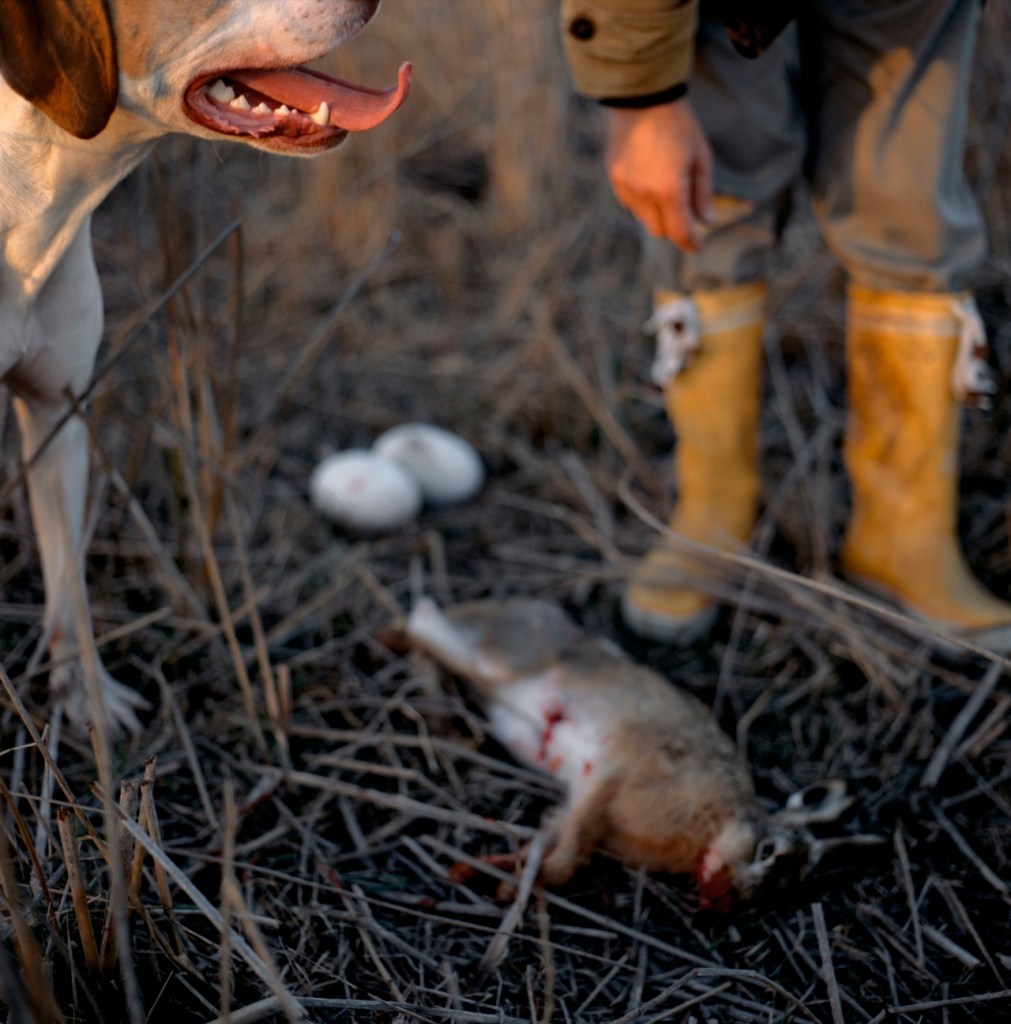
It is a book without compromise. The colors are as vibrant as those saturated by the exuberant light of the Argentine sun. The green-green of the grass, the brown-brown of the earth, the blue-blue of the sky. And above all, the red-red of blood. There is a lot of it throughout the sequence. The blood of animals killed, skinned, even aborted. “It is the normal life of farms, where every day the farmer kills an animal to feed his family. There is no intention to condemn, no finger-pointing. If I had wanted to denounce violence against animals, I would have gone to photograph somewhere else: in factory farms.”

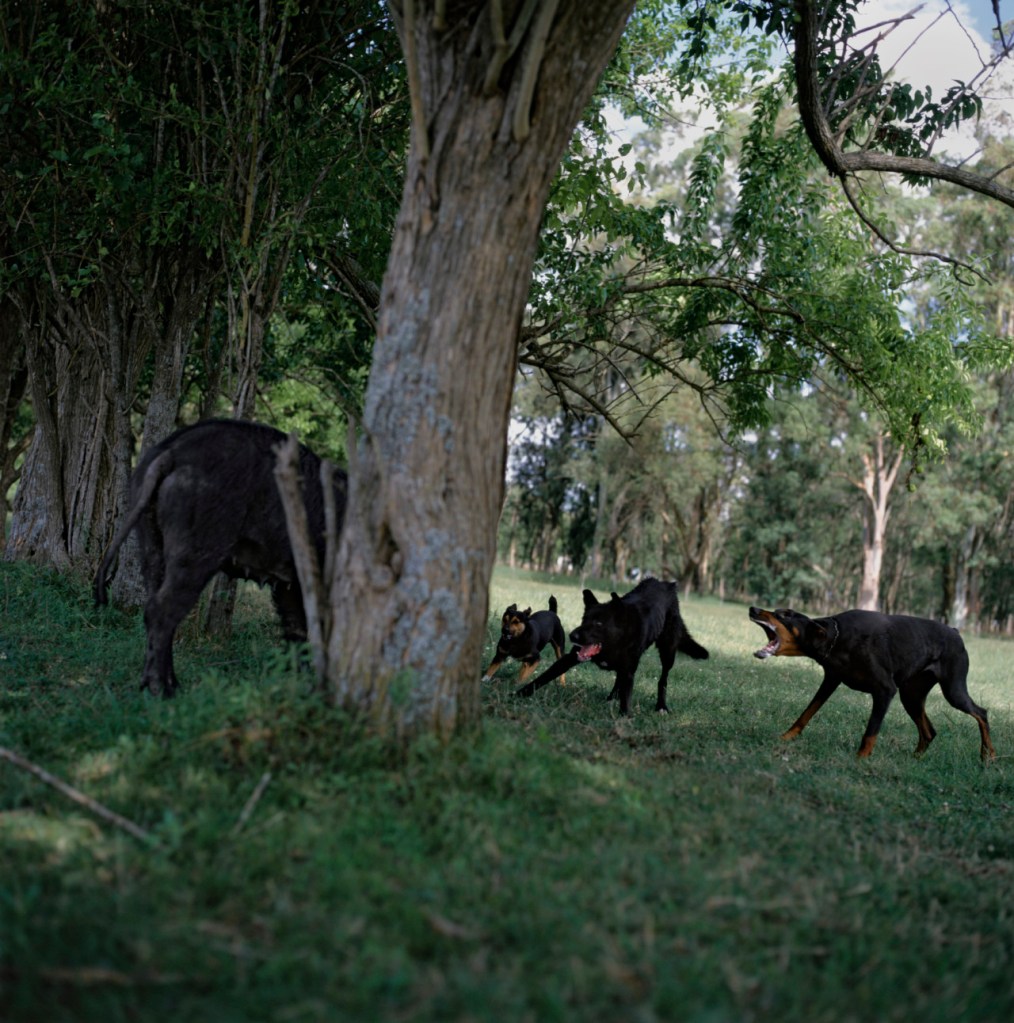
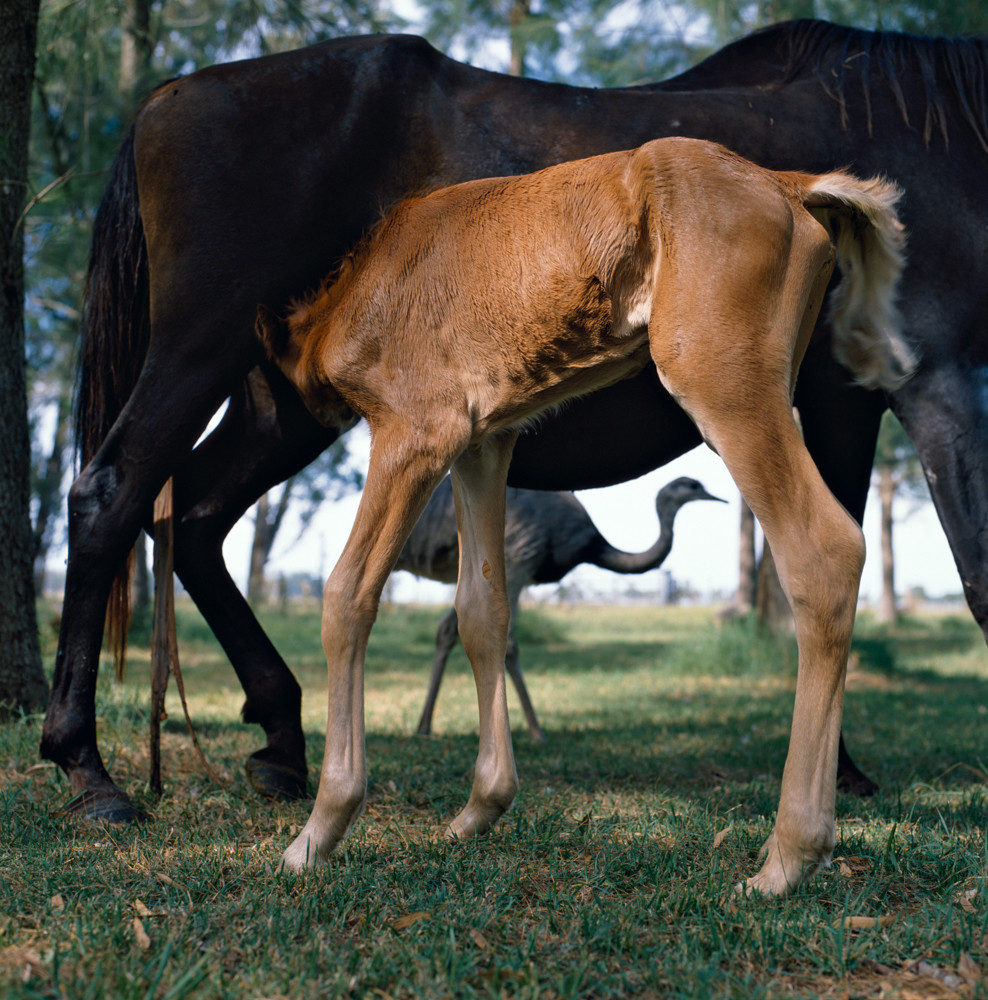
As mentioned, the framing is almost always at the animal’s eye level. There are portraits of the horse and the hen. Of the cow and the chick. The duck and the rabbit. A group of dogs barks, who knows why, at a disoriented pig. It is a choice that forces the viewer into an incredibly close gaze, dramatically reducing the distance from the subject. But this closeness, due to technical reasons, also produces a notable reduction in depth of field, leaving only the subject—or even just part of it—in focus, enhancing the sense of intimacy. Many of these shots have all the characteristics of classical portraiture, with the sole difference that the subjects are not human beings. “I don’t believe that showing an animal’s character means humanizing it. Even because, even in portraits of people, you end up projecting onto the subject something that might have nothing to do with that person. My animals are neither metaphors nor symbols. They are what they are.”

And yet, even though it is first and foremost a documentary work, it is impossible not to perceive in the succession of these photographs a poetic impulse that touches on ultimate things: life, death, joy, suffering, the sense of fate. In itself, the style in which they are made would suffice to render them verses of a poem about the intertwining of tenderness and violence that takes place on an Argentine farm. But to this is added the biblical connotation given by the title of the work, which refers to the sixth day of creation, when God created animals and man, and gave the latter dominion over all other creatures. A choice that seems to lift the images out of a historical and specific dimension and elevate them to a mythical and universal one.

At the same time as On The Sixth Day, Sanguinetti explains, the work with Guille and Belinda began—two cousins roaming around the farm while the artist was focused on animal portraits. From time to time, the two girls—nine years old at the beginning—enter the frames, appearing in the background of the animals’ life. Then, gradually, the photographer begins to observe and interact with them, in a dialogue that becomes first complicity, then friendship. The first book dedicated to them has a rather descriptive title: The Adventures of Guille and Belinda and The Enigmatic Meaning of Their Dreams. The girls are first photographed in everyday rural gestures, then in dress-up games that become a series of mise-en-scènes of nativity scenes, angelic images, jealousy dramas, jokes about future motherhood. In one shot, Guille and Belinda appear emerging from the waters of a stream like a pair of Ophelias in brightly colored clothes. At times these are dream-dreams or sacred representations, while at others they appear as prophetic visions.

“As the two girls grew up, I had to change my approach to them,” Sanguinetti explains today: “At the beginning it was easy to play together, but then they experienced a sudden transition from childhood to adulthood, since Belinda married at sixteen and became a mother at seventeen.” This phase of transition is the theme of the next book, The Adventures of Guille and Belinda and The Illusion of an Everlasting Summer. The two young women are no longer innocent souls dancing in open fields, but appear inside a modest room, cooking, cleaning, and studying. Carefreeness and play are replaced by a more everyday poetry, where mischief gives way to hidden kisses, and the fake baby bumps made with pillows become real. Heartbreaking sunsets appear, dusks of a day that is the season of a life. “It’s been twenty-five years now that I’ve been seeing them, and every time I go back I just want to visit and spend time with them, like with friends, without the camera somehow coming between us again,” she recounts. “And yet, every time, I can’t help it—I always end up bringing home a few shots.”

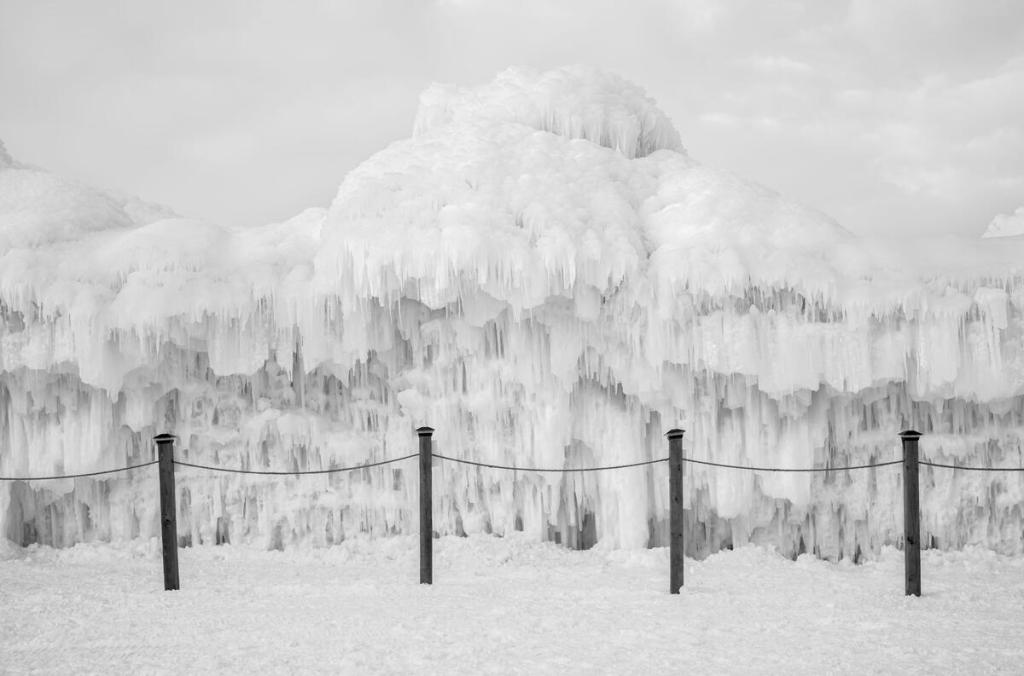
In her latest work, Some Say Ice (MACK, 2022), Alessandra Sanguinetti returns to the same themes—animals and children—but in a completely different context and with a style almost opposite to what we had come to expect from her. It is a collection of images in refined black and white, taken since 2014 in the small town of Black River Falls, Wisconsin. This is the same place featured in Wisconsin Death Trip, a book of photographs taken by Charles Van Schaick at the end of the nineteenth century, documenting the life and death of its inhabitants. Sanguinetti found a copy of that volume on the shelves of her home in Buenos Aires when she was still a child. Contemplating that series of faces—often photographed post-mortem—was the moment, the artist explains, when she first recognized the reality of her own mortality. In Some Say Ice, animals are depicted like sculptures. The faces of children, young people, and the elderly are austere. Icy. Winter dominates the landscape. The title of the book is a line borrowed from a Robert Frost poem: “Some say the world will end in fire, / Some say in ice.” “While I was working in Black River Falls, it felt like I was trying to solve a mystery or find the culprit of a crime,” Sanguinetti explains. “I was looking for clues to find a valid answer to something for which there can be no valid answers.” It was, the artist continues, a kind of exorcism to ward off the fear of death. It is likely here that the threads first woven in the Argentine countryside are tied together again—where the white fleece of the lambs was stained with red blood, and the dream of childhood faded into the arid truth of everyday life: “The reason I photograph—and perhaps the reason all of us do, whether we admit it or not—is that we don’t want to disappear. Every image, even the most banal selfie, is a kind of denial of death.”

Domani, 25 January 2024

Light, Silence, and the West: Robert Adams’s Summer Nights, Walking Returns

Robert Adams Summer Nights Walking Steidl 2023

by Luca Fiore

There is a poem by William Blake titled The Evening Star that reads:

Thou fair-haired angel of the evening,
Now, whilst the sun rests on the mountains, light
Thy bright torch of love; thy radiant crown
Put on, and smile upon our evening bed!
Smile on our loves, and while thou drawest
The blue curtains of the sky, scatter thy silver dew
On every flower that shuts its sweet eyes
In timely sleep. Let thy west wing sleep on
The lake; speak silence with thy glimmering eyes,
And wash the dusk with silver. Soon, full soon,
Dost thou withdraw; then the wolf rages wide,
And the lion glares through the dun forest.
The fleeces of our flocks are covered with
Thy sacred dew; protect them with thine influence.

These lines by the English poet open Summer Nights, Walking, perhaps the most well-known book by American photographer Robert Adams, recently republished by the German publisher Steidl, after the second edition by Aperture went out of print and became a collector’s item—and a cult object. As he often does with his books, Adams wrote a short introductory text for the image sequence. In this case, he writes:

“Since childhood we remember the beauty and peace of summer evenings and want to believe that what we saw then is timeless. That hope guided my selection of pictures for the first version of this book, Summer Nights, in 1985. More recently, however, when I looked again at the photographs I might have included but didn’t, it seemed that if I had chosen a wider variety, the result, though less harmonious, would be more convincing, closer to our actual experience of wonder, anxiety, and stillness. The prayer by William Blake that appeared at the beginning of the original edition remains, I believe, appropriate for this revised and expanded version, recognizing the splendor of Creation but also the reality of the wolf and the lion1.”

In Italy—as is often the case with great masters of photography, whether American or Italian—the name Robert Adams, born in 1937, is little known beyond a small circle of specialists. And yet many consider him the greatest living American photographer. Joshua Chuang, until recently at the helm of the Yale University Art Gallery and now Director of Photography at the global art powerhouse Gagosian, is the person who has worked most closely with the master over the past fifteen years. He tells Il Foglio:

“I don’t know if it makes sense to call him the greatest—it depends on what criteria you use—but what I can say is that I can’t think of any other American artist who has tackled the enigma of human existence and how to move through the world today with such precision.”

For Chuang, Adams’s lineage is that of Edward Hopper, Charles Burchfield, and John Sloan, “who portrayed life while recognizing both its beauty and its cruelty.”

To understand the intellectual trajectory of this giant of photography—who has also written some of the most profound reflections on the artistic experience as such, collected in Beauty in Photography (in Italian as La bellezza in fotografia, edited by Paolo Costantini for Bollati Boringhieri) and Along Some Rivers (Lungo i fiumi, Itaca/Ultreya, edited by Giovanni Chiaramonte)—it’s worth revisiting his biography.

Robert Adams was born 86 years ago in Orange, New Jersey, just a few dozen miles from New York City, into a devout Methodist family. In 1947, the Adams family moved to Madison, Wisconsin, and in 1952 to the outskirts of Denver, Colorado, in search of a better climate for treating young Robert’s asthma. The encounter with the landscape of the American West was initially destabilizing. “What he discovers is a very particular kind of beauty,” Chuang explains, “not the sublime sought by earlier photographers in the wilderness of national parks, but a fascination rooted in the embrace of solitude and silence.”

As a boy, Adams joined the Boy Scouts, and his nature-loving father took him hiking and rafting. “I remember how desolate [Colorado] seemed to me, coming from Wisconsin,” Adams said in a 1978 lecture in New York. “Even in spring, nothing seemed to be happening—maybe just a bit more wind. Only gradually did I learn to anticipate the arrival of doves from Mexico, the blooming of chicory… there were so many wonderful things happening.”

His first contact with photography came in 1955, when his sister Carolyn gave him the catalog of The Family of Man, the legendary exhibition curated by Edward Steichen for MoMA, which toured dozens of cities in the U.S. and Europe and also arrived at the Denver Art Museum.

Despite his interest in the visual arts, Adams enrolled in English literature, first at the University of Colorado at Boulder, then at the University of Redlands in California, where he earned his degree, and later pursued a doctorate at the University of Southern California. His time at Redlands—a university founded by American Baptist Churches—was ambivalent: it put him off pursuing a clerical career, but intellectually it was deeply stimulating. The turning point was his encounter with Professor William W. Main.

Chuang recounts: “He was a jazz pianist, always poking fun at pedantry. He quoted Nietzsche and the Bible with ease, and never minced words. He used to say: ‘Books should bite the reader.’”

During a seminar on 20th-century European literature, Adams studied A Portrait of the Artist as a Young Man and Ulysses by James Joyce. He focused on the character of Stephen Dedalus, who in Portrait undergoes a transformation from self-indulgence, through religiosity, to the pursuit of art. However, in Ulysses, Dedalus appears as a would-be poet whose creative potential remains unfulfilled. Adams argued that Dedalus fails as an artist because he cannot reconcile his love for beauty with the conviction that God is present everywhere, even in the mundane, in a “cry in the street.”

Furthermore, Adams saw Stephen’s failure as a warning against an aestheticist drift, which “demands the worship of beauty—a trait far from universal in the human world—and thereby excludes the worship of God, the great common denominator of existence.”

Another theme that fascinated Adams, according to Chuang, was that of Sophocles’ Oedipus. “For the young Adams, the Greek tragedian portrayed humanity as both aware and ignorant, free and bound by fate, innocent and guilty. He believed contemporary European playwrights had flattened this paradox, refusing to acknowledge the contradictory nature of humanity and thus diminishing it.”

A third key influence was the Protestant theologian Reinhold Niebuhr who, in his book The Nature and Destiny of Man, wrote:

“Christianity and Greek tragedy agree that guilt and creativity are inextricably linked. Sin indeed accompanies every creative act, though evil is not a part of creativity; it arises from the self-centeredness and selfishness with which man disrupts the harmony of being.”

Adams bought his first camera in 1963 and began photographing around Denver in his spare time, while teaching literature at Colorado College in Colorado Springs. He studied Camera Work and Aperture and learned photographic technique from documentarian Myron Wood. Three years later, he purchased a print of Moonrise, Hernandez, New Mexico, 1944 by Ansel Adams.

Chuang notes: “It’s an atypical image in the canon of the Californian master of the sublime. There’s not just a majestic landscape with snow-capped mountains, but a village on the plain, a mud-brick church, and a cemetery. There’s a profound relationship between nature and human existence—not heroic, but humble and everyday.”

That relationship between landscape and human presence would remain at the core of Robert Adams’s vision—a wound never quite healed. Upon returning home from university, he remarked:

“I came back to Colorado only to find that it had become like California… The places I had worked, hunted, climbed, the rivers—all were being destroyed. My desperate question was: how can one survive this?”

Wilderness was being threatened by reckless human development, a frenzy that struck him as a whirlwind of arrogance.

But in 1968, a turning point came that would show him a possible way out of this paralysis—moral before it was creative. How to photograph a landscape besieged by human activity? Was innocence lost forever?

The occasion was a trip to Europe, visiting his wife Kristin’s family in Sweden. In Germany, Adams visited several churches designed by architect Rudolf Schwarz, a friend of theologian Romano Guardini. One church, St. Christophorus in Cologne, stood out. He would later say it showed how a simple, austere space could “contain the uncontainable.”

According to Chuang, Adams found in Schwarz’s architecture a viable model for reconciling the longing for beauty with the contradictory nature of human experience. These were buildings born, in some sense, out of the tragedy of WWII bombings, and yet they managed to convey peace.

“Back home,” Chuang says, “he resolved to follow that path: each of his frames would become a container for the uncontainable. His photographs are like haiku, where every detail is necessary. Form and content coincide. That’s what sets him apart from contemporaries like William Eggleston or Stephen Shore, where style often overtakes content, rendering it almost irrelevant.”

According to Giovanni Chiaramonte, Adams’s photography “reveals a vision based on formal analysis, poetically close to Paul Cézanne, and far removed from rhetorical flourish in composition or print tonality. He favors the quiet clarity of midtones over the dramatic contrast of whites and deep blacks characteristic of earlier masters like Ansel Adams, Edward Weston, or Minor White.”

John Szarkowski, legendary MoMA photography curator who gave Adams a major show in 1979, wrote:

“His pictures are so civil, balanced, and rigorous—so averse to hyperbole, theatrical gesture, moral imposition, and expressive effect—that some viewers might find them dull… Others, for whom the noisy excesses of conventional rhetoric have lost their power, may find in these images enrichment, surprise, instruction, clarification, stimulus—and perhaps hope.”

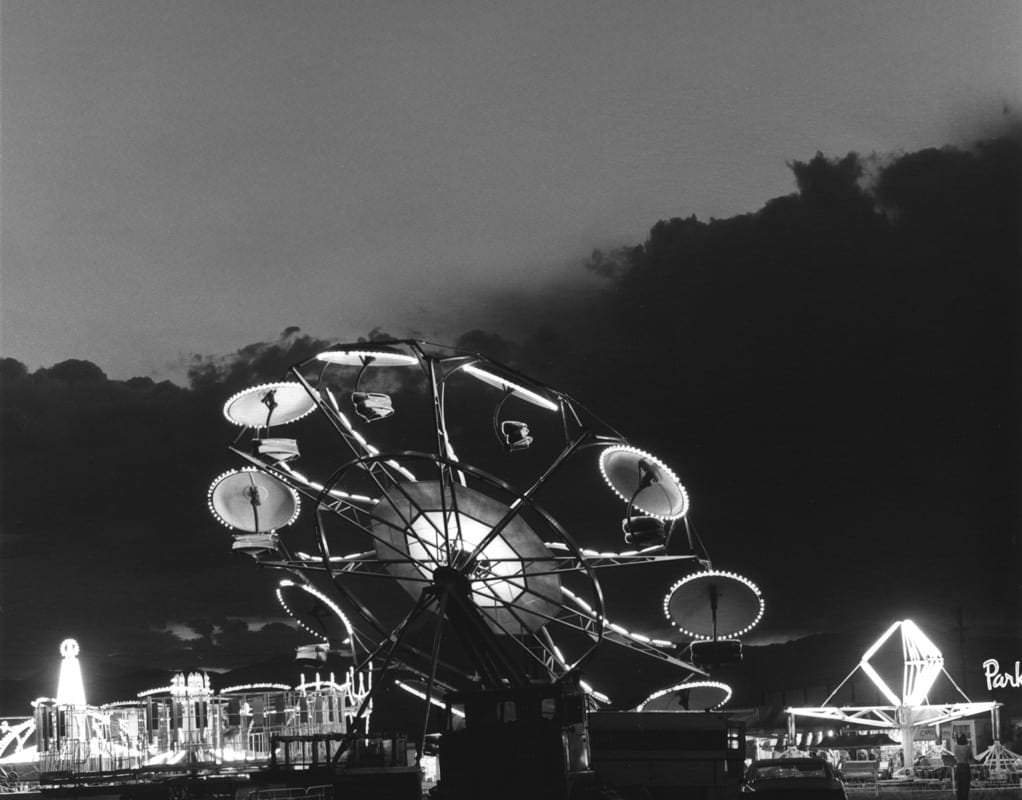
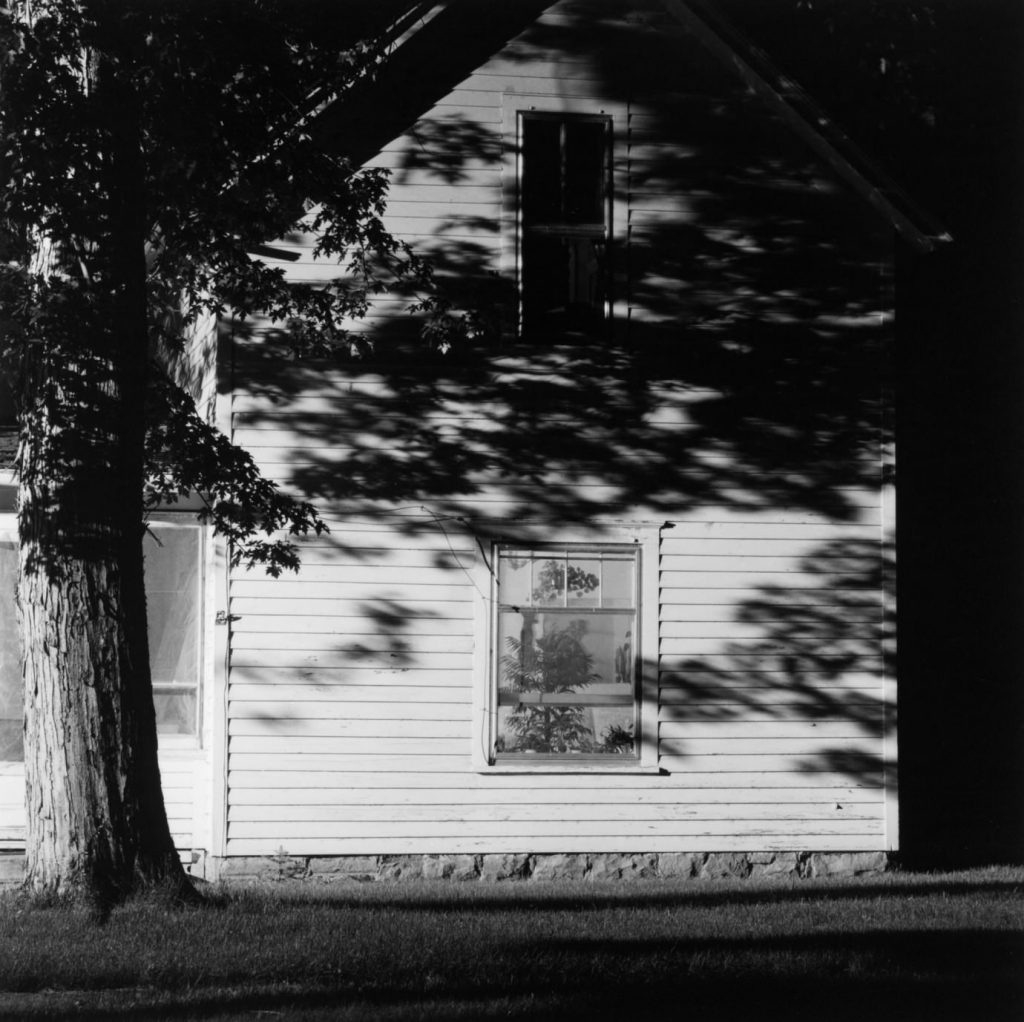
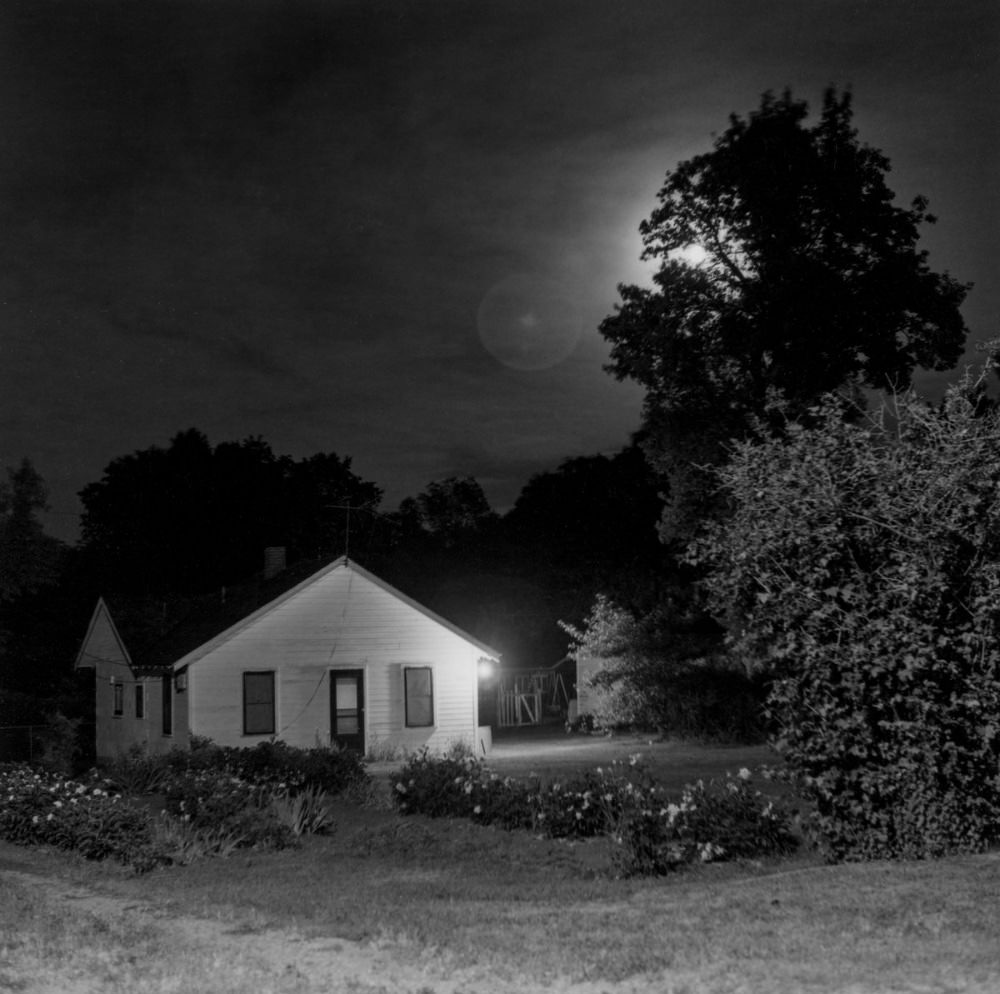
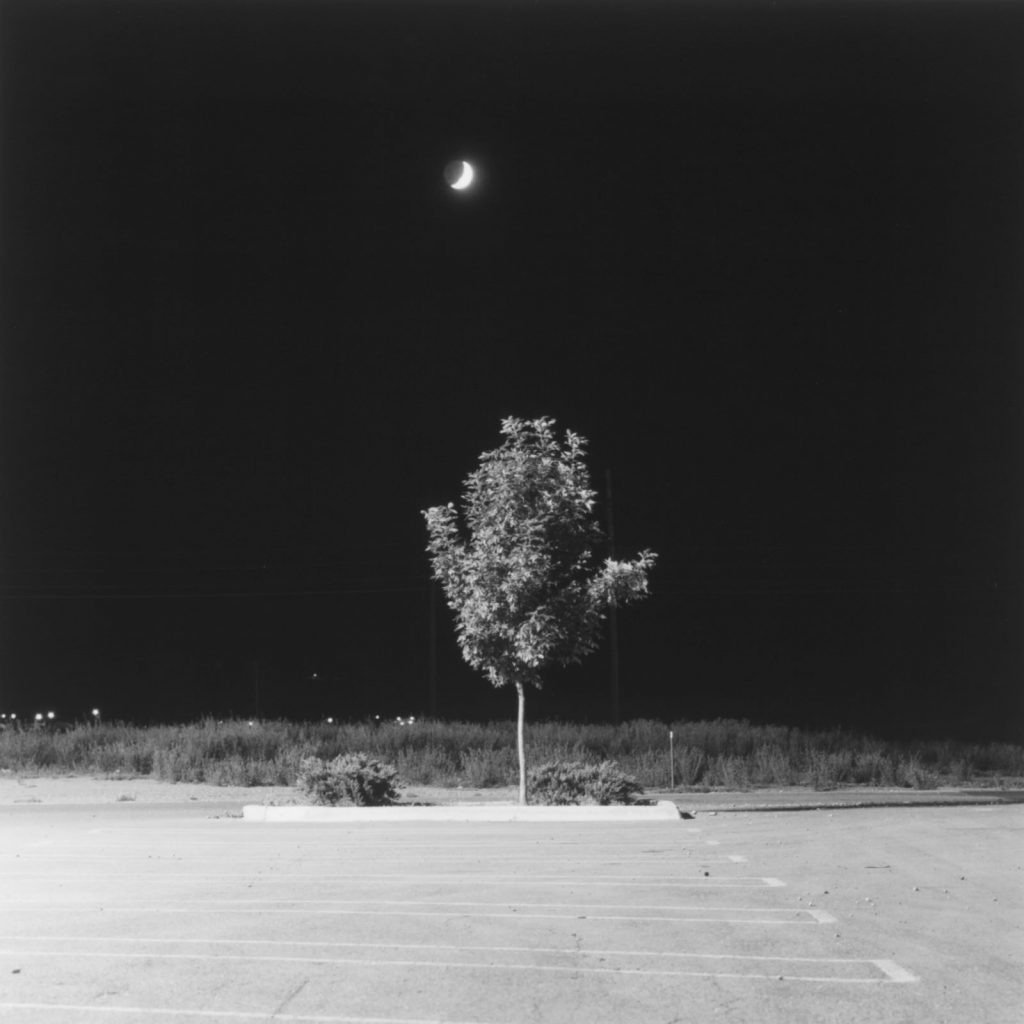
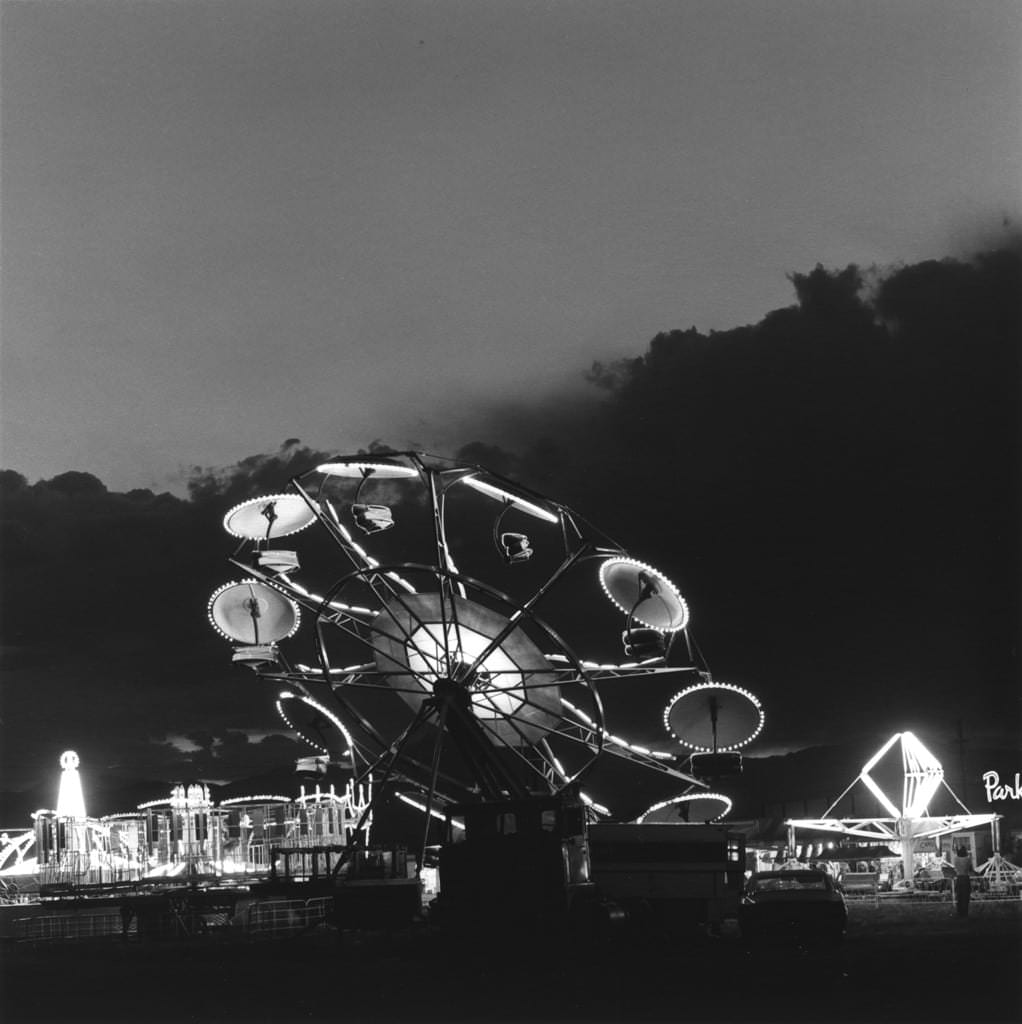
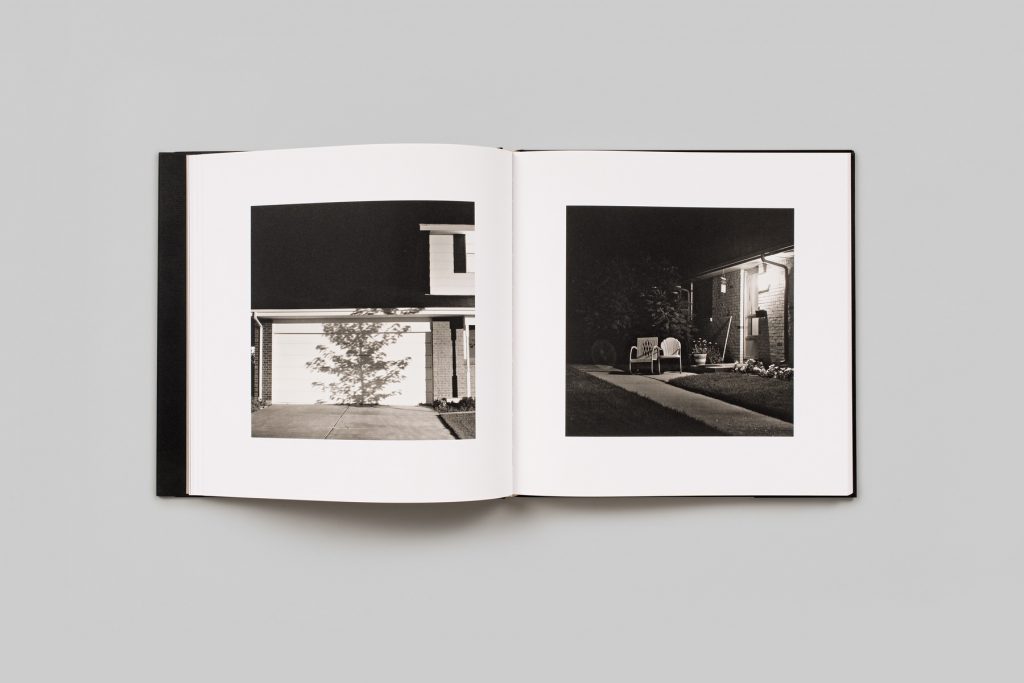
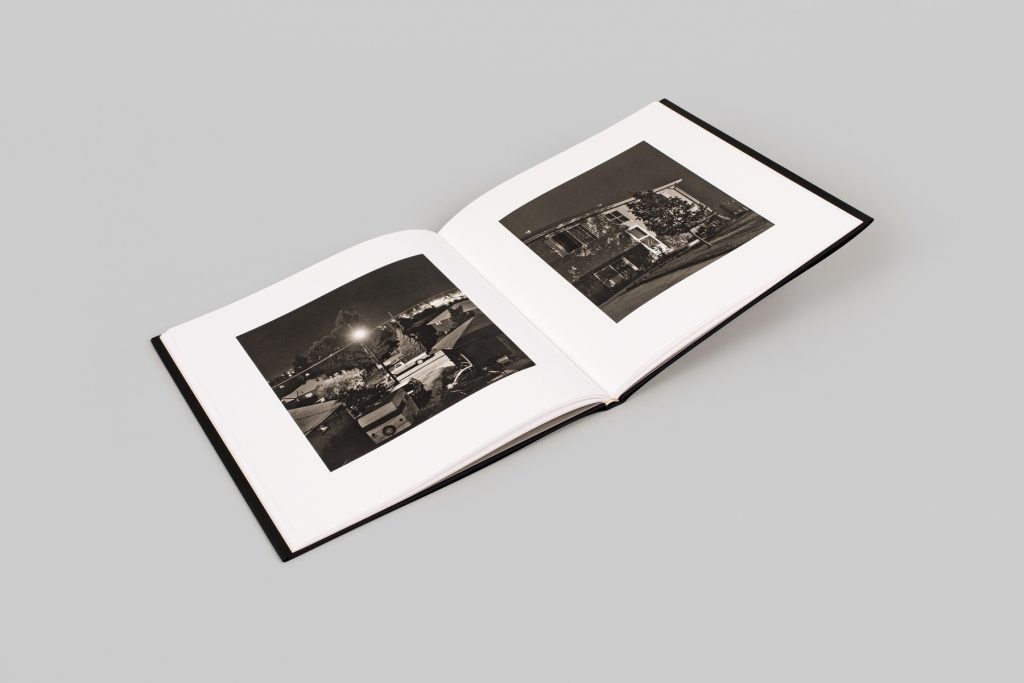
Summer Nights, Walking is perhaps the fullest expression of this vision. Made between 1976 and 1982 around his home in Longmont, Colorado, the book shows nighttime scenes of empty streets, country paths, woodland edges. Clouds still lit by the sun over a landscape already in darkness. Tree shadows cast on white suburban homes. A carousel, like a spaceship ready to launch.

He shows us what most of us take for granted but rarely notice: the few zones of the world visible at night are outlined by a combination of lingering sunlight (often reflected moonlight) and artificial lighting (streetlamps, shop signs, car headlights). Photography is perfectly capable of rendering these odd conditions—but until Adams, no one had bothered to do it with such finesse.

Luigi Ghirri once wrote:

“Adams searches more in the light than in the landscape for the narrative thread; and the nighttime sequence is more a study of light than a view of the world at night. His Summer Nights series seems to recall the darkness toward which we are headed, an end-of-the-century atmosphere accentuated by his black-and-white tonality—a poetic attempt to still see something.”

Ultimately, if light itself is the true subject of all of Adams’s photography, it’s a point he makes in his most famous essay, Beauty in Photography:

“William Carlos Williams said that poets write for a single reason—to give witness to splendor (a word used also by Thomas Aquinas to define beauty). It’s a good word for photographers, because it relates to light: a light of inescapable intensity. The form that art seeks is of such radiance that we cannot look at it directly. We are therefore forced to glimpse it in the broken light it casts on our ordinary objects. Art can never fully define the light.”

In recent years, Adams—now retired and nearly silent, like a photographic Cormac McCarthy—has become a point of reference for many younger photographers who write to him seeking advice or feedback.

As long as his eyesight allowed, he replied by hand, via regular mail. One such photographer is Gregory Halpern, now a leading voice in American photography, who sent Adams the draft of Zzyzx (later a major success). He received this reply:

“Beauty, and its implication of promise, is the metaphor that gives art its value. It helps us discover some of our better intuitions—those that encourage care.”

Robert Adams’s images, with their mute eloquence, come from a deeply unsettled mind—capable of outrage (especially aesthetic, but not only) and of profound emotion at the sight of, say, a power line lit by moonlight.

His is an intelligent sensitivity that has never accepted reducing what we see to only what is visible. When asked by William McEwan what he was trying to accomplish in his life as a photographer, Adams replied:

“To learn not to complain, I think. Robert Frost once said that the best accomplishment in life is learning to be kind—something I feel very close to, and very difficult. I’m like a woman who takes her child to the beach and watches a wave carry him off. She promises God that if the child is returned, she’ll never ask for anything again. The next wave brings him back safely. She runs to embrace him, then realizes the child has lost his hat. ‘The hat, Lord,’ she asks. ‘What happened to the hat?’”

Il Foglio, 26 August 2023

Note: 1: This is a translation produced using AI, and the quotations are not literal, but translations from the Italian translation.

Robert Adams Summer Nights Walking Steidl 2023

Robert Adams Summer Nights Walking Steidl 2023

Robert Adams Summer Nights Walking Steidl 2023

Robert Adams Summer Nights Walking Steidl 2023

Robert Adams Summer Nights Walking Steidl 2023

Robert Adams Summer Nights Walking Steidl 2023

Robert Adams Summer Nights Walking Steidl 2023

Robert Adams Summer Nights Walking Steidl 2023

Robert Adams Summer Nights Walking Steidl 2023

Robert Adams Summer Nights Walking Steidl 2023

Robert Adams Summer Nights Walking Steidl 2023

Robert Adams Summer Nights Walking Steidl 2023

Robert Adams Summer Nights Walking Steidl 2023

Kristine Potter – An Interview

kristine potter dark waters

by Luca Fiore

Kristine Potter is one of the new voices in American photography. Her dense and elegant black and white images, while respecting the formal canons of tradition, are windows that open up glimpses into certain stereotypes on which, until today, US society has perched.

Born in Dallas in 1977 into a military family (her father and grandfather were both army officers), she grew up in Warner Robins, a small town in central Georgia.

His mentor was Mark Steinmetz, a silent and highly refined photographer, a great heir to the American black and white tradition, author of South Trilogy, three volumes considered a milestone in photography publishing of the last twenty years.

Potter’s first major work is entitled The Gray Line, dedicated to the cadets of West Point, America’s most prestigious military academy. It is a reflection on the construction of masculinity and its connection to an idea of institutionalised management of violence.

His cadets, whether in full uniform or in battle dress, are ordinary young men, with pensive gazes, over whose fate lies the shadow of death, suffered and procured.

“After that project,” explains the artist, “I found myself helping to order the family archive, which contained some photos inherited from my great-grandparents. They called themselves ‘sharpshooters’, they were actually Wild West artists. They toured with Buffalo Bill: it was the first form of entertainment related to that imagery. There I thought that the cowboy was another archetype of American masculinity that I could work on’.

Thus was born the idea for the project that was to become Manifest, the book published by the Californian publisher TBW Books, which owes its title to the expression ‘Manifest Destiny’, summarising the 19th century colonists’ belief that the conquest of all North American territory was God’s will.

“Through fortuitous circumstances I ended up on the western slope of Colorado, a remote and sparsely populated area. I stayed, at first, a whole summer. I wanted to photograph people, but there were so few people around that at first I spent entire days without meeting anyone. So I also started to take landscape images, which I had never done before”.

Potter knows that, in the United States, the history of landscape photography was made in the West. And, in the early days, the images of authors such as Carleton Watkins had fed the rhetoric of ‘Manifest Destiny’, which had led to the conquest of those regions at the expense of the natives. During the five years she returned west, Potter continued to make portraits, particularly of people who had moved there for an idea, as if to revisit the ancient dream of the settlers.

“I started to ask myself what meaning that rhetoric can have today and whether all the violence it produced really realised that dream. And the answer is no. They are such inhospitable places that you can barely live there’.

The image of the men photographed does not correspond to the stereotype of the cowboy in John Wayne’s films: ‘Some were really ranchers, others were farmers, others wandered around looking for odd jobs. But what is certain is that none of them felt like heroes’. From the point of view of rendering nature, the photographer distances herself from the tradition that had celebrated the miraculous glory of the vast spaces of the West. The horizon is almost never there: rocks dominate, the land is barren and the vegetation is all a tangle of shrubs.

The strange sequence of landscapes and portraits, some spontaneous others posed, was noticed by the great British photographer Paul Graham, who decided to include Kristine Potter’s work in the 2021 exhibition at the International Center of Photography in New York, entitled ‘But Still, It Turns’. The exhibition brings together a number of authors representing so-called ‘post-documentary photography’. That practice, that is to say, which uses documentary tools and style (the one that descends from Walker Evans) without the concern of returning a faithful or objective image of what they record, but with the ambition of saying more than what is seen in their images. A mix of poetry and document. Invention and facts. A genre that could perhaps be compared to non-fiction in literature: that which is done by writing about reality, but whose result goes beyond mere reportage.

Potter’s latest project, Dark Waters, also belongs to this genre of photography. First presented at the Swiss Image Vevey festival, where it won the jury prize, then at Micamera in Milan, it has now taken the final form of a book, published by Aperture, the most authoritative photography publisher in the United States.

“I grew up in the south, in Georgia. Not far from the town where I lived, there is a creek called Murder Creek. I must have walked past it hundreds of times without paying attention. But once I asked myself: what the hell kind of name is that? Why is it called that? Then I wondered if there were other places with the same name. And, with map in hand, I realised that not only were there others, but the US is littered with terrifying names: Dead Man River, Spring Rape, Bloody Fork, Blood Creek…”.

This observation is intertwined with the observation of the existence of the all-American tradition of murder ballads: songs that recount bloody episodes, in which, almost always, it is a man who kills a woman and abandons her in a river or lake. These songs are so deeply rooted in American folk that some of them have become true standards: Pretty Polly was recorded by Bob Dylan, Knoxville Girl by Nick Cave, Down in the Willow Garden by The Chieftains and Bon Iver.

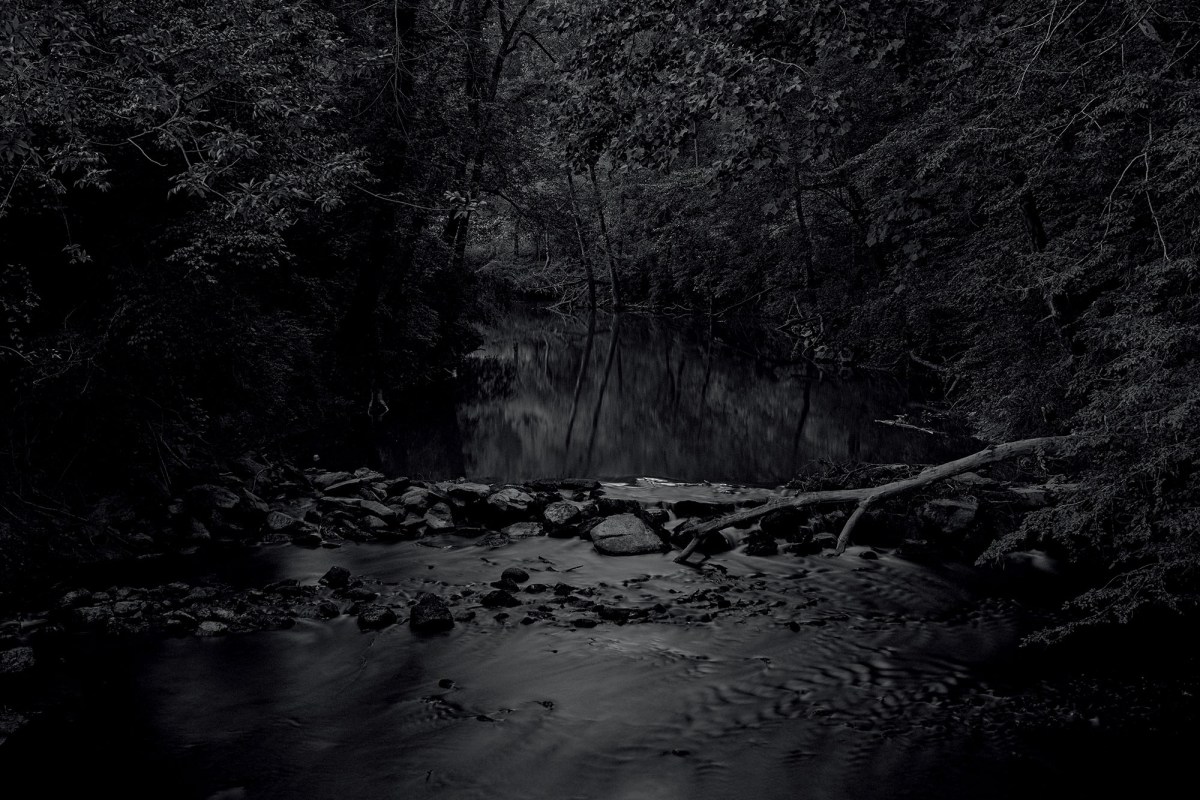
Potter, for instance, went to the historical sites of the death and burial of Naomi Wise, the young orphan girl protagonist of the song Omie Wise, who was killed in the waters of a North Carolina creek in 1808. In this work, too, the artist alternates between landscapes and portraits. The men are shot outdoors, while the women are immortalised in the studio, against a black background, almost impersonating the heroines of murder ballads. Reality and fiction interact with the lyrics of the songs to create a deliberately disturbing tale. Violence and death are only evoked, yet they form the searing core of the work.

“I have wondered if the history of violence, with which the southern United States in particular is steeped, also lives in the landscape. Or at least it affects us when we move. I am interested in the fact that all the stories we tell about ourselves, I am also thinking of the southern gothic tradition – William Faulkner, Carson McCullers or Flannery O’Connor – are often based on violence. And, for women in particular, this lives in our psyche: if I cross a car park at night to get my car, I clutch my keys in my hand like a weapon, because I know something could happen to me’.

If for the landscape of the west, the artist had tried to render the sense of disorientation of the ‘modern cowboys’, the challenge in the south is very different. “In Colorado, there is so much light that even the shadows are bright. In Georgia, however, it is the exact opposite. Everything is dark, vital, full of energy. The vegetation is thick. And the darkness is what interested me. I wanted to render the echo I perceived. Which is perhaps the echo of the much violence our land has witnessed’.

The technical choices are also dictated by this research: whereas for Manifest, Potter had used a film view camera, for Dark Waters she chose the digital medium format, which allows, thanks to the greater sensitivity of the digital sensor, to capture the depth of field with shorter exposures, in order to better fix the details of the dimly lit scene.

But the search for detail is functional to the psychological rendering of the scene. The objective is not so much the documentation of real places or situations – the artist says that 80 per cent of the portraits are staged – nor even the literal representation of the stories of the murder ballads.

“For me, those songs are examples of much of our contemporary cultural storytelling – meaning entertainment that revolves around the diminishment of women. My work often employs specific examples but my hope is that they are understood to represent circumstances more generally. The more ambiguous imagery in the work is my way of asking questions about what is reality and what is in my mind – and by extension – what is informed by this long history of storytelling.”

Domani, 3 August 2023

Olivo Barbieri – An Interview

Olivo Barbieri Il disegno dell'acqua

di Luca Fiore

Olivo Barbieri (Carpi, 1954) belongs to that generation of artists who revolutionised the language of Italian photography in the 1970s and 1980s. Together with fellow travellers such as Ghirri, Guidi, Basilico, Chiaramonte, Cresci and Castella, he started to propose a type of images that distanced themselves from the stereotypical views of the Alinari brothers, the amateurism of amateur circles and the use of black and white. This group of photographers was proposing a new look at the landscape (no more postcards), felt part of the contemporary art world and, often and willingly, produced images in colour (until then considered a technique alien to cultured photography). This is a story that for simplicity’s sake, and perhaps also a little out of laziness, we tend to make coincide with the realisation of the exhibition and book ‘Viaggio in Italia’. The year was 1984. Those artists, over time, became the masters of Italian photography but, if they could be considered a homogeneous group then, today, in perspective, what has followed over the years appears, in terms of motivations and results, much less homogeneous. Among them, Barbieri seemed to be the one who most distanced himself from the alleged dogmas of that season. Yet, from his point of view, it was not a betrayal: ‘Even at the beginning of my career I wanted to achieve what I do now. It’s just that only today do I have the right technical tools. My reference points – apart from William Eggleston – were Man Ray and Andy Warhol, and I never believed in the mystique of American straight photography, according to which photographs are a factual document of reality’. But to understand what he means, we need to go in order.

Barbieri held his first exhibition in 1978 at the Galleria Civica in Modena. He exhibited a series of colour images taken in an abandoned pinball factory. These are mainly close-up photographs of the illustrations with which the games were decorated. Pin-ups, superheroes, science fiction scenes, Indians and cowboys… These are images of images. Fragments of a pop imaginary. Something between Walker Evans and Mimmo Rotella. At the same time, the artist from Carpi travels the territory around his home, photographing the urban landscape of the province. Bars, shops, small squares, young and old people. But Barbieri also has another predilection: nocturnes. “I had in mind certain scenes from ‘Apocalypse Now’ and the urban visions of ‘Blade Runner’. In photography, the city at night had already been depicted, even by greats like Brassaï, but hardly anyone had done it using colour,” the artist explains. They are shot with very long exposures, fixing the camera on the tripod and overexposing the brightest areas, which are almost burnt out in print. Unexpected colour tones, produced by different qualities of artificial light, are imprinted on the film. Skies of an unreal purple. Acid blues and greens. The white and pink streaks of car headlights. The movement of the moon and stars piercing the dark sky. The beam of light rising from the oculus of the Pantheon piercing the sky of Rome.

Even when Barbieri landed in China for the first time in 1989, with the curiosity to get to know the shape of the cities in that ‘new world’, night scenes remained one of his great interests. But it is above all the possibility of comparing similar and distant realities that moves him. “The great thing about photography is that it allows you to see distant realities side by side. You can put five photos of cities on different continents on the same table to see the differences. Images are fundamental for comparing thoughts. Wittgenstein himself was obsessed with them. And Aby Warburg does exactly that: he associates images and compares them to try to understand’. In his books, he often juxtaposes photos of the same subject taken by day and by night. Or he surprises with similar forms on distant continents: a bridge on the Navigli in Milan and one in the Chinese province of Hunan; the Tower of Pisa and a building in Osaka, Japan.

But it is at the turn of the millennium that Barbieri begins to pursue increasingly experimental paths. The first technique he embraces is that of selective focus. That is, he began to photograph by focusing on only part of the image, regardless of how far the subject was from the lens. It is a technique that exploits the technical features of the view camera, the machine used in architectural photography, which is gives the possibility of changing the position of the photographic plate with respect to the lens. “In itself it is a technical error, but I have exploited it because it allows me to indicate which way the image should be read and, therefore, suggest an interpretation”. Among the most successful examples is the pair of photographs taken of Caravaggio’s Incredulity of St Thomas. The framing is the same, the distance of the lens from the work is also the same, but in the first one only the saint’s wrinkled forehead is in focus, in the second one only the finger entering Christ’s wound is sharp. “In the first shot you focus on thought and doubt, in the second on the verification of that doubt,” Barbieri explains. It is a language that the artist begins to use to photograph landscapes, buildings, urban contexts. “The human gaze is always in focus but, psychologically, we focus on this or that detail, leaving out what interests us less”. In this sense, for Barbieri, his is a type of photography that, while distancing itself from the supposedly faithful reproduction of the object, respects the common experience of vision. “A side effect of this type of photography is that cities appear as if they were models. They appear as avatars of themselves. So I thought it would be interesting to take aerial shots of urban centres’. Thus was born the ‘Site Specific_’ project, which, for a decade until 2013, led Barbieri to portray major cities around the world in this way.

Over the years, the idea of arbitrarily selecting the point of interest of the image has been declined in other ways, made possible by digital technology: partial desaturation, the out-of-frame of geometric subjects present in the frame, the filling of geometric shapes present in the frame, the coexistence of positive and negative in the same image. The results are alienating. Formalist abstractionism applied to photography. Even if the starting point is a shot of a real subject. Nothing is invented about the shapes we see in the image. He explains: ‘It is a way for me to ask new questions. What is this mountain? Why is this building there? Is it worth preserving?”

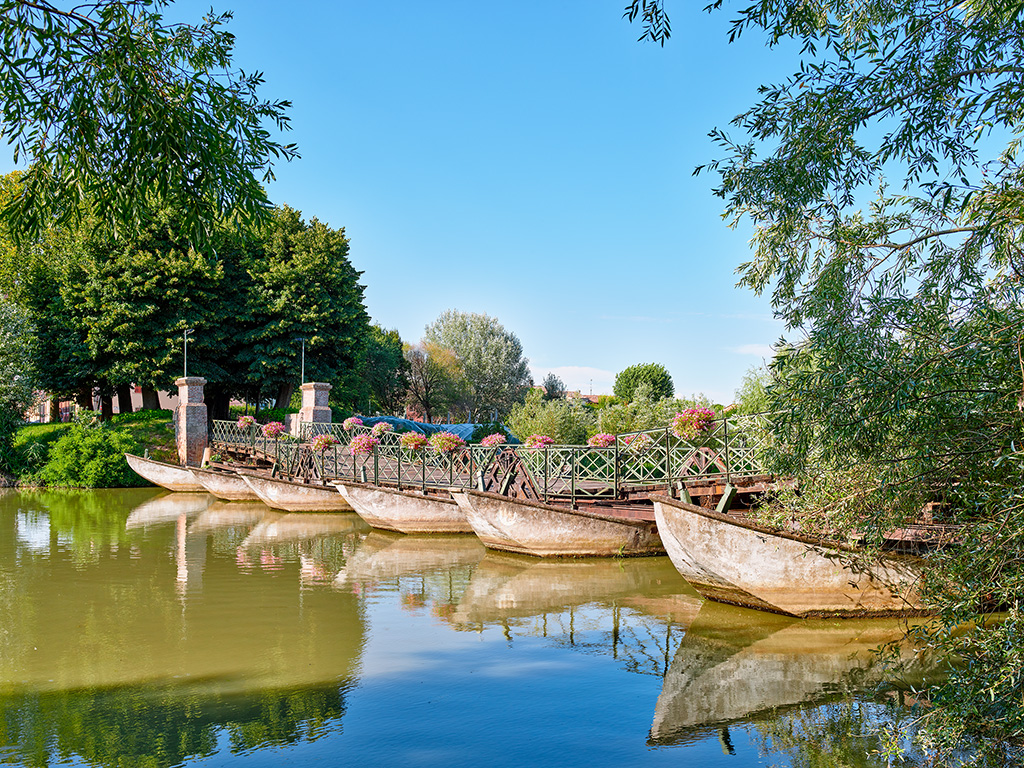
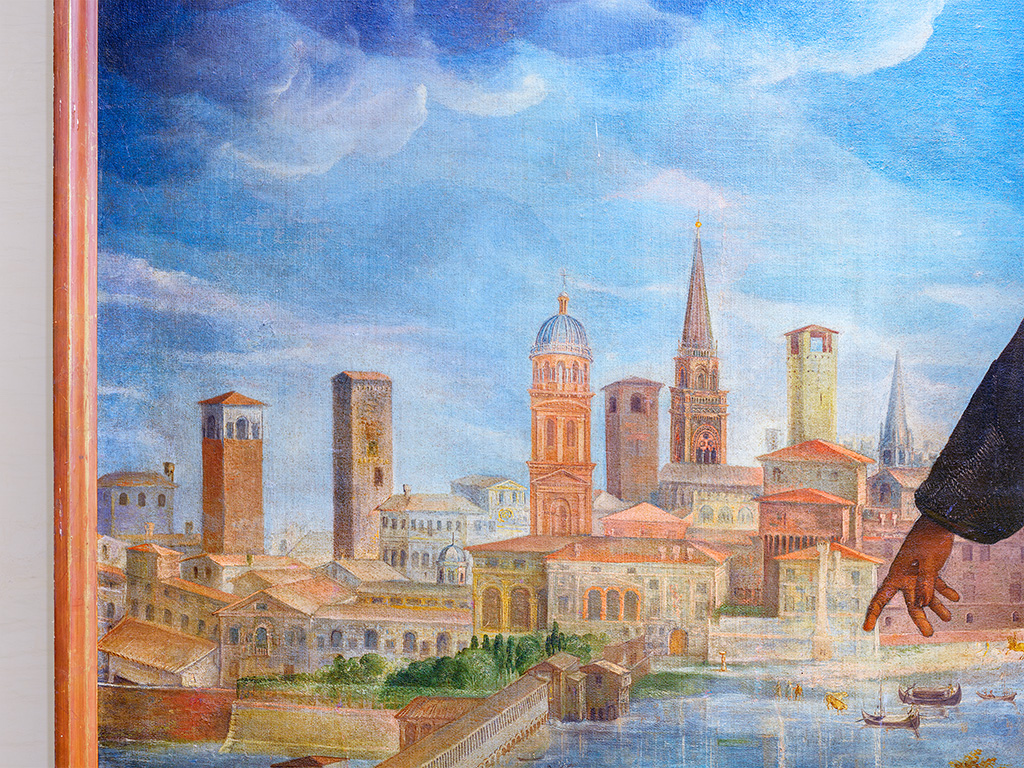
After the furore of these experiments, in recent years Barbieri has felt the need to return to the origins of his photography. He has done so with a book entitled ‘Il disegno dell’acqua’ (The Drawing of Water) produced for the Fondazione Banca Agricola Mantovana. It is a journey in which the artist tries to question the relationships between the natural landscape and the ‘artistic landscape’ of the city of Mantua, using water as a reacting element. The book alternates shots of interiors – the Bridal Chamber, the Hall of the Giants in Palazzo Tè, real or drawn labyrinths, inscriptions, frescoes – and shots of exteriors – the paper mill designed by Pier Luigi Nervi, the pontoon bridge in Torre dell’Oglio, the lotus flowers floating in the river water. Correspondences, associations, suggestions, references and memories of readings. Night and day photographs, artificial and natural illuminations. The artist reproposes his ‘workhorses’ and puts them at the service of new questions. Giulio Romano’s giants are grappling with an earthquake, but also with a flood. Water, then, is what holds paper production together (it takes a lot of it in the industrial process) and lotus flowers, which were introduced in these areas with the utopian intention that they would solve the problem of food shortages. The photographs, the stories they carry, the short circuits they generate if you approach them. But also what they produce in the thoughts and souls of those who look at them. Barbieri, who has dedicated his entire life to photography, still cannot explain why certain images strike us and others do not. What do we look for in them? Of one thing he is certain: memory is made of images and reality is made of images. We do not know without images.

Domani, 5 February 2023

Olivo Barbieri Il disegno dell'acqua

Gregory Crewdson. “Eveningside”

gregory crewdson eveningside

by Luca Fiore

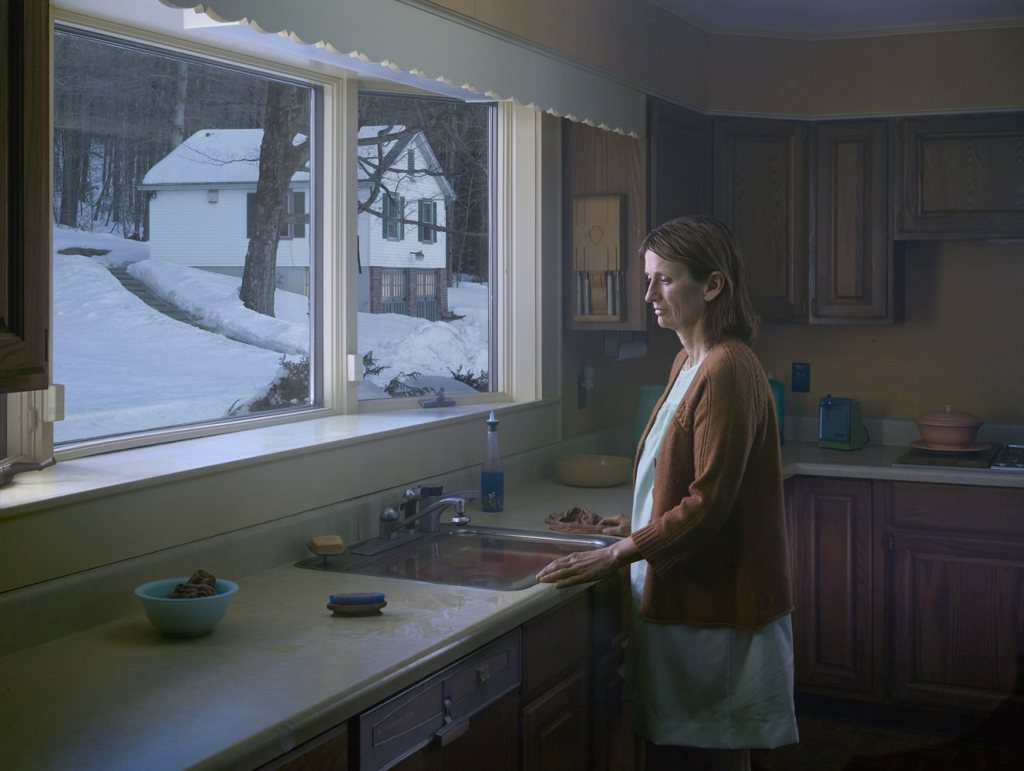
His photography has been compared to the painting of Edward Hopper, the cinema of David Lynch and the prose of Raymond Carver. A mixture of a sense of isolation, restlessness and hyperrealist surrealism. Film stars such as Julianne Moore, Philip Seymour Hoffman, Gwyneth Paltrow and Tilda Swinton have appeared in his images, constructed in every detail by a crew of dozens. Gregory Crewdson, born in Brooklyn sixty years ago, is one of the most acclaimed photographers of the moment: teaches at Yale University in the Master of Photography program and exhibit at Gagosian in New York and White Cube in London. These days, at the Turin branch of Gallerie d’Italia, he is presenting three series of works conceived between 2012 and 2022: “Cathedral of the Pines”, “An Eclipse of Moths” and “Eveningside”, the latter commissioned for the occasion by Intesa San Paolo and which gives the exhibition its title, and “Fireflies”, a cycle from 1996. It is a trilogy in which Crewdson’s style is exercised by being faithful to his interest in Middle Class… and vernacular American settings, but abandoning the surrealistic and grotesque excesses of the early days and concentrating on the places of a particular region: that of the rural towns of Massachusetts, where his childhood holiday cottage was located, where his companion was born and where he found a home in 2012 in a former Methodist church.

But in order to understand Crewdson’s complex world – in which references to painting, film and literature merge – we probably need to go back to Brooklyn, where his psychoanalyst father used to receive patients in the basement of his house, just below the living room. The photographer recounts that he would see people coming from the street and entering his father’s office, whereupon he would lie with his ear to the floor in an attempt to pick up the confidential dialogues. He recounted this in a dialogue with Cate Blanchett, saying: ‘I never really succeeded, but that gesture I think was decisive for me, it was trying to look into everyday life and look beneath the surface for a secret, something forbidden and trying to project an image in my head of what it could be’.

His first encounter with photography was at the MoMA where, at the age of ten, he visited the Diane Arbus retrospective. At sixteen, he was the frontman of the Speedies, a pop band whose first single was entitled “Let Me Take Your Photo”, later used for a Hewlett Packard advertisement. He studied photography in New York with Jan Groover and Laurie Simmons, two leading figures in the American scene of the 1960s and 1970s, and then specialised at Yale. His thesis work is a series of portraits of the residents of Lee, Massachusetts, where his parents took him on summer holidays.

The first series of images that attracted the attention of critics was ‘Twilight’, shot between 1998 and 2002, where he consolidated what was to become his trademark: large-format photographs with a realistic feel but staged with the help of a film crew, which helped him create sets, costumes and lighting effects. Saturated colours, extensive but skilful use of digital retouching. Indoor and outdoor situations are portrayed, with one or two characters, usually in a night-time setting, recalling atmospheres from the film ‘Close Encounters of the Third Kind’: beams of light raining down from above, trees growing in the living room smashing through the floor, women floating on a mirror in the middle of the living room, a giant beanstalk rising to the sky in the backyard, a myriad of colourful butterflies emerging from the shed in the garden. The protagonists watch in dismay or impassively. Enigma mingles with disquiet; a sense of threat coexists with surprise.

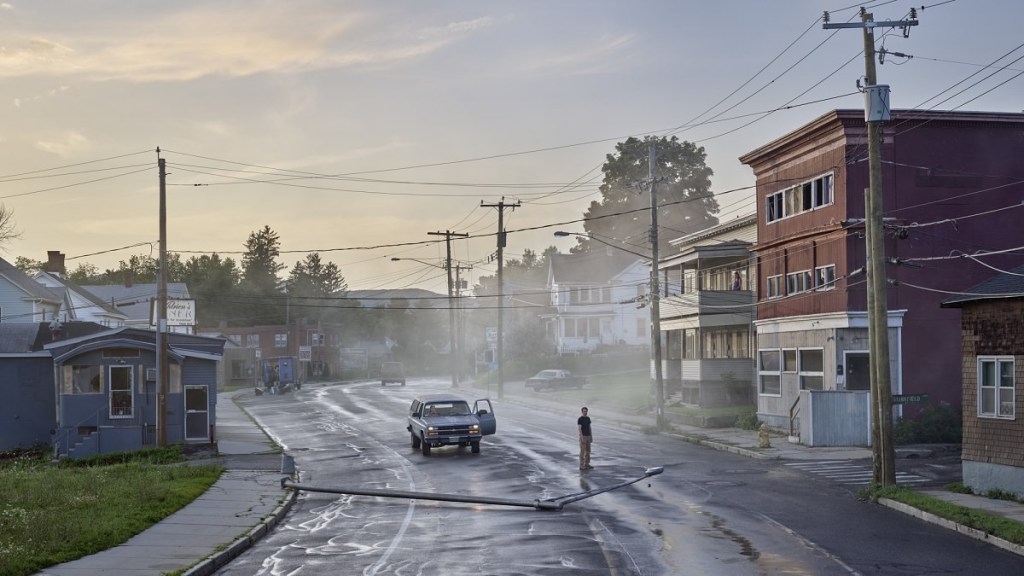
In the next series, ‘Beneath the Roses’ (2002-2008), Crewdson continues to construct images using the cinematographic method, but the situations become more intimate, less bizarre but full of narrative tension. Less Steven Spielberg, more Alfred Hitchcock: a pregnant woman stopped at a pedestrian zebra crossing at dawn, the only human presence in a deserted street; a man in a night rain in the middle of the street, while his car is pulled up to the curb with the door open and an abandoned briefcase not far away; a couple in the bedroom, he in his pyjamas sitting on the mattress, she standing in her underwear, her back to him.

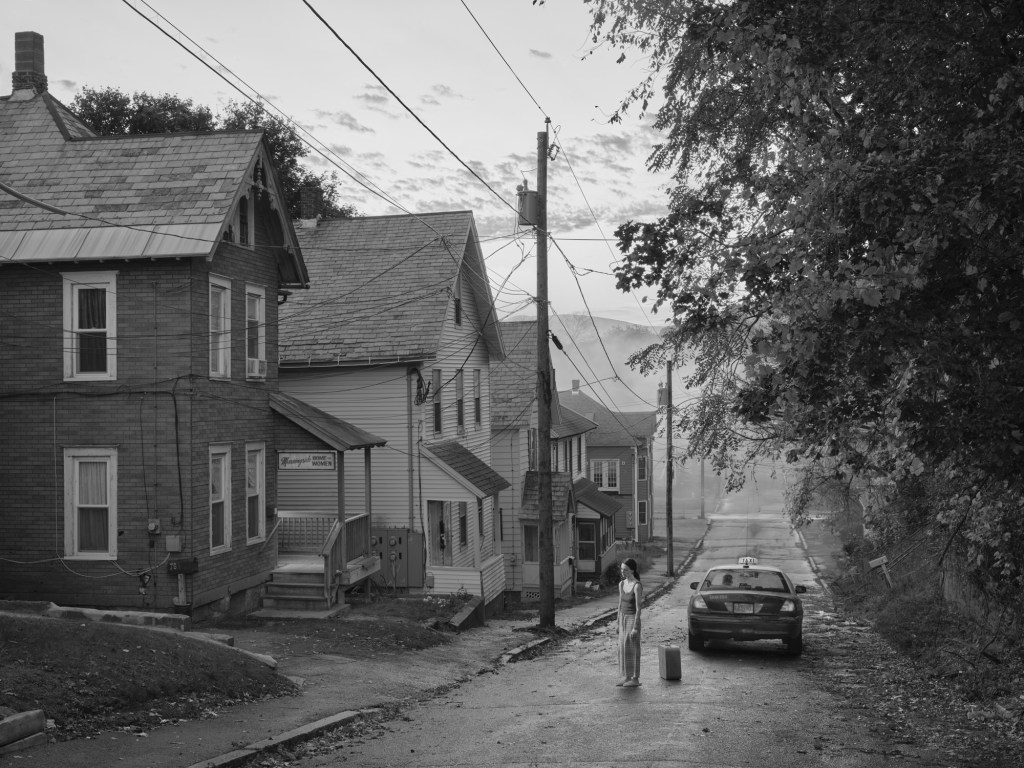
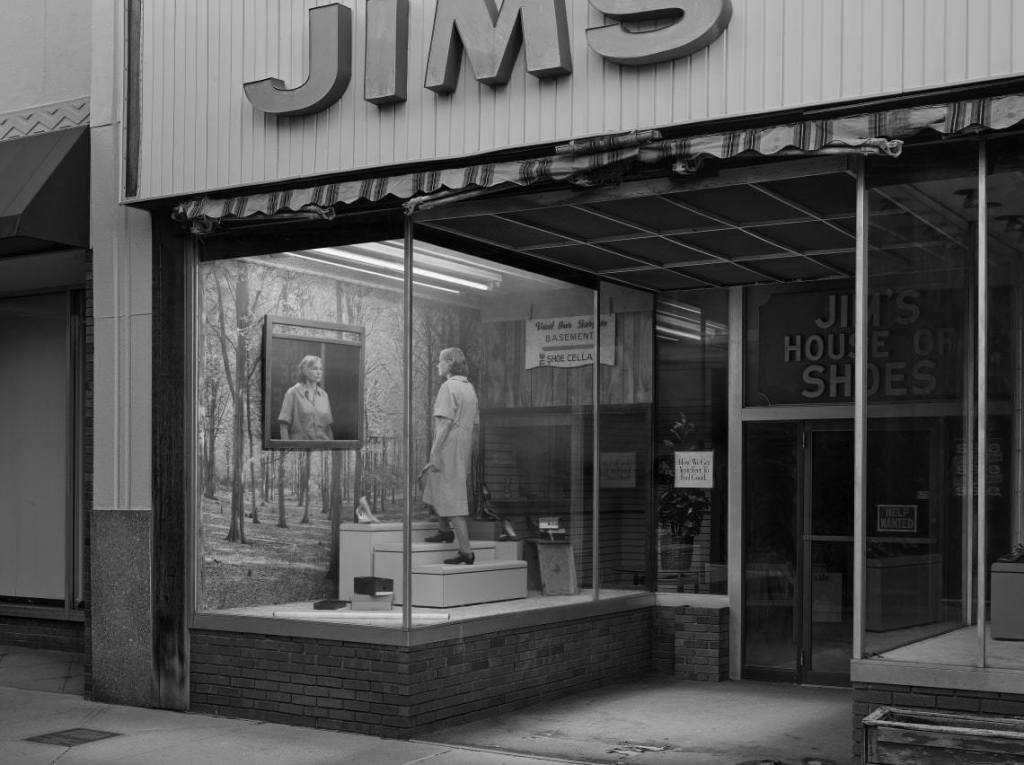
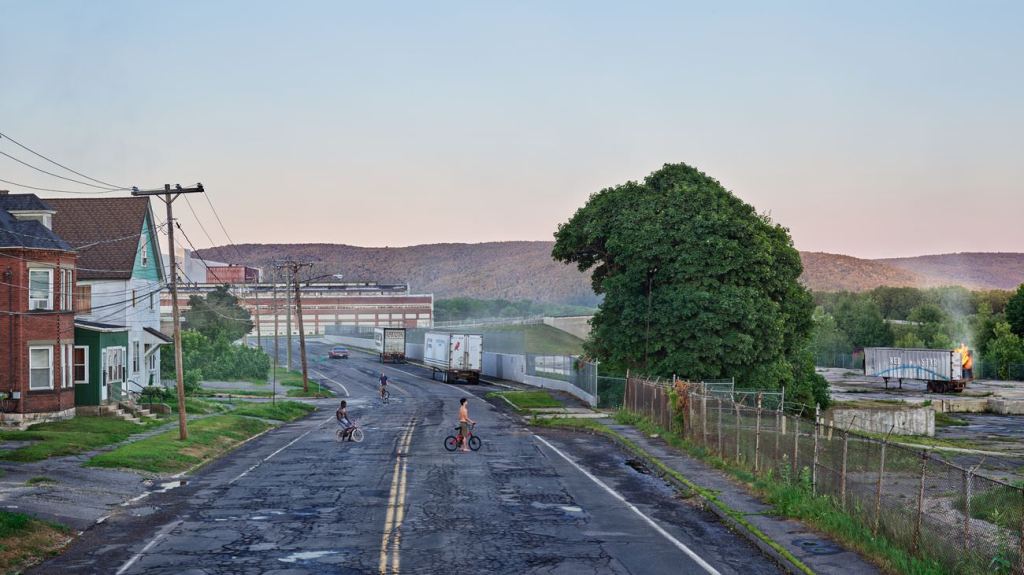
Crewdson’s style seems to evolve by small degrees. More than the technique, it is the theme addressed that makes the difference. ‘Cathedral of the Pines’, for example, is a reflection on the idea of shelter. What takes place here is the presence of the natural landscape: the forest, the river, the snow. ‘An Eclipse of Moths’ is made in Pittsfield, the place where Herman Melville wrote part of ‘Moby Dick’. Here, it reflects on contemporary America and its relationship with its history and cultural heritage. For years, the inhabitants of the town were almost all employees of General Electrics. Due to a scandal involving the use of a toxic substance, the plant was forced to close and Pittsfield slowly depopulated. The images of ‘Eveningside’, on the other hand, are in black and white, recalling the atmosphere of the film noirs of the 1940s and 1950s. It is a portrait, even more accomplished than the previous works, of an atomised and psychologically paralysed society, at an emotional standstill, where the drama is all within. Like a bomb ready to explode.

But beyond the themes dealt with, Crewdson’s work forces us to reflect on the photographic medium as such. It is true: since its invention, photography has been forcing us to think about its status. Over the years, and the evolution of technologies, the questions, instead of thinning out, have become more frequent. The first theme is that of ‘mise-en-scène’. The American artist, in this sense, is part of a tradition linked to artists such as Jeff Wall and Cindy Sherman, who since the 1970s have started to use photography no longer to record real-life scenes, but to represent invented situations. More in Wall’s wake than Sherman’s, Crewdson intends to stage instants of narratives that find their fascination in enigmatic fixity. What is striking about his work is the particular quality of realism. If one of the achievements of modernist photography had been to create works of art that did not attempt to emulate the results of painting, but took the medium’s own characteristics to the highest level (‘My intention is to make photographs that look more and more like photographs’, said Alfred Stieglitz), Crewdson returns to a kind of pictorialism, not only because he ‘invents’ what he represents, but also because – paradoxically – his images end up looking more like a hyperrealist painting than a photograph. The first characteristic of this ‘hyperrealist surrealism’ is the crowding of details that the artist disseminates in the image. They are clues to hypotheses for reading the image. Quotations (the street names) or winks (the car number plates bearing his initials) completely absent in a painter like Hopper, to whom Crewdson has often been compared. The other is the ‘all in focus’ which, in the confined space of a room, is technically impossible to achieve with the tools of photography and is the result of careful digital post-production. What we see is more like the way we see with our eyes (which is the result of an optical illusion produced by our brain) than the much more rudimentary way we see with the more sophisticated cameras. Another aspect that distances this type of image from photographic vision – and this time from that of our eyes – is the use of artificial lighting in scenes of natural light. Crewdson’s works are the result of combining many shots and the protagonists are portrayed separately, lighting them with cinematic spotlights. As a result, the light is often inconsistent with the context. The mastery of post-production is to ensure that the unnatural effect is at least plausible at first glance and not immediately recognisable. If one often hears people say of a painting “it looks like a photograph” and of a photograph “it looks like a painting”, here we are faced with a photograph that looks like a photograph, but it is a photograph in a very different sense from that intended by Stieglitz.

Another major theme posed by Crewdson’s work is the narrative capacity of photography. There are several names of literary greats to whom his images have been juxtaposed: Raymond Carver, John Cheever, Joyce Carol Oates, Alice Munro and others. It is curious that single shots, which capture an instant, are able to render the feeling of a ‘story’, i.e., a narrative unfolding over time. Garry Winogrand said: “Photographs are silent, they have no narrative capacity. You know what something looks like, but you don’t know what is happening. You don’t know whether the hat that is being held is about to be put on your head or has just been taken off’. This is, paradoxically, also what Crewdson thinks, who said in an interview: ‘Despite all the talk about my photographs being narratives or about storytelling, very little actually happens in images. A photograph is frozen and mute, there is no before and after. I don’t want there to be a perception of any kind of literal narrative. That is why I try not to give weight to motivation, plot or anything like that. I want to privilege the moment. In this way, the viewer is more inclined to project his own narrative onto the image’. The story, one might say, is in the eye of the beholder — in the innate need for narration. In other words, in the fact that facts must somehow have a direction, a sense. Yet there is, beyond a certain setting in provincial America, and the feeling of paralysis, another kind of relationship with literature that, especially in the 20th century, has become less ‘narrative’ than in the previous century. A writer such as Carver, for instance, as well as someone like Flannery O’Connor, does not rely on the ‘plot’ or the ‘fabula’. Often the stories are truncated without the protagonists’ story being brought to completion, almost as in a Crewdson photograph. And, perhaps, the reasoning should be reversed to think that it is literature that finds its strength when it is able to produce images. Perhaps it is useless to bother with T.S. Eliot’s ‘objective correlative’, we need only recall the episode in “Cathedral” in which Carver “photographs” the blind man who asks his guest to describe to him what a medieval church looks like and, faced with his inability to do so, the two of them grasp a pen and the sighted man guides the other’s hand in drawing on the paper. An unforgettable image, regardless of what happens before and after in the story.

There is one last aspect worth considering. Despite Crewdson’s desperate image of the human situation, the artist does not consider himself a pessimist. “These images were made in the middle of summer, a crucial time,” the artist explained in his dialogue with Cate Blanchett, referring to “An Eclipse of Moths”: “The relationship between these industrial landscapes and the looming nature gives a certain feeling of underlying anxiety. But in the end, it’s about renewal, and I think that’s really key: nature persists. I think in the end the photographs offer a sense of hope, or beauty, or even redemption”. In this series of works, much more than in the others, in fact, if one does not consider the human figures and their situation of material or spiritual misery, the vegetation and atmospheric skies of dawn or dusk convey an unequivocal sense of peace. It is no coincidence that the photographer uses the word ‘redemption’, as the first photograph in the series shows a building with the very inscription: ‘Redemption Centre’. Yet there is also another aspect to be considered. “If my pictures have a meaning, I think it is to try to make a connection with the world,” he explained: “In a way, I see them as more optimistic. Even though there’s clearly a level of sadness and disconnection, I think it’s about trying to make a connection and the near impossibility of doing that. And I think maybe the figures in my work are stand-ins for my need to create a connection”. It is therefore a kind of negative philosophy, which denies in order to affirm. The representation of a frustration, to accentuate the presence of the desire for an absent good.

It is no coincidence that the curator of the Turin exhibition, Jean-Charles Vergne, also decided to include the ‘Fireflies’ cycle, a series of black and white photographs of fireflies, which Crewdson took in small and medium format analogue. In some cases, they are visions of fields at dusk where the small lights can be seen, in other images the fireflies are trapped in a mosquito net or a jar. It is hard not to think of the long-distance controversy between Pier Paolo Pasolini and George Didi-Huberman over the ‘disappearance of fireflies’. If for the Italian intellectual it is a metaphor for the cultural genocide practised by the new fascism of the consumer society, for the French philosopher not only have the little lights not disappeared, but their presence is the glimmer of a positivity that resists despite everything. In Crewdson’s fireflies, one can see the plastic image of Didi-Huberman’s positive realism, which opens a glimmer of hope.

Domani, 15 January 2023

Curran Hatleberg – An Interview

Curran Hatleberg River's Dream

by Luca Fiore

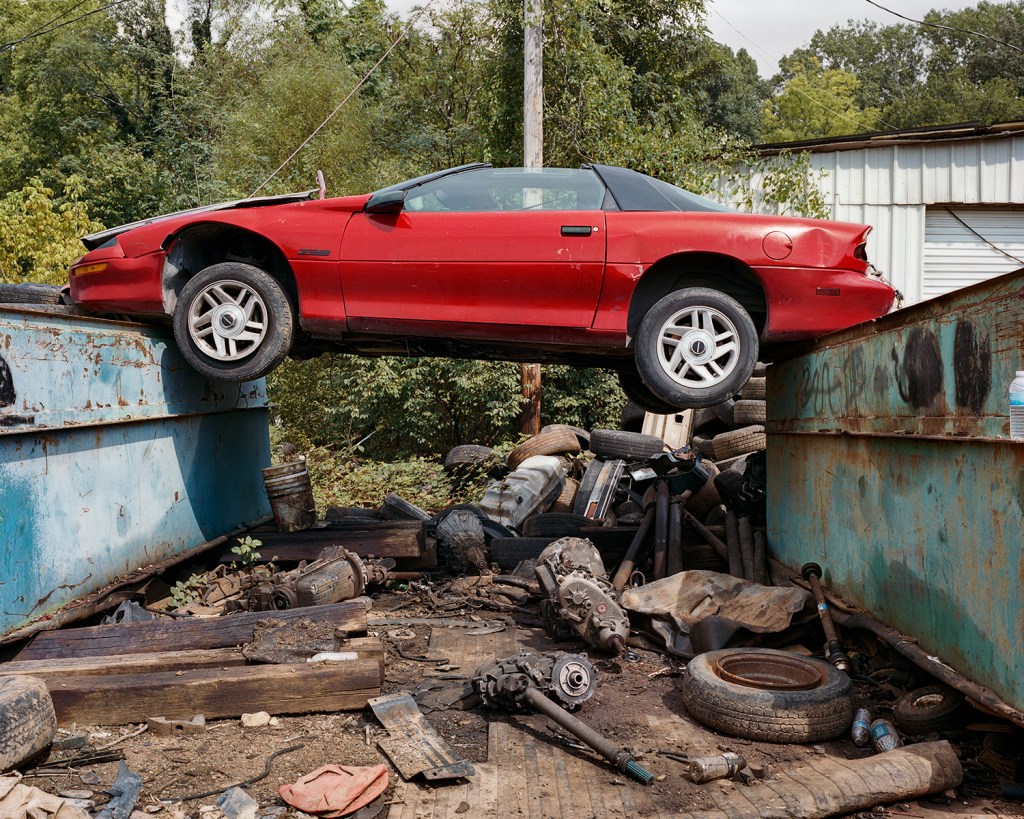
Snakes, alligators, dogs, bees. And then woods, wrecked cars, bodies of water, domino games, watermelons. Curran Hatleberg’s is a rosary of objects, perspectives and situations in which the animal and plant worlds often intermingle seamlessly, as if were only chance that earned them a shot – and thus the photographer’s attention. River’s Dream (TBW Books, 2022), the volume signed by the 40-year-old U.S. artist, which was among the finalists of the Paris Photo-Aperture PhotoBook Awards, the most prestigious prize in photography publishing, is the result of a whole decade of wandering in the southern United States, between Florida, Texas, Louisiana and Mississippi. Presented in 2019 at the Whitney Biennial in New York, it is conceived as a chapter in a single project on contemporary America: an attempt to gauge the country’s pulse in these years of turbulent transition. In the previous instalment, Lost Coast (TBW, 2016), Hatleberg immersed himself in the atmosphere of the northern California town of Eureka, where the majestic beauty of the redwoods of Redwood National Park coexist with the social unease of deep America. “In River’s Dream I try to approach these places from a particular perspective, which is that of individuals, of families, of community,” Hatleberg tells Il Foglio. “I longed to go to Florida in search of the paths off the beaten track. I was not interested in the Florida of Miami beaches or Disney World, or that ends up in the newspapers. I knew nothing about that state, and I was curious to understand what happens in normal places and in everyday life. And I wanted to do it in the middle of summer, when the humidity is unbearable, to better immerse myself in the atmosphere of those places.”

Hatleberg visited Florida for a couple of years, returning to see the same families he had met by chance to spend time with them. “I even lived for several months with some of them and became part of their daily routine. These are people I met while photographing: they were as interesting to me as I was to them. And there was a spark. It was a kind of magnetism, an unspoken connection.” This close relationship allowed Hatleberg to enter the world of these people, to access their moments of intimacy and vulnerability. A deep relationship that grew out of complete strangeness. “I relied on them, as collaborators, subjects and guides,” he explains. Hatleberg is not afraid to use the word “friendship” to describe this relationship. The volume opens with a blank page that reads, “This book is dedicated to the Huggers.” The artist explains, “The Huggers are ‘those who embrace,’ but they are also the Hugger family, one of the families I have grown most attached to.”

It is thus a book about friendship, but also about summer: “The heat forces people to be outdoors. And the photo opportunities are endless. People go out on the streets just to walk, letting themselves go out into the world without any planned thoughts. In those temperatures, you take off your shirts, your skin is laid bare. Crime increases. Waves of moisture wash over the landscape, driving weeds out of the concrete.” After his experience in Florida, the photographer landed an artist residency in Galveston, a coastal city in East Texas, which also allowed him to spend periods in Louisiana and Mississippi. “The weather there was incredible, too: you had wet clothes on all day long. It’s the swamp where snakes and alligators live; whose images recur throughout the book, as do those of the families who hosted me.” Places, seasons, people. Hatleberg records and documents. But there are no captions or notes in the book to associate the images with the circumstances in which they were taken. This is not an oversight, but a conscious choice. “When, by showing a photograph, one answers too many questions about who, what, where, and why, you close off many of the possible interpretations. If immediately after looking at an image you read the caption and think ‘oh, it’s Florida,’ the game is already over, the imaginary is already circumscribed. Whereas in this way the viewer has a chance to dream. And the hypotheses of interpretation are neither confirmed nor denied. It’s a kind of ambiguity that I really like.”

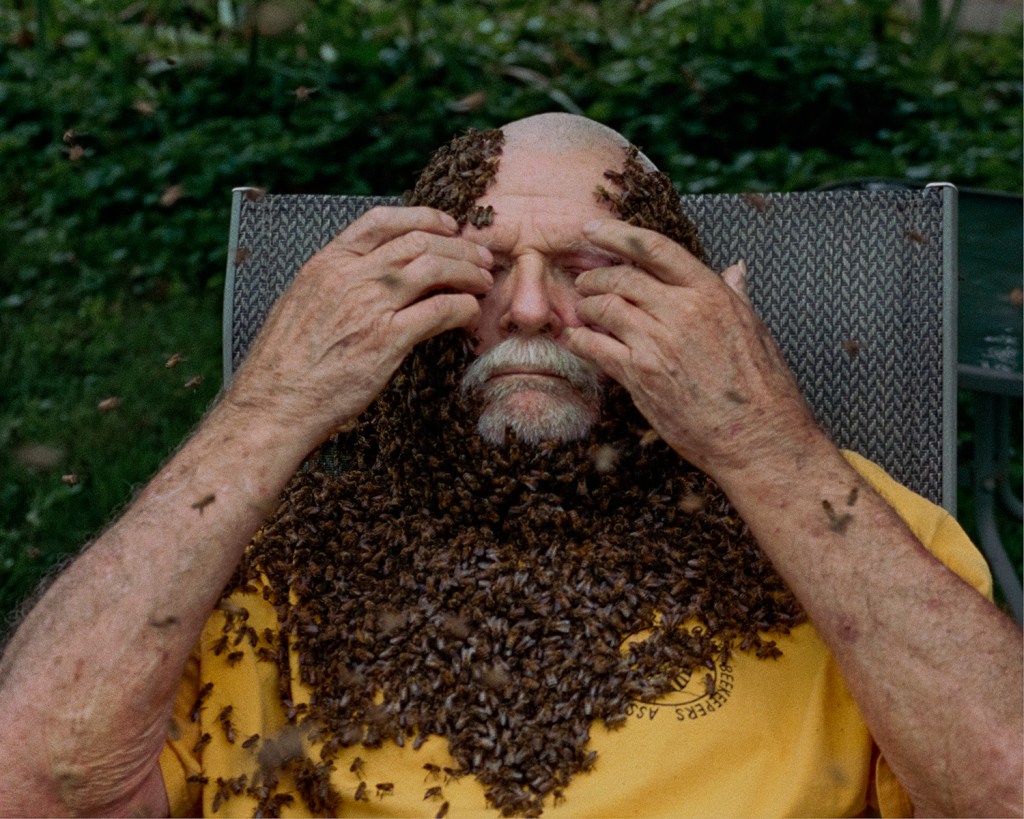
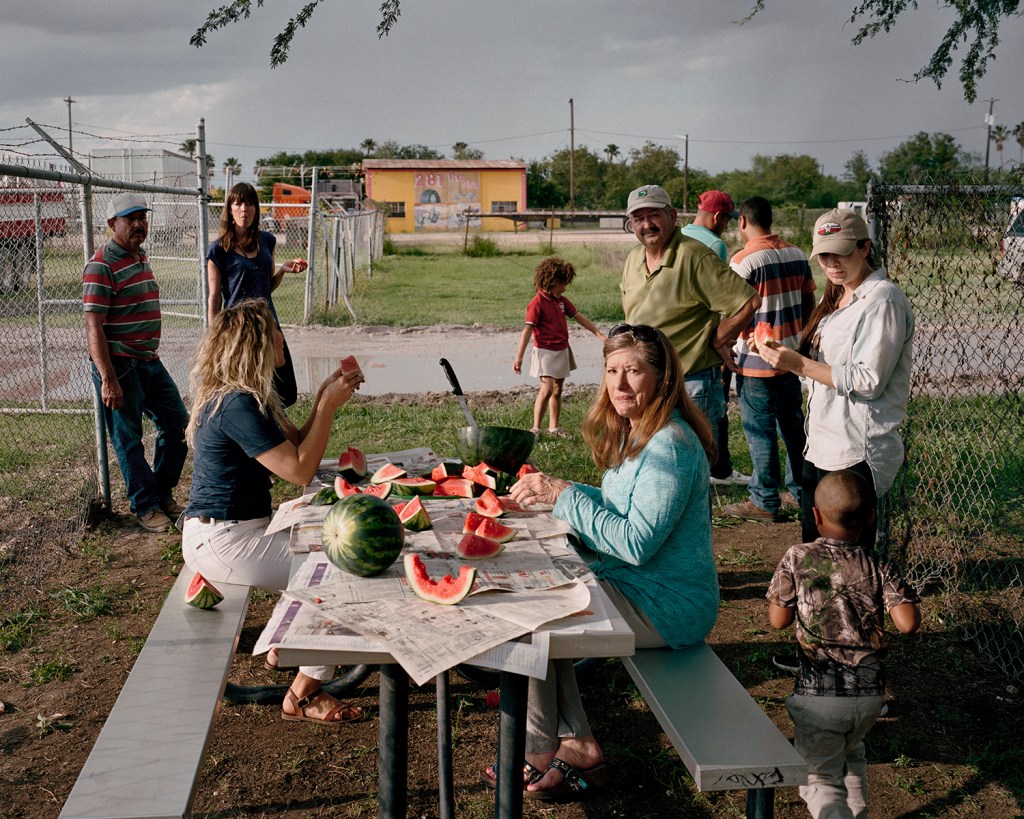
It is no coincidence that Hatleberg’s photography was chosen by Paul Graham for the group show “But Still, It Turns,” presented at the International Centre of Photography in New York and the Rencontres d’Arles, in which the British photographer put forward a new generation of artists who have restored vitality to the tradition of photography based on life “as it is.” It is, in different nuances depending on the author, a lyrical documentary, in which reality is represented without technical distortions, but without deluding oneself or claiming to be objective, but rather winking at the narrative of fiction. River’s Dream begins with an image of a ruined house, whose white door is dotted with red, black and yellow spray spots. The next picture is dotted, however, with a swarm of bees around two slices of watermelon. In the subsequent image, two more slices of watermelon are leaning against a yellow-painted wooden windowsill, and in the background is a sign that reads “Pure Honey.” We turn the page and find a man in a yellow T-shirt who, with a scowl, sports a beard of bees around his chin. The following photograph shows a family at the side of the road around a table eating slices of watermelon. The browsing continues with three men around a small table playing dominoes. In the next shot, the framing is close up and you can make out the domino pieces positioned like a snake. Turning the page, there is a photograph of a little girl, sitting amid piles of rubble, holding a snake. Hatleberg explains, “It’s a sequence of images that proceeds according to the logic of a dream. Later in the sequence, more images of snakes appear. One in a tank, the other in an inflatable pool. If you think about it, even the river that gives the book its title proceeds in loops and resembles a snake.” These are not metaphors or symbols, although it is difficult to separate an animal like the snake from a symbolic connotation, but recurring themes, like melodic lines in a piece of music. A score built by counterpoint, in which recurring images are woven into a visual flow that has little or no narrative, but much that is poetically atmospheric. Hatleberg’s is a work about the humidity, the water, the river, the life that comes alive in these regions unfamiliar to those born and raised on the East Coast’s big cities. “These are places neglected by more than just media attention. They’re places you’ll never hear about except that, for one reason or another, you’re forced to go there. America is a really big country, but probably 70 percent of it is more like these places than big cities like New York, Miami or Los Angeles. If there’s a standard, it should be looked for here, even if it’s the part of the United States you know the least about.” Hatleberg explains that, especially at this time, in such a polarized country where division dominates, photography is a great excuse to bring people from different worlds together and give them an opportunity to share something. “While working on this book,” the photographer says, “I had someone say to me, ‘I’ve never met an artist or someone from the left. But you’re nice, you’re okay.’ Ultimately, looking at it as it is, it is more what we have in common than what sets us apart. I think people are good by nature. At the heart of work like this, there is probably the belief that it’s possible to understand the meaning of family and community. Maybe that sounds trivial, but it’s probably not so obvious: people can be together even if they are different. And this I was able to see thanks to my work as a photographer.”

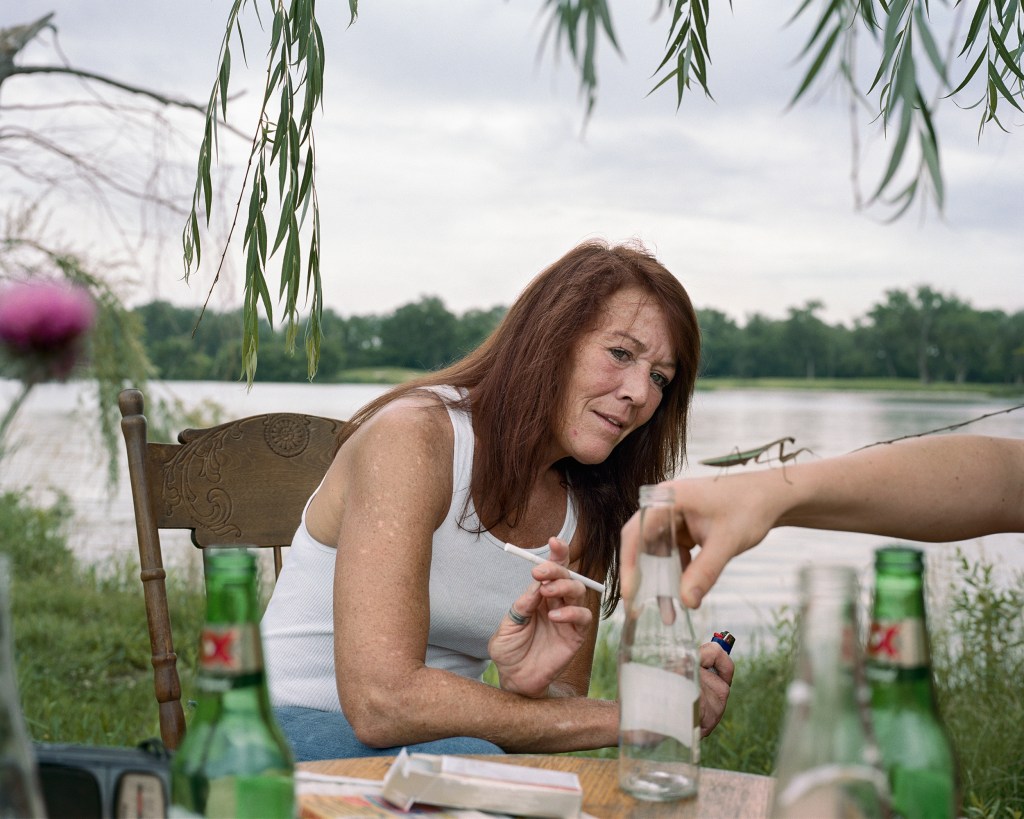
It’s as if Hatleberg’s documentary approach brings him closer to a specific subject and theme. In this case, the South: unfamiliar and foreign to a man born in Washington DC and a Yale graduate. But it is the logic of the dream that carries forward the lyrical argument of the conversation. Yet each shot is an image that stands on its own, capable of communicating even in isolation from the final sequence. Many of these photographs convey a mysterious charm, difficult to decipher. A skewed, off-axis beauty. Lester Bangs would have called it “grungy.” “Yes, I desire to show beautiful things. That’s where I want to get to. But what I prefer is to make an image that thrives on the friction between extremes: happiness and sadness. Hope and despair. It happens that you find yourself in really tough situations, socially or personally, but something appears inside the frame that opens up a possibility.” The photographer suggests looking at the ending of his book: there is a sequence of images showing a middle-aged, red-haired woman. She is sitting at a table by a river. In front of her are empty bottles. Some full of water, some of beer. She looks at the arm of a person outside the frame, on which a praying mantis has rested. “It was an ordinary day in an ordinary situation. It looked like it was going to rain. Then this beautiful insect comes out of nowhere, like a small miracle. It’s on such occasions, when the everyday flirts with the sublime, that life becomes exciting.”

Speaking of small miracles, in 2020, shortly after taking the last photo in this book, Hatleberg’s first child was born. He was registered at the registry office as River. This is not a key to River’s Dream, but something the artist greatly cares about. “The whole time I was working on this book, he didn’t exist yet. My son had not yet been born. Now, looking back on it, though, it’s like I went through these vivid, intense, beautiful experiences as if in a dream. The dialogues I had in the places I ended up, the excitement of not knowing where photography would take me at the end of the day, and trying to find the most visually appropriate way to communicate all this. And today I think that, in a way, the first person I wanted to share what I saw and experienced with was him, my son. Even though I didn’t know him yet. And today I imagine him as having participated in this impossible dialogue. And what you now see in the book, ultimately, is also his dream of what was happening to me.”

Il Foglio, 5 November 2022

© Curran Hatleberg, Courtesy of the artist and TBW

Alec Soth – An Interview

Alec Soth A Pound of Pictures

by Luca Fiore

Vince Aletti, a leading photography critic, wrote in the New Yorker that Alec Soth is the most influential photographer of the last twenty years. He may be exaggerating, but the consensus around Soth’s work is beyond question. Not only is he a member of the world’s most prestigious agency, Magnum, and his photos appear in the major American and international press, but his books are considered best sellers. The first editions are collector’s items with unaffordable prices, but in recent years his English publisher has begun to reprint them, making them accessible to an increasingly wider audience. He used to keep a widely followed blog; he now posts mini lectures on Youtube, and has just opened a profile on Tik Tok. And, so far, he hasn’t yet fallen into ridicule.

But it is precisely the form of the book, and he himself confirms this, that contains within it the soul of his work. Soth is not really a photojournalist; rather, he is an heir to the American tradition of “poetic documentary,” whose patron saints, Walker Evans and Robert Frank, succeeded not only in recounting the soul and contradictions of a country, but in sparking the flame of poetry that ignites the world of things by portraying nothing other than what was in front of them.

Soth’s latest work, “A Pound of Picture” (MACK, 2022), was born out of failure. His original idea was to retrace the route taken by the train carrying Abraham Lincoln’s corpse from Washington, D.C., to his hometown of Springfield, Illinois, in 1865. On that occasion millions of Americans flocked to see the convoy carrying the body of the assassinated president. Among them was poet Walt Whitman, who for the occasion wrote the elegy “When Lilacs Last in the Dooryard Bloom’d,” in which he asks, “O what shall I hang on the chamber walls?/ To adorn the burial-house of him I love?”

“I was thinking about the Civil War,” he tells Il Foglio, “What the United States is experiencing today is something close to it. I live in Minneapolis, a mile from where George Floyd was killed. And I’ve seen a lot of tension over the years. It would be an exaggeration to say that Lincoln’s assassination reunified the country, but it’s certain that if he hadn’t been killed, his legacy would not have been the same. Today he’s an esteemed figure, for different reasons, by Democrats and Republicans. I wished to reflect on that period and that circumstance that, in some ways, was a way out in a moment of stalemate. But it was an abstract idea and the project foundered and turned into something completely different.”

“A Pound of Pictures,” as Soth intended it, is a reflection on the photographic medium, and little of the “Lincoln Project” remains, such as the image of a bust of the President in a car secured with a seatbelt. The book opens with a photo of a cemetery in Pittsburgh, Pennsylvania. It is sunset, and in the center of the image, amid the tombstones, a person can be seen with his back to a photographer. The man is Ed Panar, an artist friend of his. The two, Soth says, are discussing the idea of a stereotypical image. The cemetery is one such example. But for Panar, there are no clichés in photography and he is not afraid to take pictures of the place. That is how this photograph was born: the two of them go to a cemetery together, and the former immortalizes the latter in order to understand how one can look at the world without too many superstructures and prejudices. The last photograph in the book, however, is an image taken inside the author’s car. In the foreground is the steering wheel, on which a typed ticket is attached. It was the first picture taken at the end of the first lockdown. Soth recounts that at first he felt he had forgotten how to take pictures. As an aid he decided to reread the advice that Allen Ginsberg used to give photography students in the workshop he held with Robert Frank. And he kept them with him while working. The first two lines read, “Ordinary mind included eternal perceptions.” The last says, “Candor ends paranoia.” In between then are images that in one way or another are related to the world of photography, including portraits of Duane Michals, Sophie Calle, Nancy Rexroth, as well as the darkroom of legendary printer Sid Kaplan and Nan Goldin’s bed, on which two works by Peter Hujar stand out.

“One of the issues that is talked about so much today is that there are too many images in the world,” Soth explains. “At different times in my career I have had to wrestle with this idea. But at some point I thought it’s like complaining that there are too many flowers. Why does one, even today, take the trouble to photograph flowers even though, probably, the fate of those images is to end up, sooner or later, in the trash? According to me it’s because, in some way, they testify to the recognition of a beauty. And for me that, for some years now, is becoming important, rather than stressing the negative aspects. For me, now, it is about celebrating what is there. Because that, after all, gives the possibility of a connection between people.” That was also the goal of the project on Abraham Lincoln: to find connection in a fragmented world. “I don’t know. I hadn’t thought about that. Perhaps underneath the surface of this work there’s also that. If I think about one of the sources I go back to, Walt Whitman, he was like that, whatever he did: from writing poetry to nursing during the Civil War. In him there is a desire to connect with people.”

“A Pound of Picture” was also included in another book released this year, “Gathered Leaves Annotated,” which gathers all five major long-term projects Soth has done since 2004. The volume, printed on newsprint, also features “Sleeping by the Mississippi,” “Niagara,” “Broken Manual” and “Songbook.” It consists of seven hundred pages in which the books are reproduced in their entirety, including their covers, but to which the author has added handwritten comments, placed captions alongside the photos that were originally placed at the end, and added – in the margins – discarded images that seemed more appropriate to him today. Beyond the curiosities, more or less interesting, leafing through such a book means to immerse yourself in a great account of America of the last two decades. What America is, then, is very difficult to say. “As I realized with the failure of the Lincoln project, I’m not the kind of photographer who goes and tells you what his country looks like,” Soth explains. “For me it’s more about the process, how things happen as you make them. Sure, my books talk about America and say something about it, but I couldn’t really say what. Ours is too big, articulate and complex a country, full of nuances. But one thing I think I’ve realized is that every time I go out to photograph America I end up learning something I didn’t know before, because things were not the way I thought they were.” To explain what that means, Soth takes an image from his latest book as an example. It is of a shirtless black boy in the middle of a tall-grass meadow, bending down to pick a flower with pink petals. “I was in Pittsburgh to photograph Buddhist temples. I arrived at one of them and found that the place was closed. I stopped the car in the neighborhood, and it was a poor area, inhabited by African Americans. I noticed a young couple. They were beautiful. I asked if I could photograph them. She said no. He agreed. After I had taken the photos, I exchanged small talk with them and found out that he usually attends the nearby Vietnamese Buddhist temple. And I couldn’t really imagine a guy like that as a temple-goer. It was like finding something I wasn’t looking for. Does that say anything about America? I don’t know. It certainly says something different than what I thought before.” A note in the book says, among other things, “Photography doesn’t just force me to leave the house, it forces me to leave my head (briefly).”

Reviewing Soth’s books, which alternate between portraits and interior shots, landscapes and still lifes, one often has the impression of being moved. The themes addressed are challenging: dreaming (“Sleeping by the Mississipi”), love (“Niagara”), living outside the box (“Broken Manual”), the religious dimension in the Midwest (“Songbook”). If asked if there was a turning point in conceiving his images, Soth returns to a photograph featured in “Niagara”: it is a portrait of Melissa on her wedding day. She sits outside an anonymous building in her wedding dress. “She had just gotten married in a motel chapel. I took pictures of the couple, then asked to take a portrait of just her. While editing my first book, I realized that my photographs included too many elements. So for “Niagara,” I was trying to work by subtraction. On that occasion, it’s as if I asked myself: can I make a photograph about love that has only one person as its subject? She sat down and took on a much more reflective expression. It was the beginning of a new way of thinking about the work.” The story of this portrait, Soth continues, does not end there: “After years, I sometimes go back to meet or photograph particular people again. I looked for information about Melissa and, on Facebook, found photos of her second wedding. Now looking at this image I can’t help but think about the time that separated the two marriages. Her gaze today seems to be that of a woman thinking about the future.” The idea that you can depict a subject – love, for example – on which light cannot rest and which does not imprint film is one of the paradoxes that has always characterized photography. “I just opened a Tik Tok profile and started experimenting. For example, I filmed myself thinking about the most different things: funny, violent, sad. And I was asking users if they understood what was going on in my head. It doesn’t work. We don’t know what the bride from earlier was thinking about. Maybe what she was going to eat at her wedding lunch. We’re the ones who fill that void. And we do it depending on who we are and when we do it. It’s the viewer who gives meaning to the image, if they want to.”

In this regard, conditioning the way we read images are often the words that are associated with them. Dorothea Lange said that “all photographs – not only those that are so called ‘documentary’, and every photograph really is documentary and belongs in some place, has a place in history – can be fortified by words.” And Soth uses them a lot. Poems, usually. His books have titles that nod to Walt Whitman or quote verses from Wallace Stevens. But not only. Flipping through “Gathered Leaves Annotated,” for example, one comes across a short text that closes “Songbook” and, which, perhaps, can illuminate the rest of his work as well. It is a quote from Eugène Ionesco that says: “The truest society, the authentic human community, is extra-social – a wider and deeper society, that which is revealed by our common anxieties, our desires, our secret nostalgias. The whole history of the world has been governed by nostalgias and anxieties, which political action does no more than reflect and interpret, very imperfectly. No society has been able to abolish human sadness, no political system can deliver us from the pain of living, from our fear of death, our thirst for the absolute. It is the human condition that directs the social condition, not vice versa.”

Il Foglio, 22 July 2022

Alec Soth, ‘Stuart. Pittsburgh, Pennsylvania’, from A Pound of Pictures (MACK, 2022). Courtesy of the artist and MACK.
Alec Soth, ‘White Bear Lake, Minnesota’, from A Pound of Pictures (MACK, 2022). Courtesy of the artist and MACK.
Alec Soth, ‘Megan. Belle Island, Detroit, Michigan’, from A Pound of Pictures (MACK, 2022). Courtesy of the artist and MACK.
Alec Soth, ‘Julie. Austin, Texas’, from A Pound of Pictures (MACK, 2022). Courtesy of the artist and MACK.

Vincenzo Castella – An Interview

Vincenzo Castella

by Luca Fiore

In 1984, Luigi Ghirri wrote that Vincenzo Castella – then 32 years old – was one of the most important figures of the “new Italian photography.” This was a generation, the Scandiano-based artist explained, whose approach to photography was neutral and impersonal. The “death of the author” was the unifying element of the new trend, which followed the example of Walker Evans: silence, rigor and simplicity.

Almost forty years have passed and Castella has shed the role of the young promise to assume that of the master. His work has evolved, but without betraying the convictions that had founded the poetics of his beginnings. “Every new photograph should be looked at as a new fact,” says Castella. “Not as a variant, nor as a reproduction, or even as a reality or its opposite. The photographic act is neither convenient nor functional; but it is a subtle, elusive and infallible gesture.”

At the turn of the 70s and 80s, Castella’s lens rested on urban landscapes, the interiors of houses or shops, industrial areas and glimpses of archaeological ruins. Color images were made with large-format plates, capable of accurately recording even the smallest details. “Everything seems to be guided by a skilful direction, which discreetly indicates, emphasizes, leads the path of our gaze,” Ghirri writes when looking at these images by Castella. “Not to force our vision but to better make visible the theatre sets of the world.”

In the following decades, Castella focused on the fabric of the city shot from above: Milan, Naples, Turin, Athens, Amsterdam, Cologne. “What I have tried to do is to convey the continuous intensity of the urban machine, which develops a life beyond the concern of the person who designed it,” he explains. “My idea of the city is that of a spaceship built elsewhere and dropped into our reality. So I focused on the hooks, the hinges, the connections where you can better see the city; the Italian city especially develops more on lived experience than on urban design.” These are images in which the gaze can get lost in their many details, all rigorously in focus. They demonstrate an effort of precision that is a gesture of affection towards the web of streets and buildings within which the lives of men stir.

The years at the turn of the 2000s, on the other hand, were years of technical experimentation, which led him, among the first in Italy, to scan photographic plates, printing them from files. Within him was the desire to reflect on the nature of digital transformation, which he does not consider a neutral process, along with the curiosity to obtain far from naturalistic chromatic renderings, but more resembling to industrial products: “A particular green that, more than resembling the colour of a meadow, resembled the colour of an Apple screen.”

More recently, Castella’s interest has shifted to art history: Santa Maria Novella in Florence, San Maurizio and Santa Maria delle Grazie in Milan. His attempt was to return, through peripheral shots, to a poetic reading of architectural spaces or frescoes. This is the case with Leonardo’s Last Supper, where he focuses on the walled-in door that punctuates and wounds the work. The concrete rectangle, which the photographer makes almost disappear into the darkness at the bottom, appears as a metaphor both for Leonardo’s impenetrable masterpiece and for the diaphragm that separates us from ultimate knowledge of the world.

Parallel to this, the artist is also pursuing projects concerning nature. These are close-up photographs, made with nineteenth-century lenses, with an uneven focus. The effect is painterly, now far removed from Evans’ surgical precision. They are often photographs taken in botanical gardens, although they give the impression that they were produced in wild settings. “In such cases I try to raise the temperature of the visual action. Nature allows me to create uneven backdrops of plants in captivity. I’ve almost never photographed a forest,” Castella explains. “I don’t photograph the created or the creator, but something I consider a text, often treated in art history in the peripheries of paintings, in the margins. I am attracted to the color green; it’s a color that is not beautiful, but is ambiguous, which gives you the perception of understanding more. I don’t think it’s by chance that it represents hope in popular culture.”

In his recent “Il libro di Padova” (The Book of Padua), published by Silvana Editoriale, Castella combines these two thematic strands – the art of the past and nature – by proposing a journey that starts from the Botanical Garden, passes through the Venetian city’s main historical buildings, and then returns to its starting point: Goethe’s Palm, Galileo’s desk, the Last Judgment in the Scrovegni Chapel. “It’s a path manual, where you add up what you know and what you don’t know and at the end you get a mysterious mathematical derivative that, somehow, allows you to know something.” Until then, the artist had conceived his work in terms of “parataxis,” that is, the juxtaposition of main, independent and interchangeable sentence-images. In Padua, however, he tried to construct a ‘hypotactic’ text, in which the discourse is articulated by main and subordinate clauses, in order to help the cognitive process.

One of the book’s most intense moments is the page with four photos of the “Martyrdom and Transport of St. Christopher”, Andrea Mantegna’s fresco in the Ovetani Chapel of the Church of the Eremitani. The vertical, panoramic-format images dissect the work in three intervals, somewhat imitating the movement of the gaze that follows, from left to right, the pictorial narrative. This choice allows him on the one hand to include the dimension of the time of observation, and on the other hand to enter into a relationship with the work by going beyond trivial photographic mimesis. The artist includes not only the painting, but also the portion of the wall below it and a section of the floor. “We cannot understand the enormous heritage we have in Italy if we do not extend our field of vision to the place where the works are kept. I’m not interested in denouncing degradation – and that’s not the case in Padua – the point for me is broader observation.” Castella’s images of the Ovetani Chapel have also brought to light the losses sustained by the March 1944 bombing: the work and its wounds, those of time and those inflicted by the hand of man.

For Castella, reality is not what we see. It is better. “Because the visible is made up of what is framed by the lens and is captured on film, but also by what is invisible to the eyes and the camera. I’m not talking about ghosts, but about what – although not seen – we can only get to know through what appears to us.” This is why the artist always tries to work in “negative space,” both from the point of view of his choice of subjects, and his framing. On the one hand, he depicts fragments of cities or works not worn out by the gaze of the mass media, and on the other hand, the widening of shots to capture the outline of the subjects, often also achieved by use of the panoramic format.

Another choice that recurs in Castella’s work is that of the reverse shot. This is the case with the wooden horse in the Great Hall of the Palazzo della Ragione in Padua, which has been shot from behind, capturing only its pedestal and legs at surface level. The space from which the monument is usually observed by the visitor is instead at the edge of the shot. “It’s the work that begins to look at you,” he explains. He had done the same in Florence, when he shot Santa Maria Novella from the apse towards the façade, depicting the iron and wooden back of Giotto’s crucifix in the foreground, which stands out against the backdrop of the black and white stone vaults.

The rhetoric-free attention to a landscape unknown to the collective imagination, which he shared with the “new Italian photography,” now appears transfigured. He still has a good dose of nonconformism within him, for whom the image is both a tool and an end to gain a liberated awareness. Society has changed, which has found new ways to imprison images. He himself has changed, who refused to settle for any singular way of desiring the liberation of the gaze.

Domani, 20th March 2022

Bruno Ceschel – An interview

by Luca Fiore

What interests me most about photography, and in art in general, is the ability to build the future. Artists have the ability to narrate, to make us think about a different, better future. This is the common thread that holds together what I do: books, exhibitions and teaching.” Bruno Ceschel is well aware that photography has made its fortune on its capacity for memory, of resurrecting people, things and events that are no longer there, as Roland Barthes explains when he writes about his search for an image to revive his dead mother. And yet, in Ceschel, a restless visionary, what prevails is the opposite force: art has to push beyond the limits of the known and, as Luigi Ghirri said of Daguerre, to approach the boundary of the “already seen” and at the same time the “never seen”.

In the world of photography publishing Bruno Ceschel is considered the guru of self-publication. In 2010 he founded a cultural project, which later became a publishing house and a series of popular online masterclasses, with a clever and optimistic name: Self Publish, Be Happy!. Since then, if the way in which photographers think and make books has changed, it is also thanks to the enhancement and visibility given to hundreds of independent publications by young artists who were previously overlooked by publishers and curators. The Guardian called Ceschel’s initiative “the vanguard of the self-publishing revolution.” In fact, SPBH was born as an invitation to the new generation of photographers to send in their publications so that they could be included in the collection of self-published books that, last year, was acquired by the Maison Européenne de la Photographie (MEP) in Paris. Three thousand books and fanzines: a “snapshot” of what has sprung up spontaneously in the young community of artists over the last fifteen years.

Ceschel, born in 1976, began his adventure in Treviso, not far from the town where he was born and raised, Orsago, as part of the editorial staff of Colors Magazine, the cult magazine founded in 1991 by designer Tibor Kalman and photographer Oliviero Toscani for the Benetton group. After studying Sociology in Trento and London, he became editor during the period in which Adam Broomberg and Oliver Chanarin, two key figures of the new photography, were directing the magazine, projecting it onto the international stage. Three years later he found himself in London, making do with collaborations with Italian newspapers, particularly women’s magazines. But the new turning point came when he was advised to send his CV to Chris Boot, former director of Magnum Photo in New York and London, former editorial director of Phaidon and future executive director of the Aperture Foundation – one of the industry’s master minds. By that time Boot was working on his own, publishing books by Martin Parr, Luc Delahaye, James Mollison and Stephen Gill, among others. This was greatly educative for Ceschel, who began to familiarize himself with the world of photography that matters.

Bruno Ceschel

In 2008 he was asked to curate an exhibition for the Brooklyn Museum, with an Aperture catalog. The exhibition’s theme, at the time, was avant-garde: Contemporary Queer Photography. The project, however, fell through and nothing came of it. “But during those two years in New York, I came into contact with a community of young photographers and artists who were producing work that resonated with my interests. They were using print, books and fanzines and were self-publishers. The Do-It-Yourself culture in the United States is much more deeply rooted than in Europe, and what I was seeing seemed very valuable.” So he decided to launch an open-call, inviting people to send him their work for promotion on his blog. “I proposed an event called Self Publish, Be Happy to the Photographer’s Gallery in London, in which I showcased a selection of these books and organized meetings with the authors. They were works that were not circulating in the mainstream and people had no idea they existed. It was an overwhelming success. The principle was democratic; anyone could send us their work, then we would select what would become part of the collection. Overnight, I suddenly had a house full of books. I received as many as 15 publications a week. People talked about it, word got around. And the Photographer’s Gallery began keeping some of these books in their bookshop.”

Five years later, in 2015, “Self Publish, Be Happy” also became a book published by Aperture with the subheading, “A Do-It-Yourself Photobook Manual and Manifesto.” Ceschel’s introduction begins, “This is not a collection of recently published photography books. It is not a best-of. It is a call to arms, a rallying cry to take part, to act, to share.” The volume features big names, artists who would later become big, and others who have remained in the shadows. We find “The Little Brown Mushroom Dispatch” by Alec Soth and Brad Zellar, a series of publications in newspaper form documenting the American photographer and writer’s travels around the United States. Or “Nude” by Chinese photographer Ren Hang, which collects works that later became particularly famous after the artist’s suicide, printed by a printmaker friend. We also find “Gomorra Girls” by Valerio Spada, which recounts the story of the suburbs of Naples, alternating material from the police dossier on the murder of a fourteen-year-old girl, killed by crossfire in a shootout, and images of the neighborhood where the girl lived. Or “Afronauts” by Spain’s Cristina de Middel, which freely reconstructs, through original documentation of photographs and the artist’s drawings, the story of Zambia’s space programme that dreamed of sending astronauts to Mars in the 1960s.

“Self-publishers have shattered the rules of traditional publishing, which were very much tied to the standards imposed by big names like Taschen and Steidl. They introduced innovations both in terms of the themes that were presented and the form of the book object,” Ceschel explains. “Not only because the artists often came from minority backgrounds and, belonging to underrepresented communities, told stories and themes that were hitherto unexplored, but they had a freedom and unscrupulousness in their use of the publishing medium. The physical appearance of the publication became an integral part of the narrative. The quality of paper, graphics, binding, printing techniques. They were young people who thought about books in a different way. It was an experience that certainly ended up influencing mainstream publishing as well. Today, even if the trend is that of the book “a la Michael Mack”, which is very clean and classic, we see certain experiments in books published even by more established and official entities. The language of the photographic book has changed forever.”

But there is another dimension that, according to Ceschel, has been brought out by this phenomenon. “Traditionally, photography has always been a parallel reality to the world of contemporary art, for various historical reasons, so much so that in museums it has always been considered a thing apart; paradoxically certain institutions have not even collected it. And the same has happened with photobooks, which have remained separate from the history of artists’ books”. In the last fifteen or twenty years, he notes, there has been a fusion of photography and contemporary art. “This phenomenon is not only seen in museums, but also in publishing: all these experiments do not come from nowhere, self-publishers did not invent them, but it is something that has matured from the experiences of the artistic avant-garde. Some scholars believe that the artist’s book is the form that expresses the quintessence of 20th century art because it has the characteristics that shaped the last century: the adoption of the industrial process, conceptual experimentation, the democratic, social and revolutionary impulse.”

And it is no coincidence, Ceschel continues, that many of the artists of the last generation were trained in universities where photography is taught in the Contemporary Art department and not in the Design or Applied Arts departments. “These photographers thus have a different way of thinking. Their mind is different from the previous generation, and that has always attracted me. But not because I am interested in contemporary art itself, but what is being said through it. In the end, what I am looking for – in general, in life – is to confront myself with new ideas. To be able to live better, to understand who I am and where I am. That is why I am always looking for something unprecedented, for what is being told and how it is being told.”

To explain what this means, Ceschel gives the example of his collaboration with artist and activist Carmen Winant, which he says is based on questioning her preconceptions and ideas about gender identity. SPBH published “My Birth,” the book of a project in which Winant collected almost 3 thousand images of women in the period of gestation and childbirth – a completely taboo topic in Western society – which was exhibited in the same year in the exhibition “Being: New Photography 2018” at Moma in New York. “That book had a visceral impact in the community of people I met at museums or fairs. We received so many messages of gratitude for that book. And for me, from a personal point of view, a world opened up that I did not know.” Another of Ceschel’s partnerships is with renowned American poet Claudia Rankine, with whom he collaborates regularly and with whom he is working on The Racial Imaginary Institute Biennale 2022, titled “On Nationalism: Borders and Belonging.” “Her radical work on the political and social construction of the white race has inspired me to embark on an incredible emotional and intellectual journey about my own identity.” Or his friendship with photographer and writer Nicholas Muellner, who explores the potential of the relationship between photography and literature. “He, too, opened up a world to me that was unknown to me. But the moment one gives you the key to enter it, you have the opportunity to discover how much is hidden behind that. These are all relationships that give me tools to open myself up to new ideas. As time goes by, I find that I am increasingly impatient with what gives me the impression of having already been seen and heard.”

It is from this impatience that, in 2018, the idea of organizing an event entitled “Photobook: RESET” at the C/O Berlin museum blossomed. “I had the impression that contemporary photography was not taking seriously certain topics that today, fortunately, have exploded into public debate. Why is it that museums only offer collections of works produced by men? Are there alternative voices to the heterosexual white man? But there were also the challenges posed by the acceleration of technological progress. These were the questions that I had and that I felt that no one was trying to answer seriously.” The idea was to invite photography’s elite – academics, curators, editors, critics, artists, designers – and ask them, rather than an ex-cathedra lecture, to get involved through the workshop format. “I did not expect solutions to be found. These are huge problems that cannot be solved in a weekend. But I wanted that, through very personal work, everyone would go home with a set of new questions to continue to reflect upon.” What have the results been three years later? “I do not like grading colleagues. But Lesley A. Martin of Aperture and Michael Mack came. Are their books now different than before? To some extent, yes. Things are moving along. I am not saying that event was decisive. Some things were already in the air. A lot of ground is still to be covered. But every now and then we see some jolts. Like what happened at Foam, the Museum of Photography in Amsterdam, where Jane’a Johnson, a thirty-year-old African-American, was appointed creative director. She is the first non-Dutch woman to hold that position.”

In recent months, a new chapter in Ceschel’s life has begun. After a decade spent between the United Kingdom and the United States, mostly in London, he returned to Italy and has settled in Milan. “Reaching 40, it seemed like the right time to think about something new. Brexit provided the impetus. London is a place I love and has given me so much. I had incredible opportunities there, but now by returning to my country I hope to bring back my experience and a way of thinking about this work and photography that is probably different. I have not yet found a way to do this. But things have always worked out for me by experimenting in the field. I am not going to change my method. We will see.” In the meantime, four new SPBH books have been released in recent months. Two monographs, “Promise Land” by Gregory Eddi Jones and “Say So” by Whitney Hubbs, and two short essays on topics – as is typical of Ceschel – that are anything but obvious, “Instructional Photographs: Learning How to Live Now” by Carmen Winant and “To Be Determined: Photography and the Future” by Duncan Wooldridge.

Il Foglio, 28th December 2021

“The British Isles” by Jamie Hawkesworth

Jamie Hawkesworth The British Isles

by Luca Fiore

Jamie Hawkesworth is a photographer born in Suffolk, South East England in 1987. In the last decade he has established himself in the world of fashion. He photographed Kate Moss for Vogue, Gisele Bündchen just woken up and without makeup, but also David Hockney for the New York Times Magazine. Mack is about to release a book on his non-commercial work, entitled “The British Isles”. It is, perhaps, the British publisher’s most ambitious release this 2021 and is poised to become a best seller.

Hawkesworth is, without a doubt, a great portraitist. He proved this in 2014 with his first book, “Preston Bus Station,” a volume that featured work done visiting the bus station of the small town in the north of England each day for a month. Teenagers, office workers, laborers, the elderly. The faces of the people of Preston are illuminated by a golden light that enhances their beauty and dignity. That station, a Brutalist giant that recently escaped demolition, as the photographer recounted, “Was the first place where I really looked at light. I began to see, feel and understand its effect, I was becoming sensitive to light. Being patient in such a transitional space began to amplify every detail. Everything became significant. In the continuous motion of people’s days, light became a magnifying glass – a tool to study and appreciate life. A cold circular space became heaven.”

“The British Isles ” appears as a bit of a development, of that extraordinary book, which is now impossible to find; it takes Hawkesworth’s poetics from the limited spaces of a “non-place” to the undefined spaces of the entire country. Here too we find the faces of men and women of different ages, ethnicities and social groups, but the setting is now that of the English landscape. The portraits, all shot in urban contexts, alternate with images of coasts, moors, and the English countryside. The same light rests on the human figure and on nature: warm and golden. And the wild spaces, with large horizons, caress the idea of the sublime and, perhaps, would like to evoke the boundless expanses of feelings and emotional patterns that dwell within the bodies of the protagonists of the portraits.

The photographer’s investigation is not systematic and does not aim to offer a social cross-section of contemporary England, although its title seems to suggest this. What is striking, and that could even be found annoying, is the general feeling of positivity that this overview of faces conveys. No account is given of the deep fractures in the social fabric. The multicultural dimension seems peacefully resolved. Political divergences do not appear. The knot of Brexit is not touched upon. But, as said, it is perhaps the connection between the human and interminable spaces and superhuman silences that develops in the sequence of images. And, if we look closely, another theme that arises, in various forms, and that intersperses the gallery of faces: the enigmatic theme of the house.

This is an important volume also in terms of its size; with its 304 pages, the book constitutes a very demanding sequence of images. And here lies the Achilles’ heel of a work of great charm. The sequence of images, which could have been more selective, presents some lapses; at times it lingers and is more explicit than it should be (too many smiles, for example) or slips into an aesthetic that is more suited to the pages of Vogue than to those of a song about beauty in life.

Il Foglio, 2nd July 2021