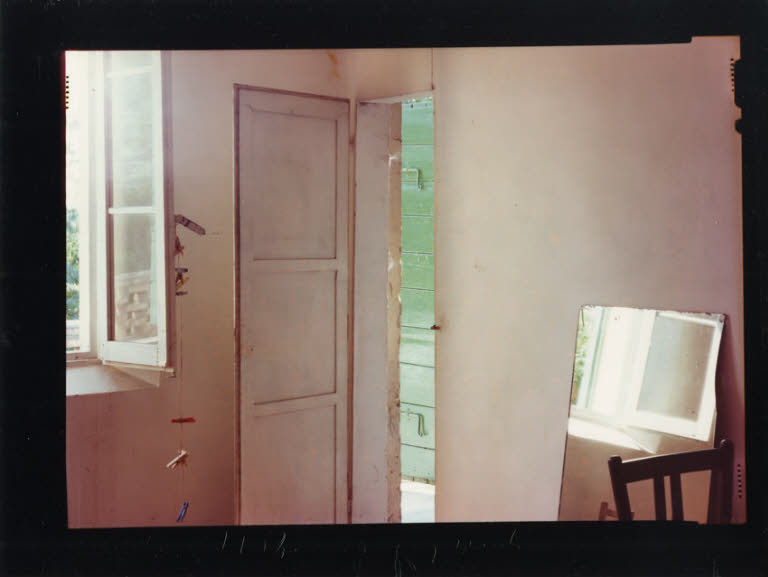
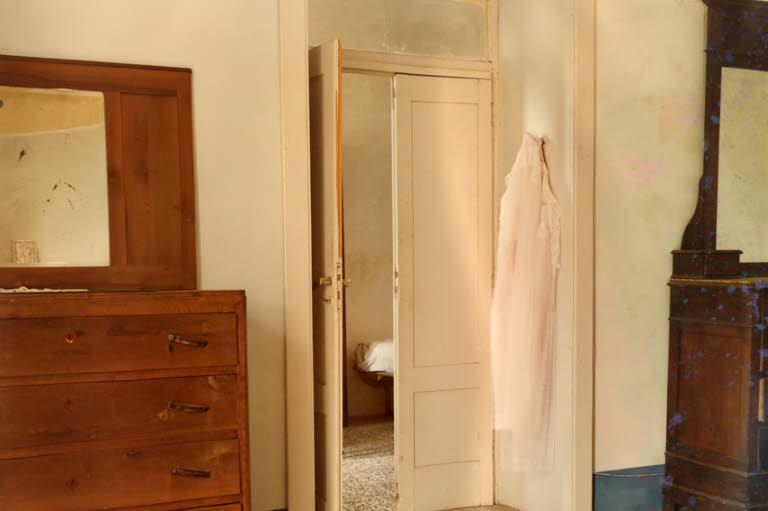
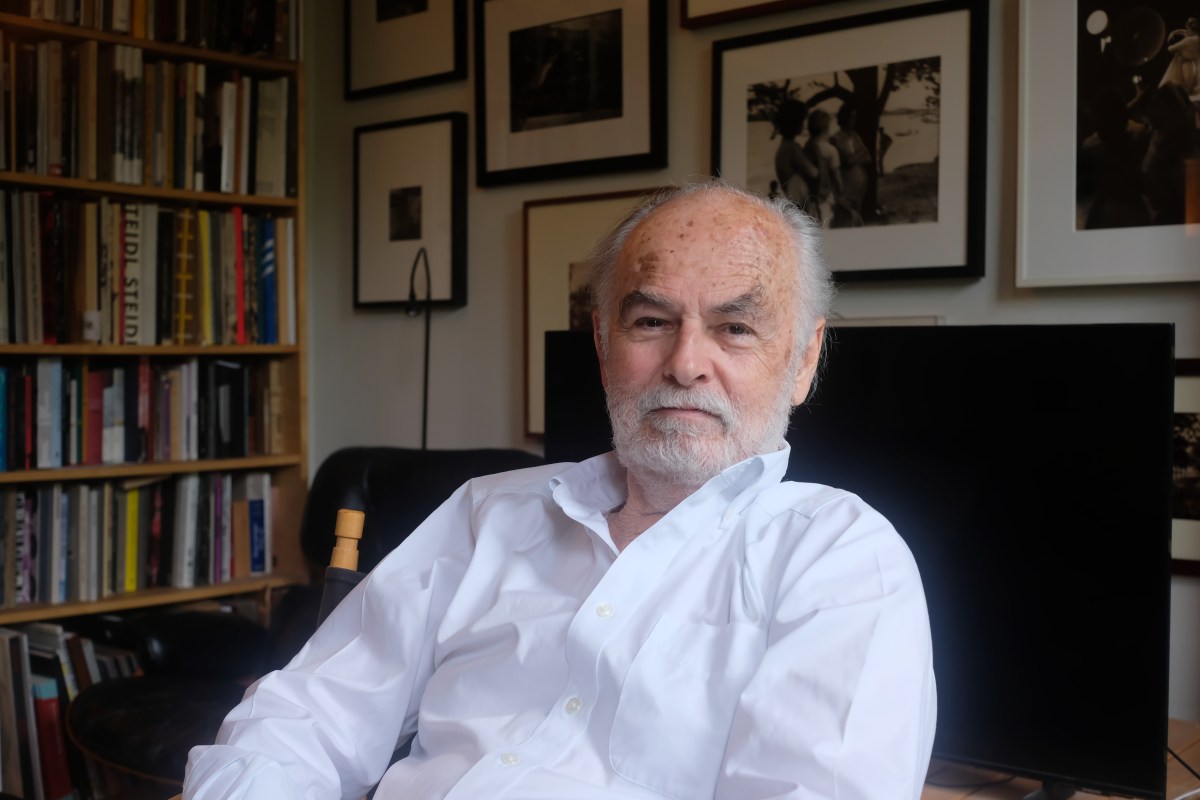
Nan Goldin: This Will Not End Well — A Deep Dive into the Milan Retrospective

Nan Goldin Heart-shaped bruise, New York City 1980

In a dazzling 1998 New Yorker article, the great Peter Schjeldahl wrote: “Nan Goldin is two people—a needy sentimentalist and an adamantine aesthete, who unite to make her one of the best art photographers of the last twenty years. If you’ve lived much, you know both types. The emotionally blundering sentimentalist dewily loves humanity in general while falling in miserable love with a monotonous succession of human beings in particular, each somehow exactly wrong. The aesthete, one almost believes, would heave his or her own grandmother out of a speeding car if it promised a glimpse of perfection.” One must envy Schjeldahl’s critical lucidity more than his empathy. Indeed, he continues: “Sentimentalists and aesthetes are born to loathe each other. The sentimentalist recoils from the aesthete’s visions of orderly bliss, which purportedly serve the human heart while coldly using it, and maybe even using it up. The aesthete would like the sentimentalist to dine on broken glass for the sin of presuming to nurture ‘creativity.’ The two temperaments are fire and ice.”

“This Will Not End Well,” at Pirelli Hangar Bicocca in Milan (open through February 15), is the perfect occasion to verify how right Schjeldahl was. Beyond being the most complete retrospective of the artist born in Washington in 1953, it’s a unique opportunity to experience her work in its original format: the slideshow. Books, catalogs, photographs elegantly hung in white cubes could never replicate the experience of sitting in a dark room watching wall-sized projected images accompanied by a soundtrack usually composed of extremely famous songs. The Milan exhibition, previously shown at Moderna Museet in Stockholm in 2022, the Stedelijk Museum in Amsterdam in 2023, the Neue Nationalgalerie in Berlin in 2024, and heading to the Grand Palais in Paris next year, presents eight projections ranging from 15 to 42 minutes in length—nearly three and a half hours in total. If the subject matter of Goldin’s entire oeuvre didn’t advise against it, one might say there’s a risk of overdose. But it’s a risk worth taking with proper precautions: admission is free and you can return multiple times.

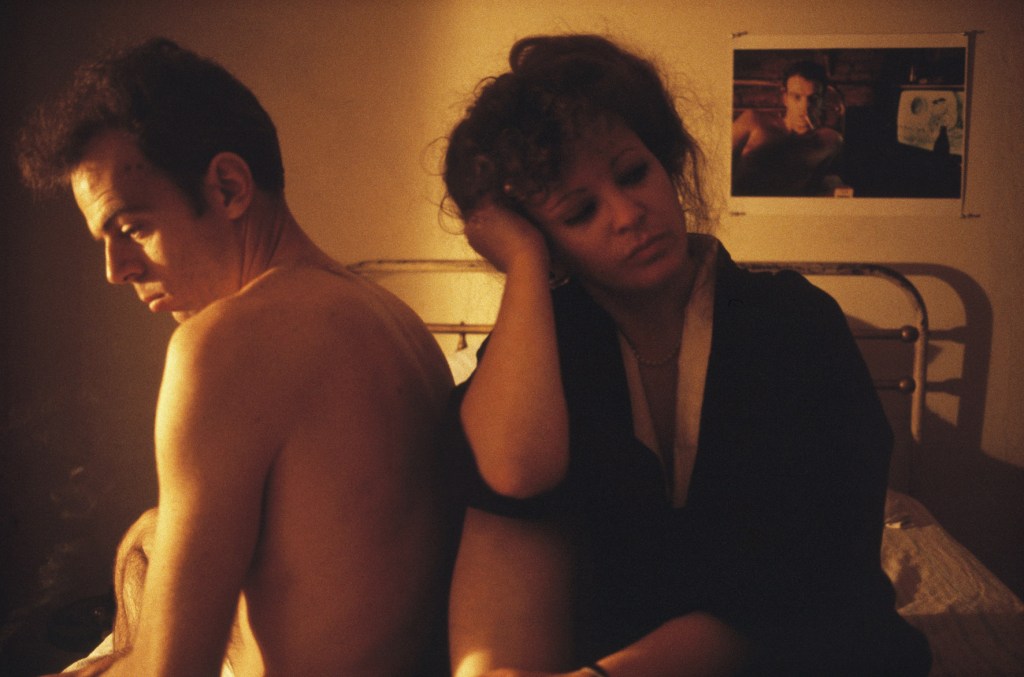
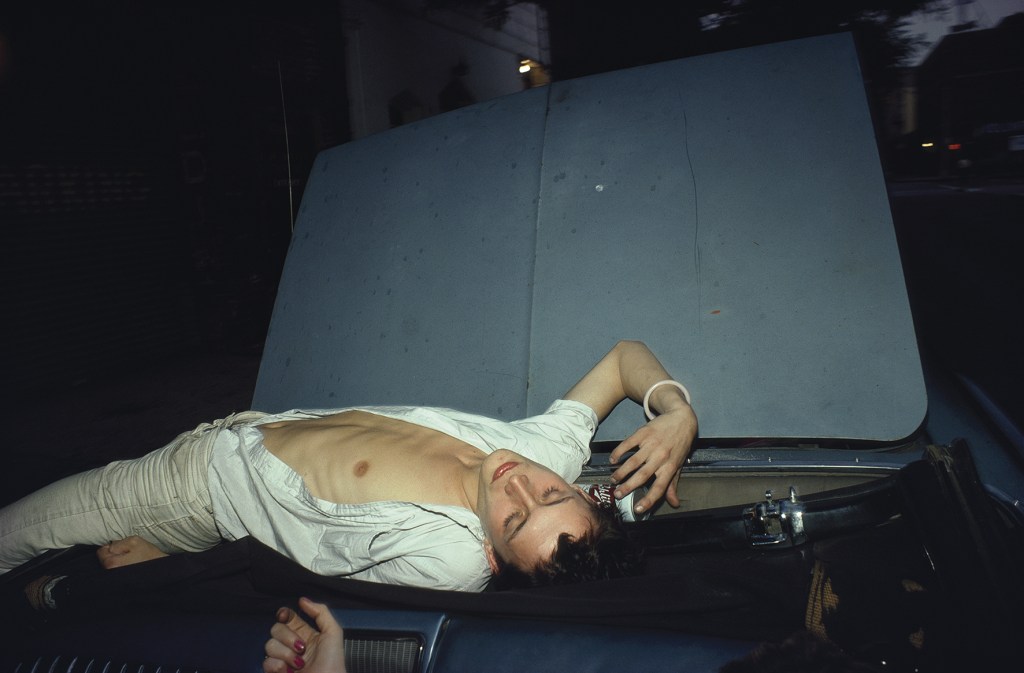
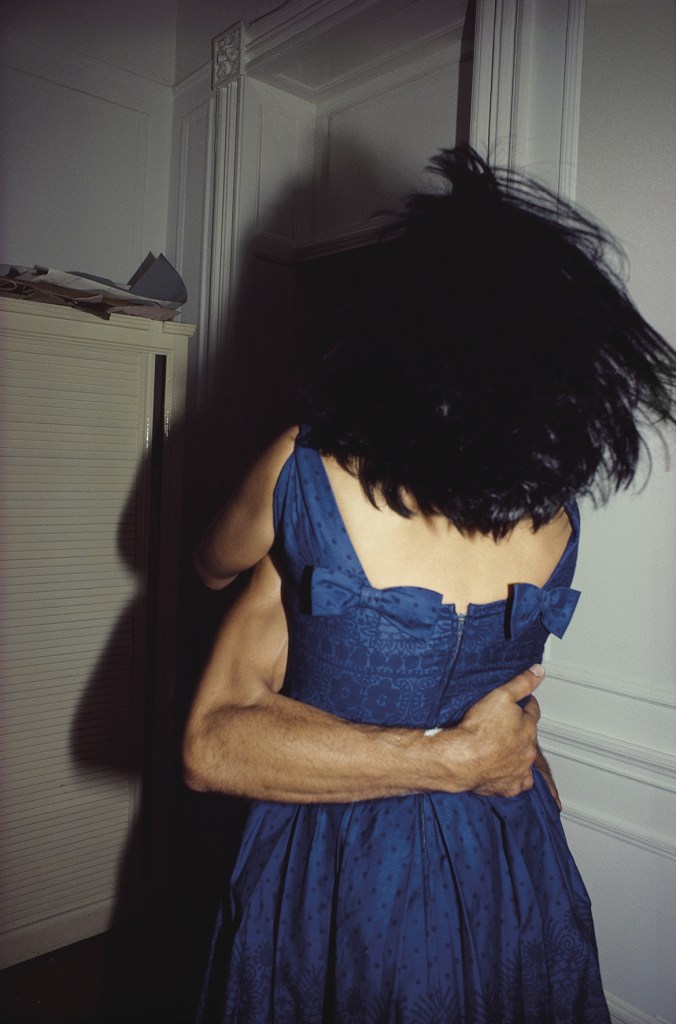
Nan Goldin’s fame is inextricably linked to “The Ballad of Sexual Dependency”: roughly seven hundred portraits of people from her closest circle during her bohemian life between the seventies and eighties. Boston, Provincetown, Berlin, London, but above all New York’s Bowery. Friends, lovers, stars of the underground scene—all are photographed with raw tenderness. Parties, moments of relaxation, intimacy inside and outside almost always squalid bedrooms. Kisses, embraces, sex, and bruises too. Physicality displayed in all its forms, including the ambiguous and exuberant world of drag queens, portrayed fearlessly in the years immediately following the Stonewall riots. The slides, with their saturated, dense colors, succeed one another rapid-fire, without allowing the eye to linger on details. One slap after another. The musical element is not background but a soundtrack that interacts—here dramatically, there ironically—with the flow of images: “I’ll Be Your Mirror” by the Velvet Underground, “She Hits Back” by Yoko Ono, “Sweetblood Call” by Louisiana Red. The reference to music is actually already contained in the title, borrowed from an aria in Bertolt Brecht’s “The Threepenny Opera,” placed right at the beginning of the playlist.

The slideshow was the method Goldin chose from the start, making virtue of necessity—slides cost less—to show her work in Manhattan clubs, where initially the audience coincided with those portrayed. With each screening, the sequence changed and expanded, as did the music. The “ballad” first left the underground circuit when shown at the Whitney Biennial in 1985 and then published the following year in book form by Aperture. The soundtrack assumed its current composition in 1987, but the slide sequence, conceived as a visual diary, continued to evolve. Over time, however, the story of life “on the wild side,” as Lou Reed would sing, had to reckon with the mounting deaths from the HIV epidemic. Those same beauties, both pure and damned, portrayed just a few years earlier, now became expressionless faces in coffins. Thus the “Ballad,” in its definitive version, concludes with a photograph of graffiti showing two skeletons embracing—Eros and Thanatos—becoming a long elegy for lost friends and lovers. Thirty are named in the closing credits.

It would be a mistake, however, to think the value of this epic and lyrical work lies solely in “storytelling.” Nan Goldin’s artistic roots run deep into certain masters of American photography. As Schjeldahl writes again: “Evans, Frank, and Arbus were progressively more explicit photographer-laureates of the abyssal lack—the wanting, the want—that defines American soulfulness. Think of the largest genre of our nation’s artistic symbols: melancholias of city, suburb, town, and farm; the solitude (not loneliness) of Edward Hopper; the choiring voids of Jackson Pollock; emptinesses of open roads, prairies, rivers, and ocean; the ache of the blues; the light across the water from East Egg; the whiteness of the Whale.” But in this list of patron saints of American art, the New Yorker critic forgets to include a certainly lesser name, but one without which Goldin’s direction cannot be understood: Larry Clark, photographer and filmmaker born in 1943 who published a scandalous photobook titled “Tulsa” in 1971. The author explains: “I was born in Tulsa, Oklahoma, in 1943. When I was sixteen I started shooting amphetamine. I shot with my friends every day for three years and then left town, but I’ve gone back through the years. Once the needle goes in, it never comes out.” The book is a collection of images Clark made during those years when beauty and damnation mixed in an elixir as intoxicating as it was toxic. Unlike Evans, Frank, and Arbus, who observe the abyss from above, Clark and Goldin show it to us as they plunge into it.

This artistic genealogy helps better understand the thread running through “This Will Not End Well.” The impression one has at the end of viewing the eight projections is that “The Ballad of Sexual Dependency” is not so much the artist’s first and most successful work, but rather the beginning of a never-concluded project that produced, by germination, all her other works. Not only because we see how much the artist draws from the Ballad’s corpus to nourish the other sequences, but because each slideshow is nothing other than the in-depth development of one of the many themes already present in that guiding sequence. Take “The Other Side” (1992-2021), a homage to the transgender friends Goldin lived with in the early seventies and whom she first began to portray, who naturally also appear prominently in the Ballad. The same goes for “Fire Leap” (2010-2022), a tender parade of children featuring the artist’s godchildren and friends’ sons and daughters. Pregnant women (nude, of course), births, nursing, games, gazes scrolling across the screen accompanied by a children’s choir singing David Bowie’s “Space Oddity.” Flashes of innocence in the whirlwind of a life as beautiful as it is damned.

The HIV epidemic isn’t the only one Goldin has survived. There was also the opioid crisis, into whose trap she personally fell. This story, along with her parallel career as an activist first for AIDS patients’ rights and then in the campaign against art institutions’ acceptance of funding from the Sackler family, responsible for spreading the infamous OxyContin, is well told in “All the Beauty and the Bloodshed,” Laura Poitras’s film, which won the Golden Lion at Venice in 2022 and was nominated for an Oscar the following year. “Memory Lost” (2019-2021) is an attempt to render in images the hallucinatory experience of substance addiction. The photographs are systematically out of focus. The claustrophobia of interiors alternates with blazing dawns and sunsets. Telephone dialogues are heard. Skewed music. The political activism that has marked Goldin’s career today also finds expression in support for the Palestinian cause, explicitly referenced at the end of each projection.

“You Never Did Anything Wrong” (2024) is instead a film, shot in Super 8 and 16mm, dedicated to animals. The title comes from an epitaph for a pet that the artist found and filmed in Portugal. It’s Goldin’s most abstract and lyrical work, in which she steps outside her usual playing field: autobiography. “Stendhal Syndrome” (2024) is the evolution of work begun at the Louvre, where she started juxtaposing photographs of artworks with those from her own archive depicting relatives and friends. Simultaneously, Goldin shows the sometimes truly uncanny resemblance between art and life and retells, in her own way, stories from Ovid’s Metamorphoses: Pygmalion, Cupid, Narcissus, Diana, Hermaphroditus, and Orpheus. Part classical culture and art history refresher, part memento of the reciprocal relationship between art and life.

The exhibition concludes in the large “cube” space at Pirelli Hangar Bicocca, over 20 meters high, which the American artist uses to house “Sisters, Saints, Sibyls” (2002-2022), a three-channel video installation that is an ode to her older sister Barbara, who died by suicide at 18. Barbara is also the person to whom “The Ballad of Sexual Dependency” was dedicated back in the eighties. Goldin returns, once again, in an infinite spiral around the indissoluble knot that has gripped her soul her entire life and that has always generated the creative and self-destructive energy displayed in this major exhibition. It’s an indictment of parental responsibility, without the verdict being pronounced, but left to hover in the space with its reinforced concrete walls. In the center of this space is displayed a sculpture representing the artist lying in her bed, immersed in a dream or waking nightmare. The editing is calculated and effective, and the 35 minutes of visual and verbal narrative flow smoothly, though painfully. Occasionally, Goldin seeks emotional impact by turning to Johnny Cash, whose voice accompanies images of self-harm: “I hurt myself today / To see if I still feel. / I focus on the pain / The only thing that’s real.”
In the finale of “All the Beauty and the Bloodshed,” an interview Goldin conducted with her parents before they died is shown. At one point, the mother mentions a note found among Barbara’s belongings, the suicidal daughter, which contained a passage, typed out, from Joseph Conrad’s “Heart of Darkness”: “Droll thing life is—that mysterious arrangement of merciless logic for a futile purpose. The most you can hope for is some knowledge of yourself—that comes too late—a crop of unextinguishable regrets.” And there, also in light of the Milan exhibition, comes the suspicion that this note contains not only Barbara’s testament but the entire poetics of her sister Nan. Regret belongs to survivors, and Goldin is a survivor of two perfect storms: AIDS and OxyContin. If we had to say what kept her alive, beyond the mysterious energies of the universe, one would say: that small crowd of faces and affections she surrounded herself with and never stopped portraying. As if art, together with the capacity to attain self-knowledge, had the power to affirm an illogical positivity of life (“Images in spite of all,” as Georges Didi-Huberman would say). Life which, in its elusive entirety, is the incandescent core that ignites all of Nan Goldin’s work. This is perhaps why it conquers us even in its harshness. Yet there hovers, impossible to ignore, that title steeped in black humor: “This Will Not End Well.”

Il Foglio, December 13-14, 2025
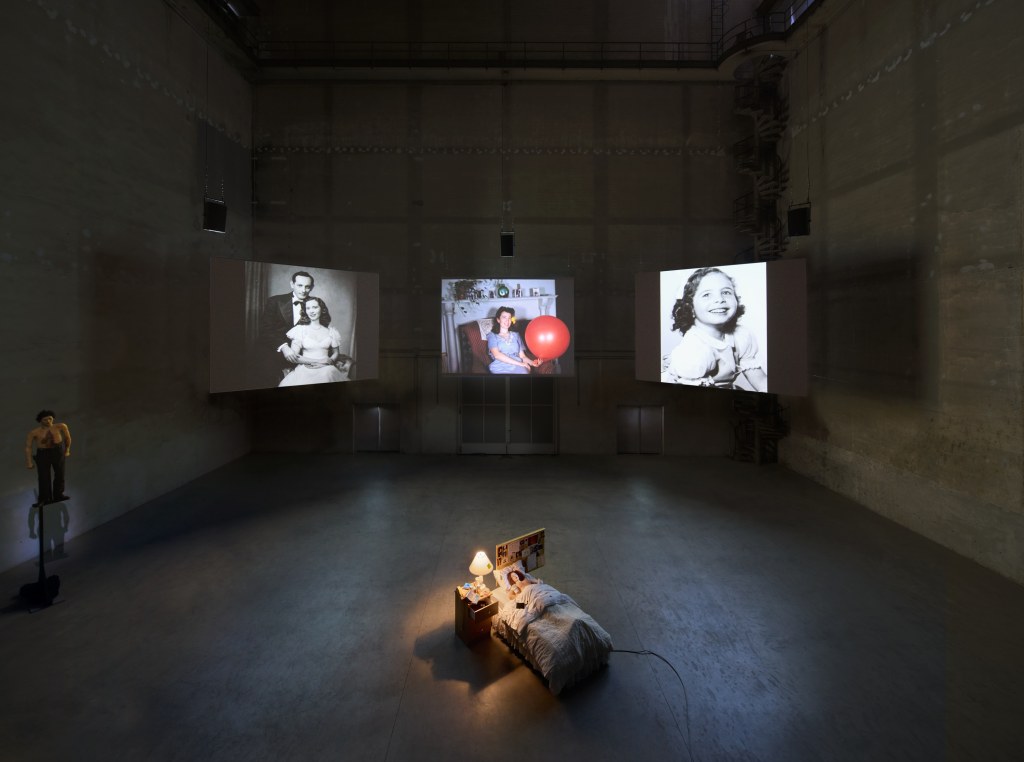
Sisters Saints Sibyls SIO2565

Nan Goldin Brian and Nan in Kimono 1983

Nan Goldin, French Chris on the convertible, New York City 1979

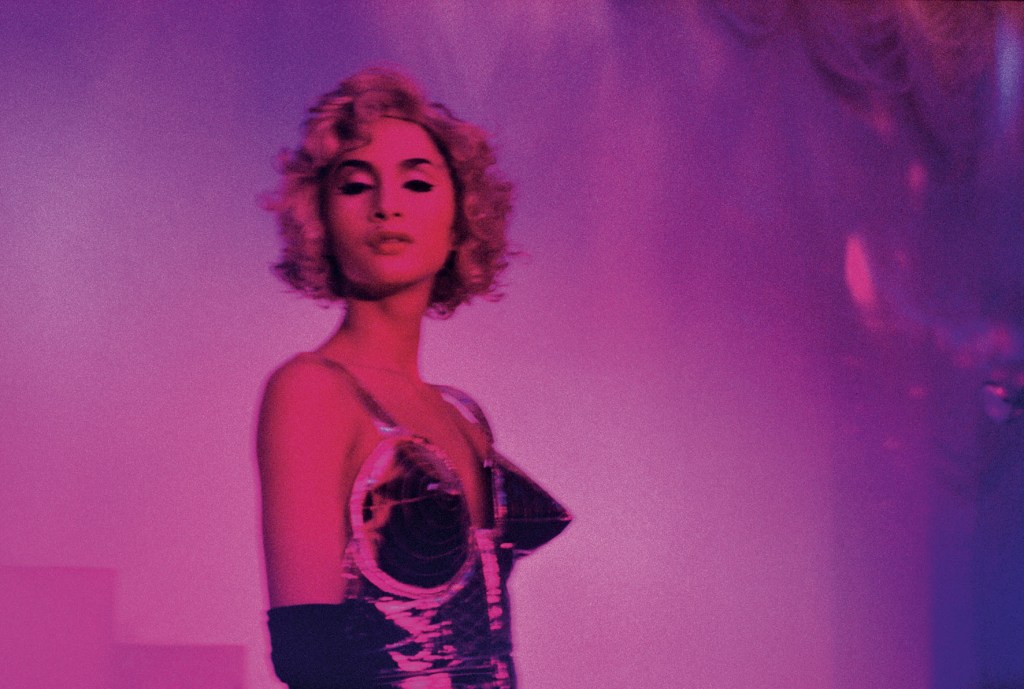
Nan Goldin, C performing as Madonna, Bangkok, 1992

Nan Goldin, Claes’ baby daughter, Ulrika, Stockholm, 1998

Nan Goldin, Vivienne in the green dress, New York City 1980

Nan Goldin, The Hug, New York City 1980

Stephen Shore’s Early Works. Inside the Teenage Years of a Photography Icon

Stephen Shore Early Works

by Luca Fiore

When, in 1982—forty-three years ago—the fifth expanded edition of The History of Photography by Beaumont Newhall was published, Stephen Shore was thirty-five. It’s a super-classic, still studied today in universities all over the world—or almost. His name and one of his photographs appear on the very last page of the volume, alongside those of William Eggleston and Joel Meyerowitz, cited as pioneers of the new color photography. After all, his first solo exhibition had been at the Metropolitan Museum of Art in New York in 1971, when he was just twenty-three. A lot of time has passed since then. What must it be like to live for four decades knowing you’ve already made history?

In truth, photography is neither football nor pop music, and fame is a relative concept. And it took quite some time before he was actually considered “famous.” Shore tells Il Foglio that for the first twenty-five years of his teaching at the photography program at Bard College—which he still directs—he never showed his own work, not wanting to produce imitators: “I only started showing it when it had become so well known that it no longer made sense not to.” He’s referring mainly to the images in his most famous book, Uncommon Places, published in 1982. Urban and everyday landscapes, portraits made with the precision of a large-format camera—and in color. Before him, no one had done it quite that way. His other cornerstone contribution to the tough soil of photographic history is American Surfaces, the record of a journey from New York to Arizona, where the black-and-white Americas of Walker Evans and Robert Frank blend into a cocktail of vernacular visions: motel rooms, diner tables, armchairs, and carpets in quintessentially American hues.

Shore was the favorite photographer of Peter Schjeldahl, the erudite and exquisitely refined art critic of The New Yorker, who passed away in 2022. Schjeldahl wrote of him: “The closest to Shore, in a cohort that includes Joel Meyerowitz, Joel Sternfeld, and Richard Misrach, is his friend William Eggleston, the raffish Southern aristocrat who has made pictures unbeatably intense and iconic: epiphanies triggered by the hues and textures of a stranded tricycle, say, or of a faded billboard in a scrubby field. While similarly alert to offbeat sublimities, Shore is a New Yorker more receptive than marauding in attitude. I fancy that Eggleston is the cavalier Mephistopheles of American color photography, and Shore the discreet angel Gabriel.”

Until recently, the only colorful detail in his biography was that, at just seventeen, in 1965, he found himself photographing at Andy Warhol’s court—an experience that lasted five years and was later gathered in Factory: Andy Warhol (Phaidon, 2016). That seemed like plenty. And yet, this year he has come out with a brand-new book, Early Work 1960–1965 (MACK, 2025). Here again, the dates matter: these are photographs made between the ages of twelve and seventeen. They are the shots of a teenager, yet they look like the work of a fully formed artist. The volume is accompanied by a text in which Shore recounts how those images came to be and tries to reconstruct the atmosphere of New York in those years—even though he admits, “It’s like looking at someone else’s work. I actually have no memories; I can’t recall what I was thinking or what drove me then.”

He tells of a child who, for his sixth birthday, received a Kodak ABC Darkroom Outfit, a kit for black-and-white developing and printing. At eight he had his first camera, a Ricoh 35. At ten, his first copy of American Photographs by Walker Evans—the first encounter with art photography. At twelve, he was already active: “I used to go to a small playground on 57th Street and the East River, just outside Sutton Place, a well-to-do neighborhood. I photographed kids who were there with their nannies. I’d ask for their addresses, make a 20×15 cm print, and show up at their parents’ apartment with the photo. I asked for five dollars—which would be fifty today. No one ever refused.”

In 1962 he met a photojournalist, Lee Lockwood, who took him under his wing and introduced him to the New York photography world. Lockwood was editor of a quarterly magazine, Contemporary Photographer. Leafing through it, Shore saw for the first time the work of Lee Friedlander, Don Donaghy, Duane Michals, Bruce Davidson, and Dave Heath. He became friends with Heath, who introduced him to W. Eugene Smith, the legendary Life photojournalist. One day the young Shore asked Smith how much one of his prints cost. Smith replied, “Thirty-five dollars.” The boy said, “Thirty-five for a photograph?!” And the legend answered, “Okay, twenty-five.” A few months later Smith handed Shore the print—it was Guardia Civil, from his photo-essay Spanish Village, published in Life in 1951.

In the spring of 1962, at fifteen, Shore picked up the phone and called the Museum of Modern Art, asking for an appointment with Edward Steichen, then head of the photography department. Steichen not only agreed to meet him but bought three prints for the museum’s collection. Shore recalls: “Looking back on that period, I see that occasionally, when I wanted to meet someone I admired, I would just call them or show up at their door—as I did with the musician Noah Greenberg, and later with the experimental filmmaker Jonas Mekas.” The latter ran the Film-Maker’s Cinematheque, where Shore had the chance to screen one of his short films, titled Elevator. It was 1965, and that same night the premiere of Warhol’s The Life of Juanita Castro was scheduled. It was there that Stephen met Andy—the Pope of Pop—who invited him the next day to take some pictures at the Factory. Early Work ends with seven photographs taken on that occasion. Andy is there, of course, along with Ed Hood, Ann Reynolds, Donald Lyons, and Edie Sedgwick at her radiant best. Shore was seventeen but already a fully fledged photographer—he just had to apply what he had learned on the streets of New York. He kept returning to 231 East 47th Street almost every day for the next three years. Then, at some point, he left: “I didn’t want to spend my whole life in Warhol’s shadow.”

When asked why he decided to publish his teenage images, Shore explains that his assistant, Laura Steele—who manages his archive—had started working on those early negatives a few years ago. “You need to look at your old photos,” she kept telling him. One day, returning home from some errands with his wife Ginger in Rhinebeck, a small town on the Hudson near where he now lives, he decided to look through the stack of prints Laura had made. “On top was an image taken in ’63 or ’64 at a street intersection I had just driven through. I didn’t remember ever being there. And yet, the two people in the photo were my parents.” The coincidence struck him—but not only that. “It was as if, in that image, there were already the photographic concerns I would develop a decade later in Uncommon Places: the attention to the vantage point, the way shadows enter the frame from below, the relationship between poles and street signs. Everything was already there—and yet I had no memory of taking that picture.” That very image now appears on the back cover of Early Work. It feels like a prefiguration of the Shore to come. The rest of the book consists mainly of street portraits—men, women, old people, and children populating the urban landscape of New York. It’s a genre that flourished in the 1960s and made great names of Garry Winogrand, Joel Meyerowitz, and Diane Arbus. It’s as if, in those same years, you could hear a kid playing trumpet with the cadence and atmosphere of Miles Davis’s Kind of Blue.

But like Davis, Shore didn’t stop there; he has always sought to evolve his language. In his memoir Modern Instances: The Craft of Photography (MACK, 2022), he recalls the time, in 1976, when he met Ansel Adams—one of the fathers of American photography—at a mutual friend’s house. “During dinner I saw him drink six tall glasses of straight vodka. Toward the end of the evening he said to me: ‘I had a period of great creativity in the 1940s, and since then I’ve done nothing but mediocre work.’ I don’t remember the context of the remark, but I remember clearly that he said it in a dry tone, like a photographer observing something.” That sentence, Shore says, stuck in him like an arrow. He vowed never to end up saying the same of himself. Of course, there are great artists who have always remained faithful to their language without losing their edge—he thinks of Eugène Atget, Bernd and Hilla Becher, and Lee Friedlander. “Others renewed themselves by changing their aesthetic approach or subject matter—sometimes simply by changing cameras. During that dinner with Adams, I realized that, temperamentally, I belonged to the second group, the ones who refresh their vision.”

Over the years, the different cameras Shore has used have indeed changed his language. At the beginning there was the large-format view camera with color sheet film (20×25 cm), but later came the cellphone, drones, and digital medium format (for the gear-obsessed: a Hasselblad X1D). Each technology imposes limits and opens new possibilities—the photographer’s body and mind assume a different posture depending on the tool being used.

That lesson from Ansel Adams is one of many that Shore tries to pass on to his students—who arrive at Bard College at the same age he was when he entered the Factory. And even if his images seem, visually, to have little to do with the Warholian world, the link between Shore and Andy runs deep. “From him I learned first and foremost how an artist works. I saw him at work and saw how he experimented—trying and trying again—to understand what worked and what didn’t.” But there’s more: “In him there was what I call a distanced delight in contemporary culture. A kind of detached pleasure, in the sense that he would see something and say, ‘Wow, look at that.’ And he didn’t just mean he liked how it looked—he was amazed that it existed, and that it existed that way. Yet he maintained a distance, which wasn’t necessarily critical detachment. He liked everything, but always with a measure of distance. And that’s perhaps an attitude that, in some way, belongs to me too—especially in my American Surfaces images.” A title, incidentally, that Andy would have loved.

And what about his nineteen-year-old students? What should they be taught? “My task is to help them find their own voice,” Shore explains. “That’s why, along with technical instruction, we give a lot of space to class discussions of their work. Technique must always serve expression and aesthetics.” But there’s also something else, perhaps even more interesting: “Bard is a liberal-arts college, so students majoring in photography are required to take courses in the humanities or sciences—but the opposite also happens: in my classes I sometimes have students who have no intention of becoming artists, but study sociology or history. And I think that’s very interesting, because then my job is to teach them to look attentively. They walk every day from their dorm to the classroom, usually with headphones on or eyes on their phone. But if they take that same route with a camera around their neck, they begin to notice things they’d never seen before. Paying attention is a very useful skill for anyone. And it’s perhaps the most important contribution photography can make.”

Il Foglio, September 3, 2025
Stephen Shore Early Works

Stephen Shore Early Works

Stephen Shore Early Works

Stephen Shore Early Works

Stephen Shore Early Works

Awoiska van der Molen: In Search of Silence and the Essence of Things

Awoiska van der Molen

by Luca Fiore

When her first book, Sequester, was released in 2014, The Guardian’s photography critic, Sean O’Hagan, wrote that the volume was “laden with an inordinate sense of silence. Her monochrome landscapes, made using long exposures at dusk or early morning, alert us in their meditative way not just to the thereness, but also to what James Joyce called the ‘whatness’ of things.” He continued: “One senses that, for Awoiska van der Molen, photography is like a metaphysical quest, a journey to the essence of things. Her images take me back to Nan Shepherd’s classic book, The Living Mountain, which recounts, in luminous prose, the Scottish writer’s lifelong fascination with the Cairngorms as a physical and spiritual landscape. In it, she writes of her solitary walking and looking: ‘It is a journey into Being: for as I penetrate more deeply into the mountain’s life, I penetrate also into my own. For an hour I am beyond desire… I am not out of myself, but in myself. I am. To know Being, that is the final grace accorded from the mountain.’ That grace exists, too, in these quiet photographs of a world both desolate and beautiful.”

Since then, for Awoiska, born in Groningen, the Netherlands, in 1972, her career has been on a constant rise. Sequester (Fw:Books, 2014) was shortlisted for the Aperture/Paris Photo award, followed by the Deutsche Börse Photography Foundation Prize in 2017 and the Prix Pictet in 2019. In the meantime, she published three other books: Blanco (Fw:Books, 2017), The Living Mountain (Fw:Books, 2019), and The Humanness of Our Lonely Selves (Fw:Books, 2024), the latter again selected for Aperture/Paris Photo. Today, her photographs are part of the collections of the Stedelijk Museum in Amsterdam, the Victoria & Albert Museum in London, the De Young Museum in San Francisco, and the Museum of Photography in Seoul.

“I didn’t want to become an artist. I grew up in what I would call a disharmonious and chaotic family, with my mother a painter and my grandfather a sculptor. I wanted a normal life, a normal job,” she tells Il Foglio. “I started a Tourism school because I wanted to travel, but I quit after two years. I enrolled in art school, studying architecture, thinking I would find a job in an office. But even that didn’t work out.” At twenty-five, she found herself without a clear direction. While working as a waitress, she took a course in photography and darkroom printing. There, she finally realized she had found “the right thing for her” and decided to return to art school to study photography. “I had the chance to work in solitude, having control over the entire process. It was just me, the camera, the chemicals, and the things in front of me.”

During her studies, she stumbled upon a book by Wim Wenders, Written In The West, in which the German director recounted his location scouting in the United States for Paris, Texas. “I wasn’t so much struck by the American landscapes, but by an interview where Wenders explained that what he was looking for was ‘the end of the world, where everything is finally silent.’ I wondered what it would mean for me, in the Netherlands, such an urbanized place, to go in search of the same thing.” She began a series of portraits of young Dutch people living in the North, near the dikes, far from the rest of the world. Awoiska asked herself, “What are they doing there? Why aren’t they looking for anything else?” This became her graduation project. But what next? What else was there to photograph?

“There are many artists who move from one project to another with great ease. They have an idea, they realize it, and then they move on to another. But for me, it doesn’t work that way. I don’t love the term ‘project,’ which is so overused. I’ve always been more interested in understanding the inner drive, the intrinsic motivation that leads me to create images. I tend to go where things take me.” So, during her Master’s in photography in Breda, she found herself traveling by train along the northern coast of Germany, which, in her thoughts, was again a kind of “end of the world.” There, she found a group of artisans engaged in rebuilding a medieval shipwreck. “Unlike my previous subjects,” she recalls, “these men and women didn’t worry about their appearance or how they would look in photos. I noted in my journal that they seemed ‘without vanity’ and ‘uninfluenced by the outside world.’ It was a kind of epiphany that strengthened the common thread present in all my subsequent works.” So, it wasn’t about portraying people in particular situations, but about something that had that characteristic of purity or, perhaps, imperturbability. Or maybe the right term is “sprezzatura.” In fact, after that trip, she started focusing on urban landscapes, photographing them from the outside and the inside. “I was looking for the same experience I had with the German artisans: places that seemed untouched by the outside world. I realized that those buildings, especially at night, offered me support. I felt them, in some way, rooted. Something I could lean on. In the daytime tumult of the city, photographing them helped me find peace and feel more rooted myself.”

For six years, she photographed nothing else: industrial buildings, suburban street corners, anonymous interiors, old armchairs, radiators. All nocturnal images, where the absence of people suggested a sense of quiet. Then, one day, while looking back at some of these images, she noticed a patch of black earth on which one of these houses stood. It was a photograph taken a year earlier, but in that moment she thought, “That’s where I need to be.” This marked the beginning of her great landscape period, which would occupy Awoiska van der Molen for the next decade and take its first stable form in 2014 with Sequester, as we mentioned.

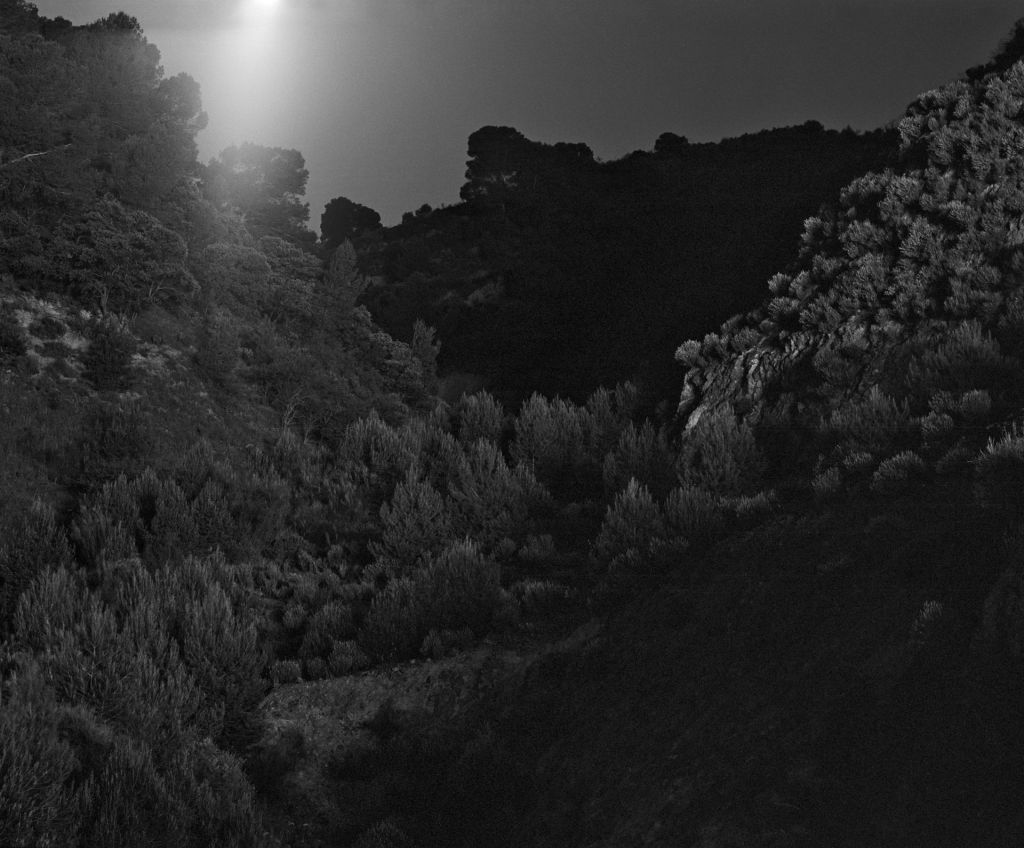
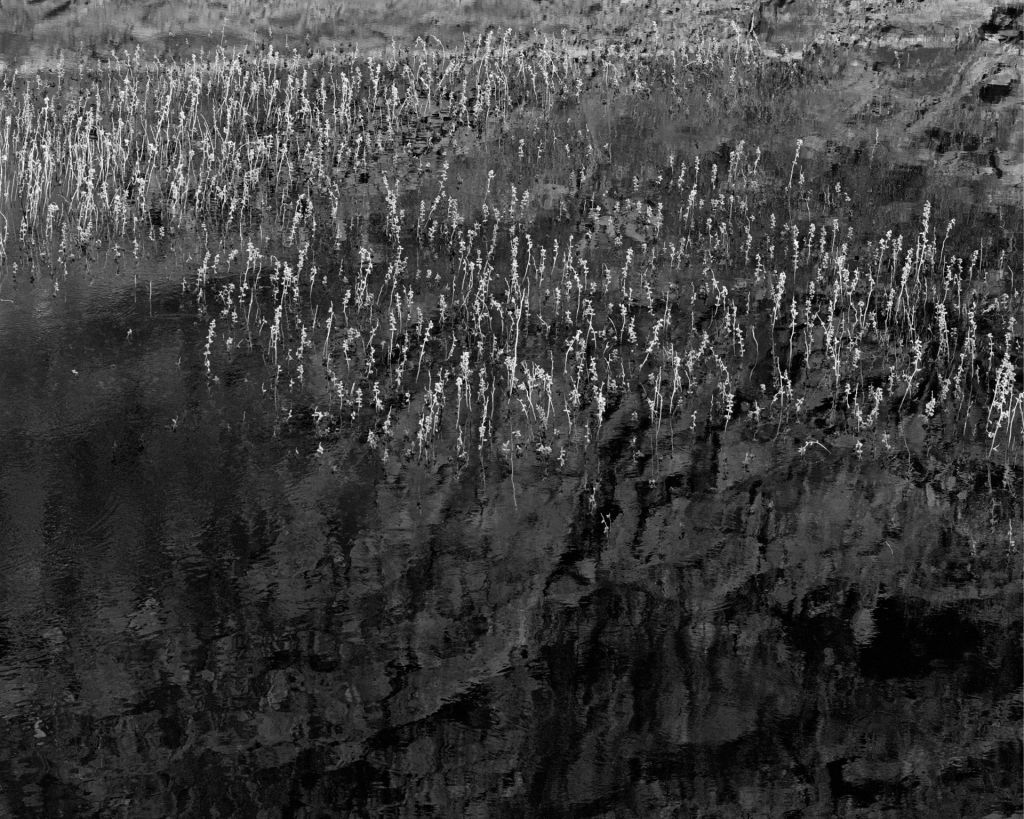
Of that book, Stanley Wolukau-Wanambwa, one of the sharpest and most elegant pens in contemporary photography criticism, wrote: “The photographs describe surfaces, fissures, and rolling expanses of an unspecified landscape, taken with long exposures on nights of profound shadow, when each scene is illuminated by the light of a distant moon. What we see in each image is therefore the accumulated compression of many minutes or hours of light traveling across a dark scene, so that ravines, trees, rock faces, leaves, and slopes are lit by a light that casts no shadows in the darkness surrounding them.” He continues: “Amidst all this darkness, these images are animated by life, and by a sense of its spread into the imperceptible depths of shadow, where the silhouettes of leaves transform into spores with rough and blurred edges. Trees seem to reach for the light, while the jagged pattern of shadow and light animates the surfaces of the grass, and in the diaphanous shimmer of this nocturnal light, we feel like explorers of a deep and pristine ocean.”

Van der Molen has traveled across Europe in her Fiat Marea, stopping in safe places and sleeping in the back seat. She has been everywhere, she says, “from Spain to Crete, passing through Norway.” In her book, no location is specified, because it is not a work about places. Instead, she explains: “I only take the camera out of my bag when, in a place, I feel a connection between my ephemeral and transient self and what is eternal and solid. In these places I photograph, what I feel is a deep sense of rootedness. Photography is the result of this connection, of this experience. I’m not documenting the landscape: I’m photographing what I perceive by being in nature. The place we come from.” It’s one thing to say it, another is to create convincing images that can convey the same experience to the viewer. The artist says that after an entire year of work, there were only five or six “good” photographs. And, working with analog, you only find out if a shot was successful weeks later. It’s so easy to fall into the temptation of the rhetoric of the sublime that comes from romantic painting, she explains: “It’s like photographing a person smiling. Everyone likes a beautiful smile. But is it really the expression that says the most about us? In landscape photography, something analogous is the sky, where the eye can get lost in the depths. My attempt, however, is not to let the gaze escape.” It’s almost the search for a centripetal rather than centrifugal force. An invitation to an immersion.

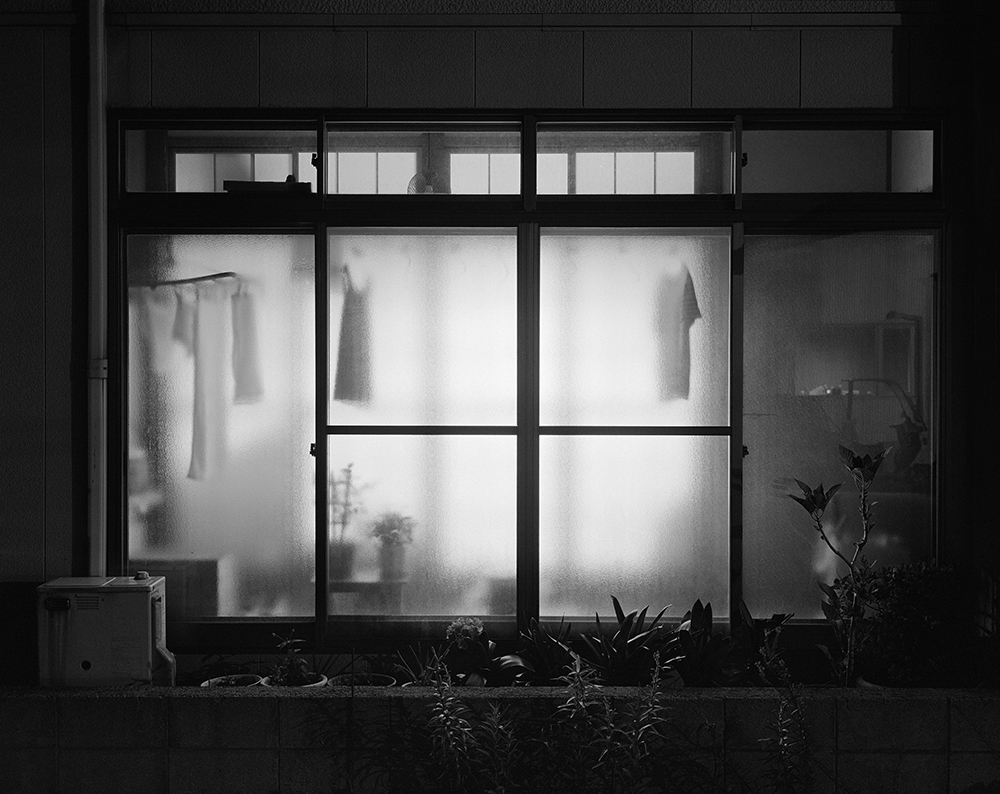
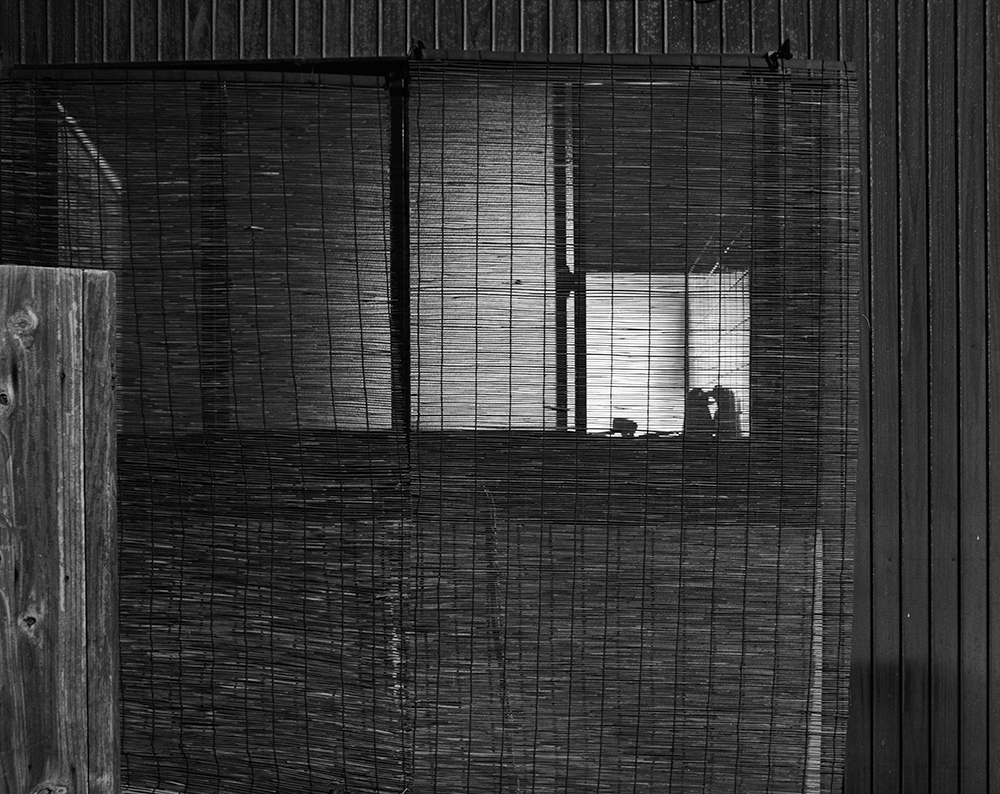
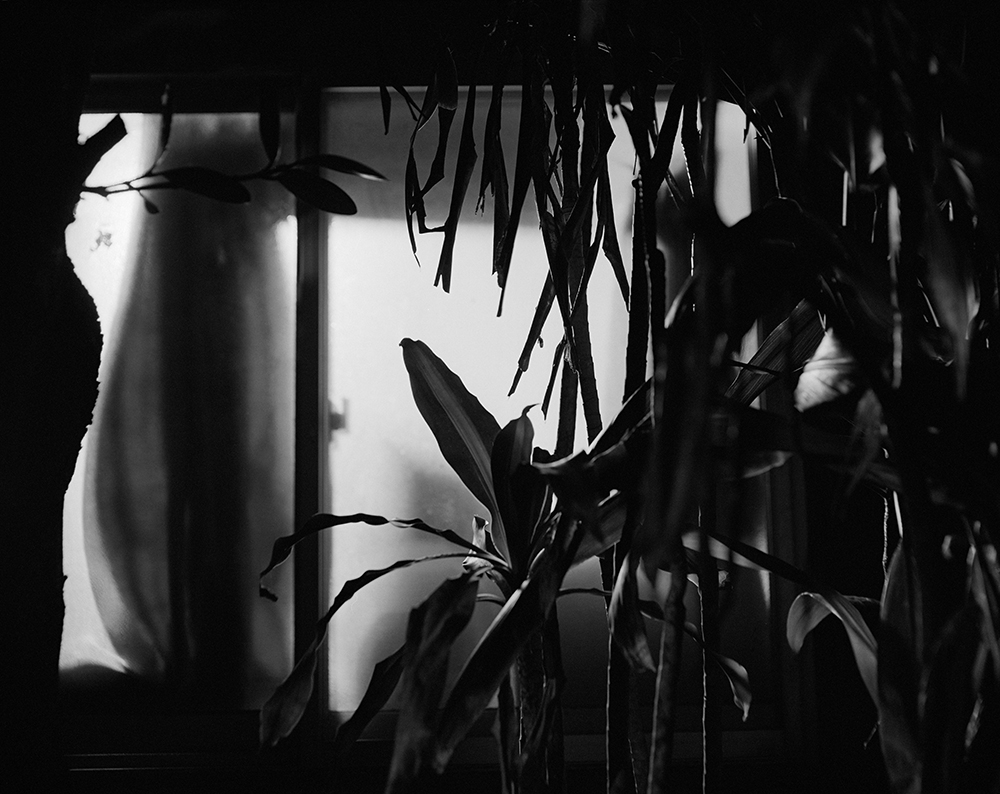
Then, at a certain point, after ten years of work, Awoiska realized she was repeating herself. “I learned a lot about myself during that period, and perhaps that’s why I no longer felt the need to continue that search.” So, while in Japan looking for new landscape images, she happened to photograph, at night, the grid of orthogonal lines drawn by the windows of a traditional Japanese house. The opaque panes prevented a view of the interior but returned a soft light, discreetly illuminating the darkness of the street. Back in Amsterdam, she looked at the image and said to herself, “No, too pretty.” But the following year, she returned to Kyoto to photograph nature and made a few more images with the same kind of subject. “But in the third year, I went again knowing that I would only photograph the windows. I didn’t know yet why or what I would do with them. I just knew that was what interested me. But there are those situations where you have no idea why you’re doing something, you just do it in response to what’s happening. It’s horrible to hear, but these are moments when you feel happy.” As in one of her photographs, Awoiska’s story is made of lights emerging from the deepest blacks. If I think back to the first time I photographed a window, in 2015, I realize it was a period when I felt lonely. Over time that personal experience passed, but it made me aware of an epidemic of loneliness that was afflicting a country like Japan and, ultimately, our entire society. Thus, as had happened with the nocturnal landscape, the photographs of the windows became a kind of psychological space for the artist to explore. Those luminescent panes become a kind of separating membrane, a defensive barrier, but also a breach in a closed world. “The more time passes, the more I think that this kind of loneliness is at the root of many difficulties, not just personal ones. I think that certain political behaviors, cultural choices based on fear, ultimately grow from this feeling of isolation and lack of connection.”

It would be wrong to create a cause-and-effect connection, because it’s never like that in van der Molen’s work. But perhaps it’s no coincidence that from the mysterious images of the grid of squares/windows captured from a medium distance, the artist began to get closer to the glass, framing the objects leaning against the opaque panes. They resemble bodies pushing outwards. “I was surprised by these new images. They had a new intimate, even sensual, quality. And I asked myself what they were saying about me. Was there perhaps a desire for greater intimacy?” The book that resulted from this is titled The Humanness of Our Lonely Selves and is a unique object, bound as a leporello with the photographs of the windows and a 16-page insert with the images of the glass. A design object in itself, it sold out in just two months.

Awoiska only understands herself and her work in retrospect. Today, she thinks back to the cover of Sequester, a photo she initially discarded because it was “too pretty.” A year later, she recounts, upon re-examining the negative, she changed her mind: “It seemed like a Japanese drawing to me, with flowers at the edges and the center empty—a space that in Japan would be called ‘Ma.’ I had never used it before; I considered it ‘their’ concept, not mine. But I realized that in that image there was also the meaning of darkness in my work: a black hole on the border between heaven and hell, life and death, beginning and end.” She shares this because, with the window series, things seem to have reversed: “In the center, there is a bright white, surrounded by darkness. I don’t want to cross that white space; I prefer to stay in that darkness which for me is like a warm blanket. Even if the windows can be born from a feeling of loneliness, I don’t try to interpret too much. Yet, comparing the covers of these two books, I see an interesting, almost ironic, inversion. An unexpected reversal.”

Il Foglio, August 27, 2025

Awoiska van der Molen

Awoiska van der Molen

Awoiska van der Molen

Awoiska van der Molen

Awoiska van der Molen

Awoiska van der Molen

Awoiska van der Molen

Awoiska van der Molen

Jacopo Benassi: The Punk Who Crashed Art Basel

Jacopo Benassi

by Luca Fiore

“Please, mention Sergio Fregoso. It matters to me.” That is Jacopo Benassi’s only request, one he never misses the chance to repeat in every interview, always citing the photographer from La Spezia whom he regards as his mentor. “More than photography itself,” he explains, “he taught me how to look.” He recalls La Spezia in the 1980s, when he used to hang out at the Kronstadt squatted social center, and it was Fregoso who introduced him to amateur photography—but with a “much more intellectual perspective. He was the one who made me discover Ando Gilardi…”

On the website of the Sergio Fregoso Archive, a phrase stands out in black type on a white background, visually modest yet arresting: “I don’t want to shed the air of home, the smell of my city. Moment after moment, without pause, I want to contain it all on my film, which is my skin, my sensitive surface.” Looking at the photographs of this man, born in 1927 in La Spezia’s working-class Umberto I neighborhood, a founding member of the AV 70 Group—bringing the language of images into schools and the city’s outskirts—one encounters flat, color images, mostly of windows. Nothing could be further from Benassi’s poetics. And yet, in every interview, that plea resurfaces: “Please, mention him.”

Jacopo Benassi was also born in La Spezia, in 1970. Last year, the online magazine Artribune named him “Artist of the Year” (notably: artist, not photographer). Massimo Minini, the doyen of Italian gallerists, brought him in June to the epicenter of the contemporary art world: Art Basel, the most important fair on the planet. Not bad for someone with a turbulent punk, anarchist, and disobedient past. (He admits: “Today it almost makes me laugh to say I do counterculture. And yet, deep down, underground, my spirit still resists ignorance and banality.”)

I meet Benassi in a ground-floor room of the Palazzo Ducale in Genoa. There, in June, he had moved his studio, working thanks to a residency organized by Blu–Breeding and Learning Unit, made possible by ministry funds from Strategia Fotografia. It was during those days that he created the core of works concluding the exhibition Jacopo Benassi. Libero!, curated by Francesco Zanot, on view at Palazzo Ducale until September 14. Beforehand we meet at a bar. Black pants, black T-shirt. Plastic slides with white stripes. At his side is Khan, a lanky Berlin-based musician, half Turkish, half Finnish, wearing a shirt that reads “Beuys Beuys Beuys.” A double homage: to the German shaman-artist and to the unforgettable hit by Italy’s own Sabrina Salerno. That evening, one of the musical performances that have long been central to Benassi’s practice is scheduled.

He begins his story from the very start: squats, music, political activism. He draws, paints, photographs. He works as a mechanic. His friend Renzo “Benzo” Davetti, frontman of the punk band Fall Out, once told him: “You can make art even if you’re a factory worker.” In 1989, Kronstadt hosted an exhibition by the collective “Arterie barbare.” He was there too: “We were a bunch of misfits.” For the occasion he showed a one-and-a-half by two-meter painting depicting a Caravaggesque deposition of Christ pierced with giant forks: “Something deliberately blasphemous. Even though my devoutly Catholic mother took it and hung it in her bedroom.”

The first turning point—or one of the artist’s many fresh starts—came in 1996. That was the year of his coming out, when he publicly declared his homosexuality and discovered his “normal light,” the flash, which became his signature. “Maybe it was coincidence, but it happened in the same weeks, and it was the end of a repressed nightmare. One day I was at a friend’s house and I realized this light was mine. From that moment, I couldn’t look at my images without flash anymore. It’s a huge renunciation of photography, really, because it means giving up on beautiful images. You can’t photograph the sky anymore, you can’t capture crowded scenes or the people in front will be burnt out and harsh shadows will cover whoever’s behind. The flash flattens everything.” With digital, for purely chromatic reasons, his images became exclusively black and white. “With color I couldn’t achieve the flattening effect I was looking for.”

His skewed, raw images—mostly of bodies—brought him to Milan in 2002, where he worked extensively in editorial photography. He published in GQ and Rolling Stone. But after four years, something felt wrong: “My photographs were becoming ‘beautiful.’ I was looking for the perfect frame. I was using expensive lenses. I was starting to give up the flash. Some of my images were beginning to look like Gabriele Basilico’s. I was losing myself. One day they told me to take my portfolio to Vogue. But I never went. Instead, I returned to La Spezia and opened a club with some friends.”

That club was Btomic, punk at its core. Experimental. A place to play music, drink, print T-shirts and fanzines. Peeling walls, a bohemian atmosphere. It was there that Benassi first took the stage. He played music, but it was the camera that dictated the dramaturgy. The performance was made to be photographed, yet it stood on its own as an event. The artist slapped the audience with his flash and asked them to do the same. “I’m not an actor, nor a musician, nor a dancer. I started because I felt I had to. There’s no script, it’s almost all improvisation. I think a bit about Fluxus, about the breaking of the score that Giuseppe Chiari talked about. Only later do I decide if and how to use the images created in those moments.”

But after 2020, Benassi’s practice took an irreversible turn, leading him to where he is now. “At the Leica space in Milan, for the first time, I cut through the glass. I stepped outside of photography—meaning that temple of amateur photography gave me the chance to enter a contemporary world. It was almost a painterly gesture, almost a tribute to Fontana, to look inside the emerging image.” From there, the momentum kept building: Museo Pecci in Prato, Fondazione Carispezia, GAM in Turin, Galleria Minini in Milan, Mai36 Gallery in Zurich. Benassi expanded his language: writing on walls, burning frames, strapping photos together with industrial belts, collecting objects, making sculptures. An aesthetic that at times recalls the “DIY” ethos of Swiss artist Thomas Hirschhorn, who made sculptures out of brown packing tape. “I’ve realized I’m an imperfect person, so I work on imperfection. In photography, with brushes, in everything—even in performance I let myself be who I really am. I don’t strive for perfection, because I wouldn’t be able to. I’ve perfected myself to the point of now being number one at making mistakes.”

It was during this period that his mother passed away. Benassi had to clear out his parents’ home, sorting through boxes and revisiting his childhood—the good and the bad. He came across his old school reports: “They said I was intelligent but got distracted easily. And that’s who I still am today. I lose focus immediately. It’s part of my character. My imperfection.” In his parents’ bedroom he found his youthful painting of the Deposition. Taking it down, he saw the shadow the canvas had left on the wall, like a shroud imprint. He photographed it. That image of the dirty wall was then assembled to almost entirely cover the “forked Christ” painting, alongside a smaller photo of the nightstand where his father slept, marked with cigarette burns from smokes left lit before falling asleep. A sacred work, shown this year at the Museo Diocesano in Milan as a counterpoint to a Deposition by Tintoretto. A meditation on love, intimacy, mourning, memory. Because, as the band Baustelle sings: “Il tempo ci sfugge / Ma il segno del tempo rimane” (Time escapes us / But the mark of time remains).

The Genoa exhibition is full of photographs of butterflies. A cow’s portrait. A lobster. A monkey. Skulls. Flip-flops. Countless flip-flops. One afternoon in his temporary Palazzo Ducale studio, Benassi receives a package containing a pair of Playstation-branded slides. He reacts as if he had received a priceless gift. I ask him what they mean to him: “They’re my obsession. I realized I was gay when I first saw them as a child, and for years I avoided wearing them—I even showered in socks—out of fear of being exposed. They were so intimate, tied to nakedness, that showing them terrified me. Now I’ve metabolized them, and I integrate them into my works as my most intimate portraits, transforming that fear into art.”

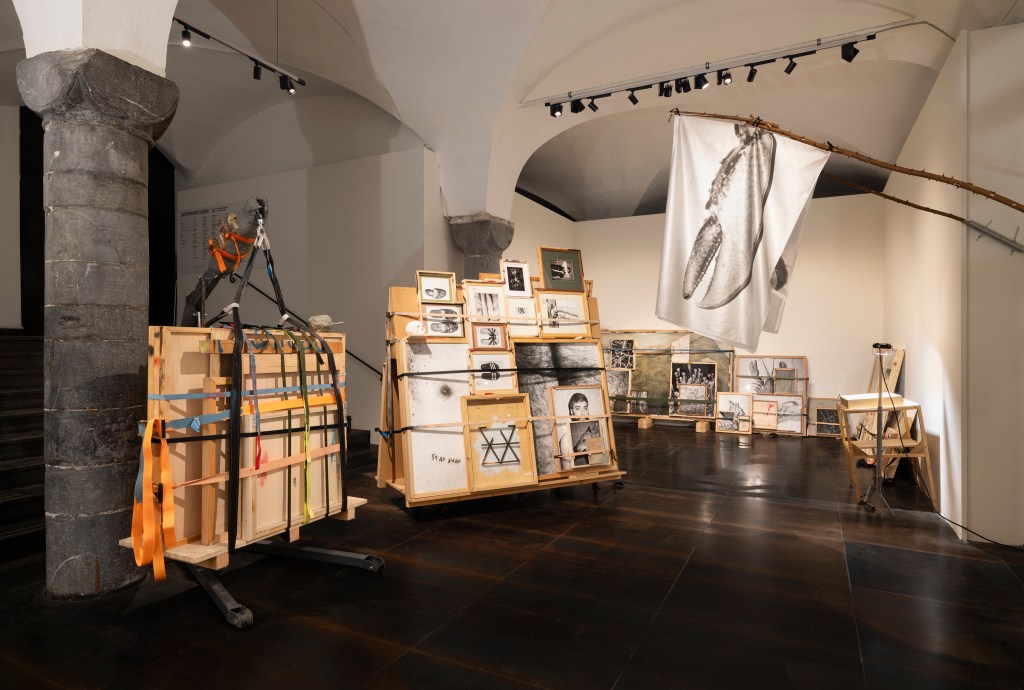
The exhibition unfolds in clusters of framed photographs, where subjects dialogue by shape or content, forming what one might call “visual rhymes.” But what strikes most in Genoa is the space taken by painting, to which Benassi has returned. “I started painting like a photojournalist: fast, imperfect, because I don’t have the patience for thorough study. It allowed me to break free from traditional photography. I paint to enjoy myself deeply, creating works about my city where the human figure no longer appears, leaving room for nature to reclaim space.” Most works are displayed resting on the floor, as if the visitor had arrived the day before the opening. Almost an invitation to share in the provisional condition that pervades Benassi’s practice.

Another recurring theme is rose thorns. Photographed, but also sculpted, coexisting with the images. Benassi explains: “Today the thorns are my defense, a wall I raise, a real political barricade that protects me, though it forces me to be careful not to hurt myself. In my work, they symbolize roses that refuse to bloom, flowers striking in protest against wars, a reflection of a world on fire. They are the deep portrait of who I am today, a mix of hardness and joy.”

This, perhaps, is the key to reading Benassi’s entire body of work: the pairing of opposites. Severity/humor is just one of its many forms. Behind the visual noise—atonal, like dodecaphony (badly made frames, tape, casual brushstrokes, mounds of clay)—lurks a strong classical rigor. A very punk approach: in late-1970s England, the Sex Pistols were nothing but the flip side of Queen Elizabeth. Aesthetically, Sid Vicious and company wouldn’t have existed without the monarchy’s flawless image. And probably, the reverse was also true.

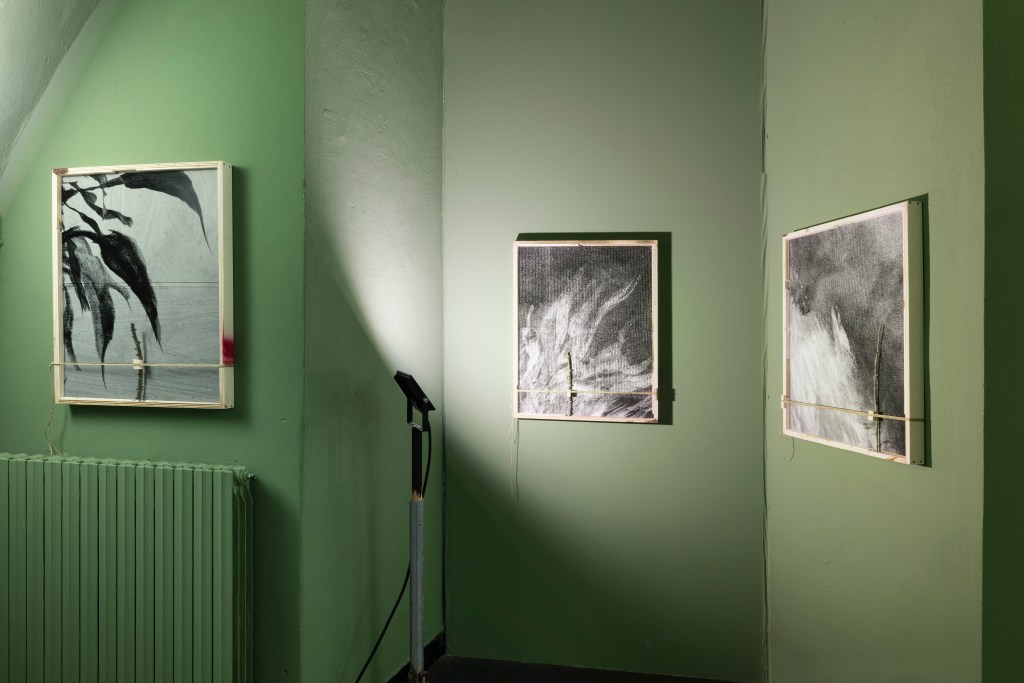
The exhibition route ends in a tunnel-like labyrinth filled with sculptures—sometimes obscenely self-mocking—objects, and writings that reflect the unsystematic, chaotic work of the Genoa residency. Emerging from the tunnel, one finds oneself in the museum bathrooms, where Benassi exhibits works made for Villa Croce, the city’s ill-fated contemporary art museum. These are photographs of his paintings depicting cut flowers, battered leaves, skies glimpsed from the villa’s garden. “I find it ironic and liberating to paint skies and then photograph them with a flash, prompting reflection on what lies behind an image. Today I feel free from any framework photography imposes, and this painting is a continuous evolution of my language.”

Benassi is the classic case who drives photography purists mad. It’s the eternal rivalry dating back to the early 20th century: pictorialists, who wink at the figurative arts as if photography weren’t art enough, versus modernists, who insist the medium can be art in its own right—though condemning themselves to isolation and marginality. Benassi has sided with the former. But, like all sensible people, he knows rigid frameworks kill intelligence. And outside Palazzo Ducale, he has sprayed a phrase of delicious ambiguity in red paint: “Benassi against the condemnation of photography.”

Il Foglio, August 20, 2025

Jacopo Benassi
© Andrea Rossetti

Jacopo Benassi
© Andrea Rossetti

Jacopo Benassi
© Andrea Rossetti

Jacopo Benassi
© Andrea Rossetti

Jacopo Benassi
© Andrea Rossetti

Jacopo Benassi
© Andrea Rossetti

Jacopo Benassi
© Andrea Rossetti

Batia Suter: The “Epic of the Gaze” That Reveals the Secret Life of Forgotten Images

Parallel Encyclopedia BatiaSuter

by Luca Fiore

One day in the mid-2000s, Batia Suter received an email from someone asking about the relationship between her work and Aby Warburg’s Bilderatlas Mnemosyne. The sender had seen a draft of what would later become Parallel Encyclopedia, her first book, published in 2007 and now considered legendary. In her Amsterdam studio, the Swiss artist had to Google the name of the great German scholar—she had no idea who he was. It took only a few seconds for her to realise the near-overlap between their projects. Today, she tells Il Foglio it was a shock that took her two weeks to recover from. “What was the point of continuing such an immense effort if someone had done the same thing a century earlier?” She ordered books, read, studied. What unfolded before her was the fascinating and mysterious world of the German art historian and critic—“Hamburg at heart, Jewish by blood, Florentine in soul”—who, during his lifetime, amassed a collection of 65,000 books and 8,000 photographs of artworks. In the last years of his life, he began working on an unfinished project: panels grouping images of artworks from all eras to show how certain iconographic themes in Western culture repeat over time. A utopian and marvellous undertaking. A new way of studying art history through photographic reproductions. An adventure abruptly cut short in 1929 by a heart attack.

Instead of being paralysed by the comparison, Batia found in Warburg a companion along the way. “I had found someone who was familiar with my way of thinking. I began to feel him as a brother, in who he was and in the way he researched. Back then, he had to order images from all over the world, spending a lot of money. I, on the other hand, had the privilege of simply scanning them from the books I collected. Of course, he was interested in Greek culture, the Renaissance, the workings of the human body. I’m not very good at building theories. Mine is more an attempt to make high culture and low culture collide.” Indeed, Parallel Encyclopedia—a 600-page volume created over five years of intense, obsessive work—is less a tool for study and analysis than an epic of the gaze. Monumental in its encyclopaedic scope, it seems to play with, if not poke fun at, the rationalism of Diderot and company. Yet it contains an immense love for the power of images: their ability to speak their own language and to converse with one another, generating unexpected new meanings.

Nearly twenty years after the publication of Parallel Encyclopedia, Batia Suter is a prominent name in the world of photography. Few, like her, have worked so convincingly and radically with archival research—a field that has become one of the most beloved and developed strands in contemporary photography. Alongside her publications, Suter has translated her research into monumental installations using her image collections. She was a finalist for the prestigious Deutsche Börse Photography Prize in 2018; that same year, she exhibited at Le Bal in Paris, one of the most important photography venues. This year, she won the Swiss Design Award and is present with a solo exhibition at the Rencontres de la Photographie in Arles, titled Octahydra. In the current display of the Stedelijk Museum’s permanent collection in Amsterdam, her installation drawn from Parallel Encyclopedia is on view—80 books, open and overlapping, so that their photographs engage in visual dialogue.

Suter’s passion for images began early, at the age of 14. That’s when she started carrying a camera with her everywhere. She would spend hours developing and printing film rolls in the darkroom. She enrolled at the School of Design in Zurich, then transferred to study at the Academy of Fine Arts in Arnhem, the Netherlands. “I began painting and drawing by enlarging my photographs. I would project the images and trace them—a very physical and intense process. But it was also stressful—I had to work at night to have the darkness needed for projection, and I needed large spaces. I realised I couldn’t go on like that until I was eighty. Even then, I wasn’t interested so much in the technique—whether painting or photography—as in understanding images and their effect on me.” After the academy, she enrolled in a master’s program in typography. It was the late 1990s, and Batia had no experience with computers, but in that course she discovered two programs that would irreversibly shape her career: Photoshop and QuarkXPress. The first for working on scanned images, the second for laying them out on the pages of a potential book. “That’s when I started collecting second-hand books. I began scanning all the images that interested me. I would print them on A4 sheets and lay them out on the floor. I worked in an open space, and lots of people would pass by. At a certain point, they started stopping and asking for copies of the images that had caught their attention.”

That’s when Batia realised something fundamental: her thinking moved through images. Not only that—everyone has their own favourites depending on their past and interests. Yet there are some images that appeal to everyone. “There are photographs that relate to something we have in common. There’s something in them with a particular power, able to captivate us.” This became the starting point for her research. What are these images? Why are some timeless? She wanted to understand. Her passion for images became like a drug—a kind of addiction. And when she began working with page-layout software, she felt a new sense of freedom. The ability to experiment—more easily than ever before—by juxtaposing, swapping, and inverting her collected material opened a frontier of exploration that seemed endless. She had finally found her tool.

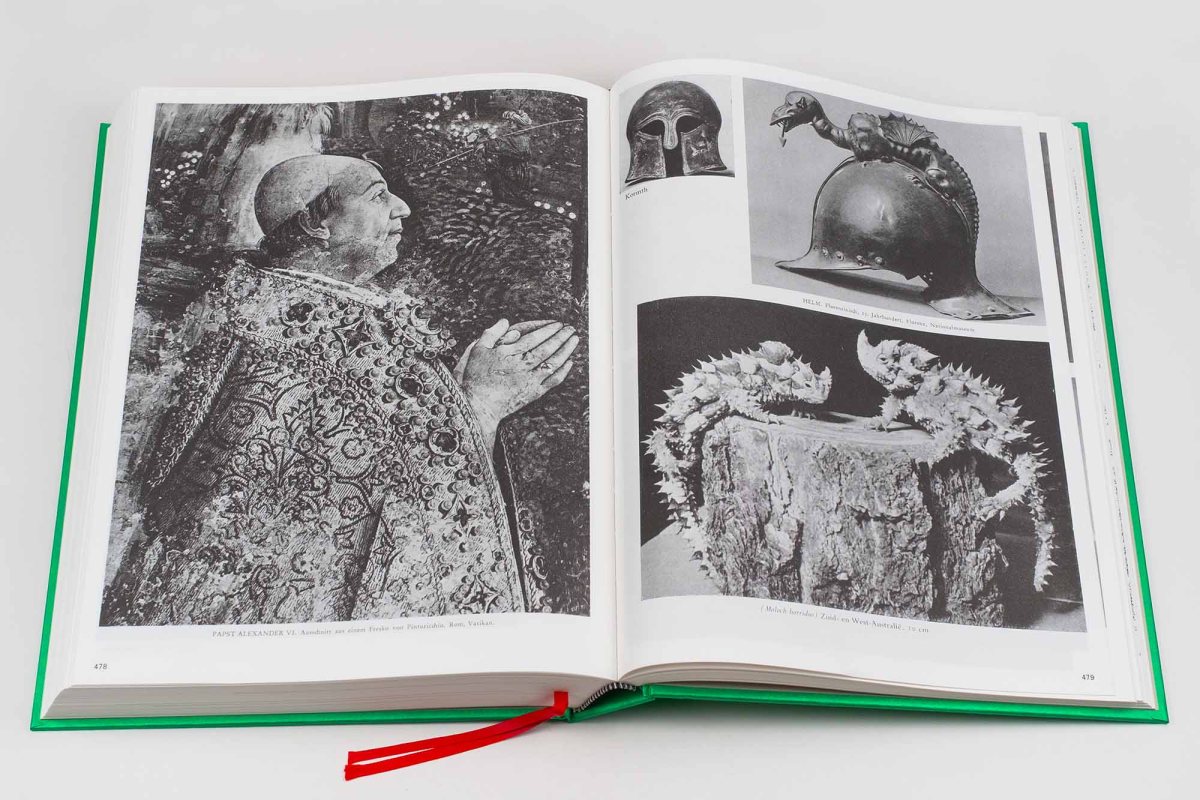
The first spread of Parallel Encyclopedia presents works by Julian Stanczak, Marina Apollonio, Richard Anuszkiewicz, Marcello Morandini, Tadasky, and Mosuho Ohno—all artists linked to the Op Art movement. These are striking geometries designed to enchant or deceive the eye. Turning the page, we find images of plankton, their microscopic marine forms arranged in geometries recalling those just seen. In the same spread, however, there is also a test chart used to calibrate a camera’s greyscale, made of circles, lines, and triangles. Forms echo one another. Later, there are photographs of planets, seashells, everyday utensils. A few pages on, enlargements of snowflakes and ancient cameos inlaid with human figures. The further you go, the more you are drawn into a narrative of visual analogies and shared meanings. Without any sense of rupture, on page 50 we are confronted with atomic explosions, American aircraft carriers, road accidents. On page 300 we see an eighteenth-century stool whose legs, in the next spread, rhyme with those of oxen pulling a plough. This opens an entire section devoted to horses: engravings, paintings by Velázquez and Simone Martini. There’s even a photograph of a tiger, with its trainer, resting calmly on the back of an elephant. Buster Keaton next to a medieval miniature. Dürer and an Assyrian sculpture. African art, X-rays, commercial catalogues. Centripetal and centrifugal force. Tintoretto and Yves Klein, Giotto and Walker Evans. A fascinating journey, a flow with no narration, yet one that holds attention like the plot of a thriller. Where will the next page lead?

After her encounter with Aby Warburg, another unexpected meeting shaped Batia Suter’s path. “My mother is a psychologist. Once, while I was talking to her in her studio, my eye fell on Man and His Symbols by Carl Gustav Jung. I picked it up and started reading.” For the artist, it was another shock: “Again, his way of thinking about images was very close to mine. He talks about ‘Urbilder’—primordial images developed by the unconscious and common to all humanity.” Jung studied dreams, fantasies, and religious symbols to show the recurrence of certain universal imaginative forms. “It’s a very powerful idea—that human beings all react the same way to certain visual information. It’s something natural. And for me, that’s very clear. I’m convinced that such a thing exists: at a primitive level, we are stimulated by certain subjects and images and by their qualities.” And yet Suter felt something was off: “I knew I didn’t want to go in a psychological or spiritual direction. I had to step back, stop, to understand better what I was looking for.” Again, the crisis became an opportunity for a fresh start, and Suter returned to immersing herself in her world of photographs, working to refine her language so that the invisible thread binding her compositions would become ever more transparent to the viewer. But in the end, what kind of language is it? “It’s similar to the language of dreams. It’s fast, associative, non-rational. I create unexpected connections between images to generate new meanings. I’m not trying to explain everything verbally, but to provoke a visual experience. A language that operates beyond words, touching something more fundamental in human experience.”

Nine years after Parallel Encyclopedia, in 2016, Suter released Parallel Encyclopedia #2. Same format, same method, same number of pages. But unlike so many film sequels, this second volume stands on its own. The artist introduces colour—sparingly. The layout is slightly more elaborate. There is perhaps more humour. But again, the flow of thousands of images manages to embrace all human knowledge, from the micro to the macro, from the ancient to the contemporary. From this volume—as from the others that followed, particularly Radial Grammar (2018)—came installations in which Suter allowed images to interact with space. They could take the form of large-scale prints, slideshows, projections. “Installations allow me to explore physical space, to walk among the images. Here, the images become almost like a ‘skin’ of the wall, interacting with the architecture.” She conceives these operations as “extractions” of one or more chapters from her books—extensions of her editorial projects. If the experience of a book is intimate and repeatable, its “spatial staging” becomes something physical, where the viewer confronts images larger than their own body, able to be examined up close or from afar. The same is happening these weeks in the dark spaces of the Roman cryptoporticus in the historic centre of Arles, where Suter has been invited to present Octahydra for the Rencontres de la Photographie. It is a projection-based work reflecting, on one side, on architectural forms, and on the other, on images of food containers whose rhythmic, architectural patterns evoke structures of defence and protection.

Suter’s is a language that eludes immediate rationality, yet is universally understandable. Like music, in a way. The images she gathers, through a kind of ancestral pull, are not mere representations but words in a discourse grasped almost unconsciously. As she herself admits, we live in a moment when—overwhelmed by a constant flow of visual stimuli—“reflection is almost impossible.” And these images she uses, drawn from the past—a past arriving to us through the printed page—appear perhaps as the last handholds to keep us from drifting away, in a context where it is ever harder to distinguish what is true from what is not.

Il Foglio, August 12, 2025

Parallel Encyclopedia BatiaSuter

Parallel Encyclopedia BatiaSuter

Parallel Encyclopedia BatiaSuter

Parallel Encyclopedia BatiaSuter

Parallel Encyclopedia BatiaSuter

Debi Cornwall: Photography Exposing America’s Fictions

Debi Cornwall Necessary Fictions

by Luca Fiore

For twelve years, she worked as a civil rights lawyer. She sought compensation for the innocent exonerated through DNA testing, worked on behalf of families of shooting victims, cross-examined detectives, and pursued justice where the system had failed. A successful but draining career. So she gave it all up. Debi Cornwall, born in 1973, is now an internationally recognized photographer known for images that—through a disorienting grace—explore the thin line between reality and fiction in post-9/11 America. Last month, she presented Necessary Fictions and Model Citizens at Fotofestiwal Łódź in Poland, following the success of last year’s presentation at the Rencontres d’Arles.

Speaking of her life as a lawyer, she says: “I was always angry. I fed on indignation. My private life no longer existed,” she tells Domani. After an exhausting trial, she took a three-month leave of absence. She went to Mexico, then to Myanmar, where she discovered meditation—and started sleeping again at night. Back in New York, she left the firm where she had been a partner. She took a year off, living all the things she had denied herself as a Harvard student. And she returned to an old passion: photography.

“One evening I was having dinner with a friend and former colleague who had assisted Guantánamo detainees who were exonerated and released, but who by law could not enter the United States. I thought I’d like to photograph them.” That’s how Welcome to Camp America: Inside Guantánamo Bay was born, her first book, published in 2017. For it, she visited the prison on Cuban territory three times and met with 14 former detainees in nine countries. The result? A sequence of images of the prison’s interiors, taken under the strict rules imposed by the U.S. military (no portraits, no wide shots, nothing that could reveal procedures or layouts), as well as images of leisure spaces used by military personnel (pools, bowling alleys, supermarkets), and photographs of souvenirs sold at the base’s gift shop. These images are interspersed with testimonies from former detainees and former guards. An emotional rollercoaster. The stories of survivors and key witnesses of torture cases alternate with depictions of sterile environments staged specifically to be photographed. What emerges is a system of performance, a self-representation of the State that begins to fascinate Cornwall and becomes a recurring theme in her later work.

“I was interested in the disconnect between the official message and the hidden truth.” That’s how she discovered the military bases on U.S. soil where mock villages are built to simulate battle conditions in the Middle East. She later learned that these “games” employ “cultural role players,” American citizens of Arab descent who act the part of potential enemies. This became the subject of Necessary Fictions, her 2020 book, in which Cornwall presents urban landscapes that at first glance seem to be in Iraq or Afghanistan but, on closer inspection, appear too clean, orderly, and deserted to be real. “The idea is that when our soldiers arrive overseas, their bodies will already have an embodied experience of what awaits them. Their bodies will already know what could happen. Behind this are psychological studies suggesting that by staging war, one can prevent the trauma that so many veterans suffer from. But I ask: at what cost? What does it mean to train for trauma through another trauma?” The photographer doesn’t mince words: “Today in the United States, war is staged every day. Not only by the military but also by a network of private contractors. What does it mean that wars fought abroad actually begin—geographically, financially, culturally—on domestic soil, without citizens being aware of it?” Part of Necessary Fictions is also dedicated to portraits of National Guard members who are made up by Hollywood professionals to help train medical personnel in triaging fatal wounds. Cornwall asks: “What does it mean, for these young people, to play out the death they might actually face?”

Cornwall’s latest work, Model Citizens, published in 2024, stems from another question and reflects not on government attitudes but on those of civil society: “How is the idea of citizenship influenced by staged performances, role-playing, and simulations in a violent country where citizens no longer agree on what is true?” The project addresses three different scenarios. The first are the training environments at the U.S. Border Patrol Academy: here, “crisis actors” (civilians who play potential threats, many of whom are Mexican immigrants) recreate scenarios in which future border agents train to track, arrest, and use force against “illegal aliens.” Then there are the historical museum dioramas: installations portraying events from the Civil War to 9/11, which present American history through static scenes, often depicting soldiers as heroes and civilians as victims or stereotypes. Finally, there are the “Save America” rallies (usually Donald Trump rallies), where Cornwall documents the “performance of citizenship,” with participants often arriving in costume to “perform” with patriotic symbols. One image shows a Hispanic-American woman, with a border wall in the background, about to throw a large rock at a mannequin dressed as a border patrol agent. Cornwall explains: “The trend is to train only for the worst-case scenario, whether it’s a traffic stop or a border crossing. If you’re conditioned to fear the worst, you’re likely to act out of fear. With potentially disastrous consequences.”

So what kind of photography does Debi Cornwall make? It’s called “conceptual documentary.” She doesn’t reject the label, but she qualifies it. “Definitions are dangerous. I don’t think of myself as an ‘old school’ documentarian, someone who makes photographs just to inform. I’m interested in using images as one tool among many to invite people to look at and think critically about the world and systems of power—and how they operate on us and our role in society, possibly complicit in those systems.” But what do photographs themselves add to her intent? “People tend to ignore what doesn’t align with their worldview. Technology amplifies this polarization. But if something is right in front of you, you can’t unsee a photo. My goal is to create images that hit physically, that make the body react. When you feel something in your gut or your heart, you remember it. And that reaction can be the beginning of a conversation. If two people with opposing views both respond to the same image, that’s common ground. Maybe even the beginning of a connection.”

Domani, 21 July 2025

Debi Cornwall Necessary Fictions

Debi Cornwall Necessary Fictions

Debi Cornwall Necessary Fictions

Debi Cornwall Necessary Fictions

“LotsOfLots”: The Most Fulfordian Book Yet

Jason Fulford LotsOfLots

by Luca Fiore

“Just as they [the Greeks] taught that all knowing is a recollecting, modern philosophy will teach that all life is a repetition. Repetition and recollection are the same movement, except in opposite directions, for what is recollected has been, is repeated backward, whereas genuine repetition is recollected forward. Repetition, therefore, if it is possible, makes a person happy, whereas recollection makes them unhappy.” This quote by Constantin Constantius, a pseudonym of Søren Kierkegaard, is the only text featured in LotsOfLots (MACK, 2025), the latest book by American photographer Jason Fulford. It needs to be read several times. And even on the third or fourth reading, you may still not be sure you’ve really understood it.

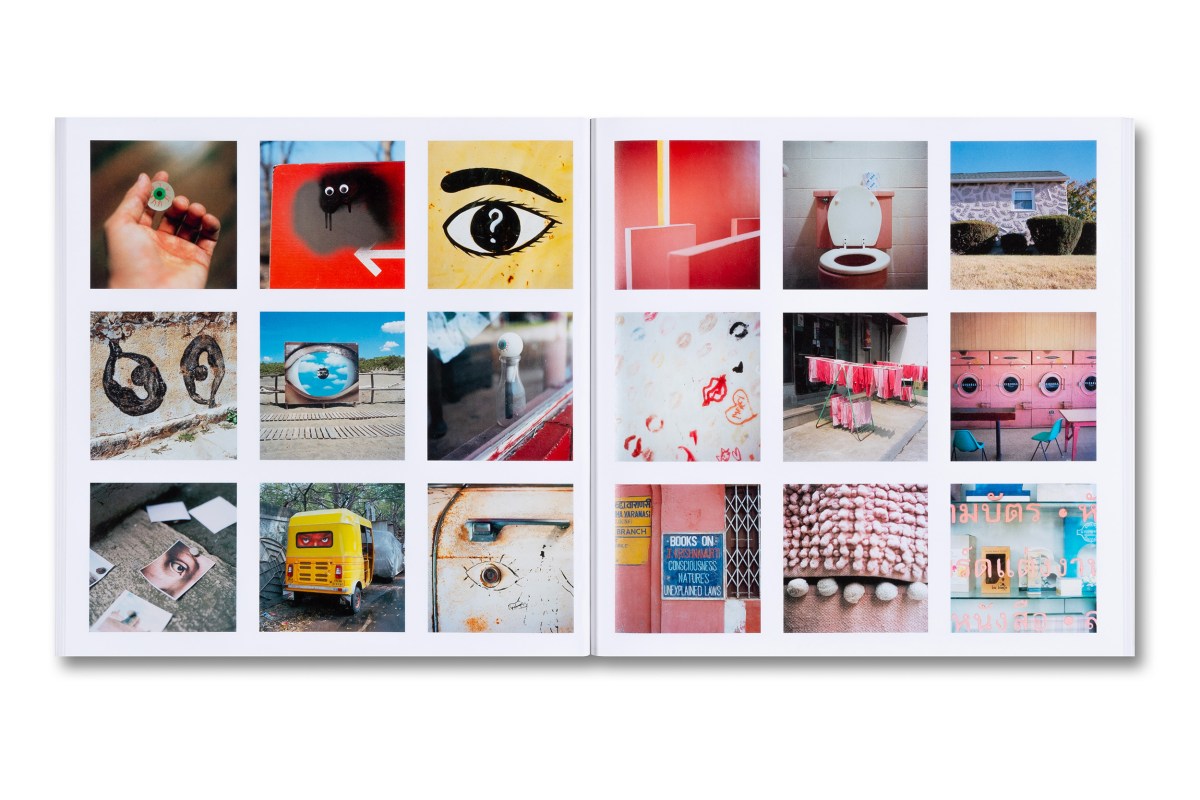
Fulford is one of the brightest minds in contemporary photography. He’s a kind of Brian Eno of the art invented by Niépce, Daguerre, and Talbot: he explores new directions on his own and helps others bring out the best in their work. He produces enigmatic and fascinating images, but his real strength lies in how he makes photographs speak to each other. It’s the art of editing: when you place two seemingly unrelated images side by side and something new emerges. In this, he is—if not the very best—certainly among the best around. Fellow photographers often turn to him for advice. In some cases, he’s been instrumental to the success of others’ work (the most notable example being ZZYZX by Gregory Halpern). He believes photographers fall into two categories: sculptors and gatherers. The former start with a clear idea and seek to express it through images. He, instead, identifies with the second type: he shoots intuitively, without a specific reason, aside from the choice of subject. For him, photographing is like collecting words—a visual vocabulary that he later tries to organize through editing, creating meaning, even if ambiguous. With this process, he has made books that are very different from one another and unlike anything by anyone else: Raising Frogs for $$$, The Mushroom Collector, Picture Summer with Kodak Film, and The Heart Is a Sandwich. And yet his latest release, LotsOfLots, is something else entirely—and feels like the most “Fulfordian” work of all: a summing-up of thirty years of photography.

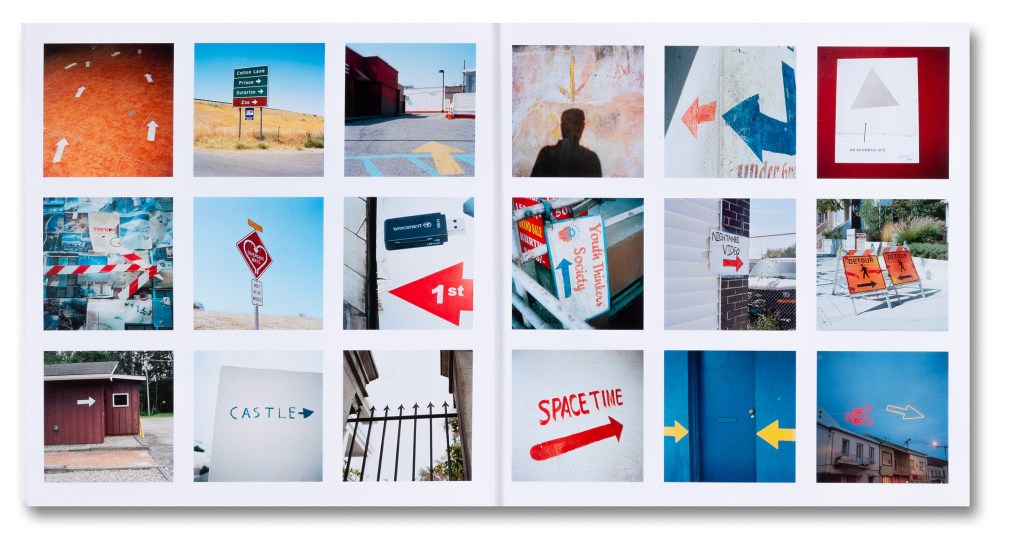
The format, design, and structure pay homage to a photography book published by Sol Lewitt in 1977, titled PhotoGrids. That book was a collection of Lewitt’s photographs arranged in grids of nine images per page. They depicted architectural elements: doors, gates, floors, manhole covers. Each grid presented a typology. Similarly, Fulford worked through his archive to create 76 grids, totaling 684 photographs. As he explains: “I had never used this way of showing my work before. I’ve always aimed for open associations. Here, the structure is very simple—it almost feels like a children’s book. Some themes are elementary—for example, images where red is the dominant color. In other cases, the themes are more subtle, like ‘wet’ or ‘not wet,’ or ‘not perfectly straight.’ What I like about this method is that when you apply a categorization system to an archive, the results are often surprising.”
It’s something, he notes, like what Canadian writer Sheila Heti did with Alphabetical Diaries, where she reorganized her diary entries alphabetically by the first word of each entry rather than chronologically. The result is that a book review might be followed by a reflection on her father’s death, which in turn is paired with a note on what she ate that day. “It’s a combination that feels much more faithful to how life actually works, made up of scheduled events, unexpected things, quirky details, things tied to the body or the mind. That’s what happens in my book too.”

The first grid in the book gathers images that all feature one or more arrows. It’s a classic theme in American photographic tradition—just think of some of Walker Evans’s iconic Polaroids (which, perhaps, also inspired their recurrence in the work of Guido Guidi). Fulford shows arrows painted haphazardly on a floor, embedded in road signs, made with red-and-white tape stuck to a shop window, or placed atop an iron fence. Later on, we encounter a grid dedicated to the symbol “X”: iron pipes, pine branches, slashes on the canvas of an abandoned painting, the crossed legs of a Buddha statue. A few pages further, we see nine photos themed around sunset: on a beach, on the open sea, seen through frosted glass, or as red neon letters spelling “Sunset Lounge.”
Fulford’s game is a cultured one, operating on multiple levels: “First, there’s the level of the grid, which can be seen as a self-contained work of art. The book, in that sense, is a sequence of 76 complete works. But then, within each image, there’s a world of its own—full of small visual puzzles. And there’s also the aspect that relates to me personally, because each of the shots was taken in a specific moment of my life.”

It’s fascinating how a rigid, mathematical structure—a grid of nine images—combined with a loose, idiosyncratic method, can ultimately speak about life: encounters, surprises, epiphanies, comic or serious moments (like when the portal of Carlo Scarpa’s Brion Tomb appears in a grid dedicated to chains). “The goal of each of my books is to create something you want to come back to. I can’t explain exactly how the game works, but I know when it’s working. It’s like a kind of chain reaction that propagates thought.”

When asked whether, after all these years of thinking about editing, he ever finds himself, while looking through the viewfinder of his Hasselblad, imagining how a picture might be used later, Fulford is firm: “Even now, it all happens in the moment. I never think about what’s going to come next. That’s the goal of life in general: to wake up every morning and keep looking at the world with alertness.”
When editing a book, he says, the aim is to keep the viewer engaged through the entire sequence. “I think about rhythm, about how to begin something and end something else. It’s a way to keep the reader in an active state of looking. It’s human nature to drift off—no one can stay fully attentive all the time. But I believe we should strive for that. I really love that quote by Louis Pasteur: ‘Chance favors the prepared mind.’ I couldn’t put it better.”

Fulford’s photography might seem anything but autobiographical. And yet LotsOfLots has become a way to grapple, in a very personal manner, with his own biography. “Digging into my archive like this made me think about past versions of myself. As we live, we change. And the images I took serve as markers of those previous selves. I look at a photo I made in Thailand and remember what I was working on at the time, what I was learning, what I was seeing for the first time. All those past versions of me contributed to who I am now. The Jasons of the past have left me these images, and now I get to do something new with them.”

All 684 photographs from LotsOfLots, printed as a single monumental sheet, are on view for the first time in Milan, at Micamera, until May 3.

Domani, 1 May 2025

Exploring Vasantha Yogananthan’s Photography Journey

Vasantha Yogananthan, Mystery Street

by Luca Fiore

Vasantha Yogananthan is the golden boy of French photography. Born in Grenoble in 1985 to a Sri Lankan father and a French mother, he is now one of the most compelling voices on the international scene. Mystery Street, his latest body of work, published in 2022 by Chose Commune, was exhibited at the Fondation Henri Cartier-Bresson in Paris and the International Center of Photography in New York. In 2023, one of the images from the project was chosen as the poster for Paris Photo, the most important photography fair in the world. His work is represented by The Photographers’ Gallery, the UK’s first public gallery dedicated to photography, founded in 1971. Last summer, Les Rencontres d’Arles dedicated a solo exhibition to him: Le Passé Composé.

Yogananthan is self-taught. He first picked up a camera at 16 and has never put it down since. After graduating with a degree in History from Grenoble, he cut his teeth as an editor at a photo agency in Paris. Then, in 2009, he took the leap and devoted himself full-time to his personal work. His first project was titled Piémanson, after the name of the last wild beach in Europe, where thousands of people would spend their summers camped out, creating a sort of utopian city. “I was trying to find my voice as an artist and had in mind the documentary photography of Paul Strand and Chris Killip. I was after that same clarity and precision, which doesn’t need gimmicks to captivate the viewer.” For four years, Vasantha returned to the Camargue and, using a large-format camera, made color images of the camp and its inhabitants in the soft light of dawn and dusk. Once the work on Piémanson was finished, he decided to head to India. He didn’t know it then, but it would be an adventure that would last eight years and lead him to publish seven books.

“Everyone thinks I went East in search of my roots, but that’s not the case,” the artist explains. “The truth is, I’m one hundred percent French, both culturally and in lifestyle. My father arrived in France as a child, and at that time, immigrants were forbidden from speaking their native language to their children.” And yet, the Yogananthan household was full of books on Indian art, which fascinated Vasantha as a boy. “I was drawn to that kind of imagery, so different from anything you could see in the museums of my city. The trip to India probably came from the desire to understand better a visual language that felt both familiar and foreign to me.”

He packed many books of history and literature for the trip. Among them was the Rāmāyana, the ancient epic poem that is a pillar of Indian culture. He began reading it and discussing it with the people he met: “Everyone I spoke with referred to the story in a very interesting and personal way.” Something clicked for him, and he decided that his images would be his own version of the Rāmāyana. That is, the work on India wouldn’t be a documentary effort but a work of imagination. His journey thus took a new direction, as he began visiting the towns, villages, and small cities mentioned in the poem. This led to the first three books—chapters in a project titled A Myth of Two Souls: Early Times, The Promise, and Exile. These are ethereal landscapes, scenes of everyday life, men, women, and children of contemporary India. The photographs alternate with a text that narrates the mythical story of Prince Rama. The palette of the images is made up of pastel colors. Many of the images are staged. Sometimes the portraits echo the look of vintage photographs—black-and-white images hand-colored. “Halfway through the project, I wondered whether I had exhausted the material and should stop,” Yogananthan continues. “It could have easily remained a trilogy, but I realized the work wasn’t finished yet.” So four more chapters and corresponding books were born: Dankara, Howling Winds, Afterlife, and Amma.

By the end of his ten-year Indian journey, the photographer’s approach had been completely transformed: “As I delved deeper into the work, I realized that a documentary approach couldn’t capture what I had before me, or the experience I was having.” It’s a conclusion shared by several photographers who come from photojournalism—two names among many: Magnum Photos members Gregory Halpern and Carolyn Drake. “To talk about the real world, you can’t just document. If what you do is too close to reality, you fail. What you get is a document tied to a place and a moment in time. I’m not saying that’s not interesting or doesn’t have value. But for me, it’s not enough.” Vasantha gives the example of another major figure in contemporary photography, the British photographer Paul Graham: “If you look at A Shimmer of Possibility, it becomes very clear. Apparently, he’s documenting a slice of American life—for example, a man walking to the supermarket. It’s a Cartesian approach. Sure, it speaks of society and its problems. It tells a piece of daily life. And yet it’s not just that—it manages to say something more.”

Looking at Mystery Street, his latest book, Yogananthan’s work seems to have taken yet another step. It is no longer a long-term project, but rather the result of a three-month residency funded by the Fondation d’Entreprise Hermès, which invites French photographers to work in the United States, and American photographers to develop projects in France. Vasantha chose to go to New Orleans with an idea he’d had for some time: working with children. For the first time, he did not use a large-format view camera, but a medium-format one, which can be used without a tripod. “When I tell colleagues what camera and lenses I used, they don’t believe me. Technically, shooting handheld at such close distances is very difficult. You risk coming back with nothing. But I did it on purpose. I wanted to go there with the wrong equipment to force myself out of my comfort zone.” The result is not a project about the city, but about the experience of childhood. Games, running, being outdoors. The artist’s gaze avoids the typical sentimentality of images of children, and yet it is far from impassive. There is energy, physicality, the freshness of a gang of kids roaming the streets. There is no ambition to analyze the social or urban wounds of a city that had to recover after Hurricane Katrina. But there is something more: it offers the possibility to feel what, once we grow up, we know will never come back. “It may sound banal, but the question I ask myself while working is: how can I speak about my experience of the world? The challenge is to create images that are both specific and universal. Rooted in a particular reality, yet timeless.”

His latest project, Le Passé Composé, marks the beginning of another long-term journey, this time close to home, in Provence (the photographer now lives in Marseille). Here, the artist focuses on an elderly woman who lives in a near-fairytale house. The lights, colors, and atmospheres tell a story that is as real as it is a product of the photographer’s imagination. And yet so real… In literature, where invention has always reigned supreme, if the subject matter is real, we call it “non-fiction.” Photography, a much younger discipline, built its status on its privileged relationship with reality. Now, however, some want to use it as the written word has long been used—where, to truly express the truth of things, the stories must be invented. What name should we give to this kind of practice? This—and much more—is what Vasantha Yogananthan will discuss at Gallerie d’Italia, on Tuesday, January 28 at 6 PM.

Domani, 27 January 2025

The Legacy of Viaggio in Italia in Contemporary Photography

Viaggio in Italia Mario Cresci

by Luca Fiore

It seems impossible, but it happened. The most cited book in the history of Italian photography—the one most studied, discussed, debated, and even mythologized—had been out of print for decades, long before the debate around it even began. Anyone who wanted to leaf through a copy had to fork out a four-figure sum. Last year, on the fortieth anniversary of its publication, the auction house Finarte sold two copies: one went for €3,096 in April (initial estimate €1,000–1,500), the other for €1,806 in December (estimate: €1,200–1,800). Almost no one among those who had studied or discussed it could actually afford it. Its title is Viaggio in Italia (Journey through Italy), and it is the catalogue of the eponymous group exhibition that, in 1984, brought together around twenty photographers at the Pinacoteca of Bari (the exhibition later traveled to Genoa, Ancona, Rome, Naples, and Reggio Emilia). Half of those photographers are now regarded as the founding generation of the so-called “new Italian landscape.”

The project was orchestrated by Luigi Ghirri, who gathered the best talents around and selected their work. The contributors, listed alphabetically as they appeared beside the physical map of Italy on the cover, were: Olivo Barbieri, Gabriele Basilico, Gianantonio Battistella, Vincenzo Castella, Andrea Cavazzuti, Giovanni Chiaramonte, Mario Cresci, Vittore Fossati, Carlo Garzia, Guido Guidi, Luigi Ghirri, Shelley Hill, Mimmo Jodice, Gianni Leone, Claude Nori, Umberto Sartorello, Mario Tinelli, Ernesto Tuliozi, Fulvio Ventura, and Cuchi White. The 86 photographs were introduced by essays from Carlo Arturo Quintavalle and Gianni Celati.

It’s as if, for forty years, anyone wanting to read and study The Betrothed (I Promessi Sposi) had been unable to buy a copy. The comparison with Manzoni is no accident: Viaggio in Italia bears witness to the birth of a new Italian visual language. It’s a literary language—cultivated yet accessible—formed not by washing the Alinari postcards “in the Arno,” but in the waters of the Hudson or the Mississippi. An alphabet of deeply Italian images, seen with a different gaze, informed by trends that had already solidified in the United States by the early 1970s. Less Henri Cartier-Bresson, more Walker Evans. As the book’s dust jacket puts it: Viaggio in Italia was born of the need to embark on a journey into the new Italian photography, specifically to see how a generation of photographers—having put aside the myths of exotic travel, sensational reportage, formalistic analysis, and presumed or forced creativity—turned their gaze toward the reality and landscape around them.”

From the outset, it’s made clear that the journey was not through Italy as a territory, but through the new kind of photography being made in the country at that time. A new way of seeing.

Today, the book is back in bookstores, reissued by Quodlibet as an anastatic reproduction of the 1984 edition, originally printed by Il Quadrante in Alessandria. The cover price is remarkably accessible for a book of this kind: €42. The initiative was promoted and realized by the General Directorate for Contemporary Creativity of the Italian Ministry of Culture and the Museum of Contemporary Photography in Cinisello Balsamo, in collaboration with the Luigi Ghirri Estate. The volume quickly became mainstream, climbing Amazon rankings and proudly appearing on Feltrinelli bookstore shelves across Italy, ready to become a Christmas gift. The challenge now is to ensure that, having finally made it back to bookstores, it stays there—as it should, for any great classic. Anyone beginning to study photography—or even simply hoping to understand that crucial episode in Italy’s visual culture—must be able to access this book, even after the hype fades.

That’s how it works for the great books of the American canon. New York’s MoMA keeps in print American Photographs by Walker Evans, The Family of Man curated by Edward Steichen, William Eggleston’s Guide edited by John Szarkowski. This year, for the centenary of Robert Frank’s birth, Aperture republished The Americans and, for under $50, offers Diane Arbus: An Aperture Monograph, Uncommon Places by Stephen Shore, and The Ballad of Sexual Dependency by Nan Goldin—all cornerstones of American photographic history. A few months ago, a new edition of Images à la Sauvette by Henri Cartier-Bresson came out, published by the Fondation HCB, along with its American twin The Decisive Moment, from Thames & Hudson. In recent years, London-based publisher MACK has reissued, among other classics, Paul Graham’s “English trilogy”: A1 – The Great North Road, Beyond Caring, and Troubled Land. All of them—at least as far as photography books allow—are priced affordably.

These are almost always publications that faithfully replicate the original editions: not just the number and sequence of the photographs, but also the format and—if present—the critical apparatus. That may sound obvious, but it’s not. A book allows an artist to definitively fix a body of work, conceived not as a “best of” selection, but as a coherent visual sequence—a true text in its own right. It’s true that photography has seen more Arbasinos—revising their own works over time—than Manzonis. With today’s advances in printing technology, high-quality editions are much more affordable, and artists are tempted to revisit earlier work and present a “more definitive” version than what they published years earlier, when money and visibility were limited. And yet, the great masterpieces endure. With rare exceptions—like The Family of Man or William Eggleston’s Guide—these are not exhibition catalogues, but works intended to be experienced in the privacy of one’s home, in a tête-à-tête that resumes each time the book is taken off the shelf.

Technically, Viaggio in Italia would fall under the category of exhibition catalogue, as we’ve said. However, one of the participating photographers, Giovanni Chiaramonte—one of Ghirri’s closest friends at the time—was convinced that the exhibition, and thus the book that resulted from it, originated “as a personal poetic intention—unique, singular, unrepeatable, like all poetic intentions.” Chiaramonte recalled that, in the May 1982 supplement of Progresso Fotografico, Ghirri had written a text made entirely of quotations, titled “After Ten Years of Photography” (now included in Nothing Ancient Under the Sun – Writings and Interviews, Quodlibet, 2021), pulling from Hofmannsthal, Novalis, Fielding, Canetti, Lichtenberg, Hobbes, and Karl Kraus. “With the same method and the same spirit,” Chiaramonte wrote, “Luigi also composed the different visual chapters of Viaggio in Italia, selecting and sequencing the images from various photographers—not a single one of them made under the obligation of public or private commissions, but solely from an inner poetic necessity.” The artist-as-curator’s hand (a sort of player-coach) is evident even in the titles of the exhibition and book’s sections, such as: “As Far as the Eye Can See,” “Of Place,” “No One in Particular,” “Closed at Sunset,” “Giotto’s O.” Ghirri skillfully mixed black-and-white and color images from artists with vastly different backgrounds, yet the result is a harmonious whole. Mario Cresci was known for his black-and-white experiments in Basilicata, almost the opposite of Olivo Barbieri’s Emilian interiors and nocturnes. Basilico’s Enlightenment-inspired portraits of Milanese factories were, in theory, miles apart from the Mediterranean and ancestral sensibility of Mimmo Jodice. What could Chiaramonte’s mysticism have in common with Castella’s cool, formal photography? Or Guidi’s quest for revelation with Ventura’s love for mystery? Each artist’s trajectory before and after Viaggio seems entirely personal. This wasn’t a school like Düsseldorf—no common masters to be found. The closest parallel is perhaps the so-called New Topographics, a group of American photographers brought together in a 1975 exhibition in Rochester, NY, subtitled “Photographs of a Man-Altered Landscape.” Like Viaggio in Italia, that show shaped more than one generation—despite the fact that hardly anyone actually saw it. And like in Italy, some of the American photographers later diverged sharply from those original premises (Nicholas Nixon, for example). There, too, strange alchemies. Unpredictable artistic and human journeys.

Guido Guidi—now the most internationally recognized living photographer from the group—recently said of Ghirri: “Luigi deserves to have every photographer today kiss his feet. But hagiographies only do him harm.” It’s a quip that, while expressing affectionate respect for a friend and colleague, also reveals a kind of unease—perhaps born from the success of Viaggio in Italia itself. Many of the photographers involved seem burdened by the sense that their work was flattened into the framework Ghirri conceived. The tendency to turn a lucky episode into a critical category. The institutional obligation to show up every ten years (last year was the third round) for commemorative events—exhibitions, documentaries, debates about a bygone time. The discomfort of waiting until you’re 80 for a contemporary art museum to take notice of your work.

But such is the fate of pioneers. Those who blaze trails never have it easy. And the news that Viaggio in Italia is back in bookstores—and selling well—is the best thing that could have happened in the small, underfunded world of contemporary Italian photography. It means that this chapter has been historicized, acknowledged, passed on to future generations. Now we can say: “Want to understand Italian photography? Start here.” And having, at last, drawn public attention beyond the niche, we can move on—to what came after. To identifying those who, in the murky and disheartening limbo of “mid-career,” are worth watching. Those who learned from the extraordinary generation of Viaggio in Italia and then moved beyond it, developing a personal style. Those who turned to other sources and succeeded in creating a new language capable of communication. Because another problem with Viaggio in Italia’s success is that it may have unintentionally strengthened the idea that Italian photography can only be about landscape. True, the golden men who led the revolution brought something special to that genre. But not all of them practiced it consistently. The near-obsessive emphasis on the “Italian landscape” hasn’t helped the generations that followed. So let’s move forward—without falling into the trap of thinking we need a new Ghirri or a new Viaggio in Italia to keep going.

Il Foglio, 4 January 2025

Jeff Wall at Fondation Beyeler: Light, Memory, and the Art of the “Near Documentary”

Jeff Wall After'Invisible Man'by Ralph Ellison, the Prologue 1999-2001

by Luca Fiore

Jeff Wall made his debut as an artist in 1978 with The Destroyed Room, a monumental color photograph (159 x 234 cm) printed on transparency and mounted on a lightbox. It shows a red-walled bedroom whose furnishings have been ravaged by some mysterious force. What we see is a chaos meticulously reconstructed, and the slash across the mattress at the center of the scene feels like both a physical and psychological wound. The large scale, the lightbox, and the mise-en-scène would become Wall’s signature features—at least until the late 1990s, when he “returned” first to analog, then to digital prints.

Although Wall’s complete oeuvre comprises no more than two hundred works, the 55 pieces exhibited in the major retrospective at the Fondation Beyeler in Basel represent one of those rare cases in which quantity truly matches quality. The selection made by curator Martin Schwander—on view until April 21—offers a highly representative survey of the trajectory that has made Wall one of the most significant figures in art photography worldwide.

Having studied art history in London, Wall came of age amid the ferment of American conceptual art in the 1960s and ’70s. He absorbed the works of the New York School, read Clement Greenberg, digested Pop Art, and studied the great masters of European painting. His choices—both formal and thematic—form a tangle of continuities and discontinuities with the artistic trends that preceded him and with the history of photography itself.

It has often been said that his work derives directly from nineteenth-century painting, but for Wall this is only a partial truth. As he wrote in Artforum in 2003 (republished in Gestus. Scritti sull’arte e la fotografia, Quodlibet Abitare, 2013):

“People who write about art often think my work always derives in some direct way from the model of nineteenth-century painting. That’s partly true, but it has been isolated and exaggerated in much of the critical response to what I’m doing. I’m totally uninterested in making reference to the genres of earlier pictorial art. I extracted two things, primarily, from the Western pictorial tradition up through the nineteenth century: a love of pictures, which I believe is at the same time a love of nature and of existence itself, and an idea of the size and scale proper to pictorial art, and so proper to the ethical feeling for the world expressed in pictorial art.”

For the artist, it is essential to create images in which objects and figures appear roughly at the same scale as the viewer. As he puts it, “life scale is a central element in any judgment of an appropriate scale.” This concern links him to the painters of the New York School, for whom monumentality—previously unexplored by art photography—was a means to convey the physicality of the creative act. The use of the lightbox also gives Wall’s images a distinctly physical presence: the illuminated box projects nearly thirty centimeters from the wall, reaching out toward the viewer, and the image, instead of reflecting light, becomes a source of light itself.

The technique, borrowed from advertising, aligns him superficially with the Pop sensibility, though Wall’s interests are quite different: he has little to do with consumer society. Each of his works is conceived as a self-contained event—there are no “series” or “cycles.” In this sense, Schwander’s choice to organize the exhibition around thematic rooms allows viewers to trace unexpected affinities and contrasts throughout the artist’s career.

Although Wall’s work is often categorized as staged photography, he rejects this label, preferring instead the term cinematography. He feels his creative process is closer to that of a film director: he interacts with his subjects (rarely professional actors) and constructs his sets with painstaking care. This approach—demanding in both time and resources—contrasts sharply with the leaner methods of “documentary style” photographers such as Walker Evans. Wall uses it to depict what he calls gestures: poses or actions that invite shared meaning.

In Mimic (1982), we see a street scene: a man walks past another who, holding hands with a woman, stares at him menacingly while raising a middle finger to his temple. In Milk (1984), a man sits on the ground, holding a milk carton that bursts open, releasing a spray of white liquid—an abstract shape suspended in midair. In Boy Falls from Tree (2010), a boy is caught mid-fall, frozen in the instant before he hits the ground. These images seem to capture something akin to the “decisive moment” beloved by humanist reportage, yet they are anything but spontaneous. Through his cinematography, Wall restages episodes he has actually witnessed, reconstructing them so that they appear both perfectly composed and seemingly candid. He calls this the near documentary dimension of his work.

Usually, photography evokes memory; here, the process is reversed—the artist’s memory generates the photograph. In documentary practice, a real event produces a subjective response in the viewer; in Wall’s work, a subjective recollection gives rise to an image that attains the status of a shared gesture.

Not all of Wall’s photographs, however, emerge in this way. Many are rooted in a more traditional sense of documentation: Vancouver landscapes, urban details, interior fragments, real-life situations. These works demonstrate the versatility of an artist who has deliberately avoided cultivating a personal “style” that would make him easily recognizable.

At times, Wall invents entirely imaginary situations. In The Flooded Grave (1998–2000), we see an open grave in the foreground of a cemetery. In the background, other tombs, trees, and a few birds in the sky. The pit is filled with water, beside it the mound of freshly dug earth. Only upon closer inspection do we notice that the water teems with marine life—fish, plants—subtly transforming the meaning of the entire image. The photograph was produced by superimposing two negatives: one taken in the cemetery, the other in Wall’s studio.

It is to this last category of images that Wall’s two most celebrated works belong: A Sudden Gust of Wind (after Hokusai) (1993) and After “Invisible Man” by Ralph Ellison, the Prologue (1999–2000).

In the first, we see a flat, open landscape in which four figures in the foreground are frozen as they react to a sudden gust of wind. The movement of air is suggested not only by the slant of two thin trees but also by the sheets of paper flying from a folder held by the man on the left. As the title declares, it is an après after the Japanese painter and printmaker Katsushika Hokusai (1760–1849). The picture was created as a digital photomontage assembled over the course of five months, resulting in a classically composed image that invites metaphorical reading.

The second photograph—also included in the Basel show—is inspired by the prologue of Ralph Ellison’s novel Invisible Man (1952), winner of the National Book Award. In those pages, Ellison describes the underground room in which the protagonist lives for years in New York, a space of voluntary exile. The author gives few details of the place but emphasizes one essential fact: the invisible man has covered the ceiling with 1,369 light bulbs. “My hole is warm and full of light. Yes, full of light. I love light,” says the man who symbolizes the condition of Black marginalization. “I doubt if there is a brighter spot in all New York than this hole of mine, and I do not exclude Broadway. … Without light I am not only invisible, but formless as well; and to be unaware of one’s form is to live a death.”

Wall’s photograph turns that passage into a visual manifesto—one that synthesizes not only his fascination with a certain kind of social and existential experience, but also stages the very definition of photography itself.

Domani, 25 February 2024

Jeff Wall Morning Cleaning 1999

Jeff Wall The Thinker 1986

jeff Wall Boxing 2011

Jeff Wall A woman with a necklace 2021