Awoiska van der Molen: In Search of Silence and the Essence of Things

Awoiska van der Molen

by Luca Fiore

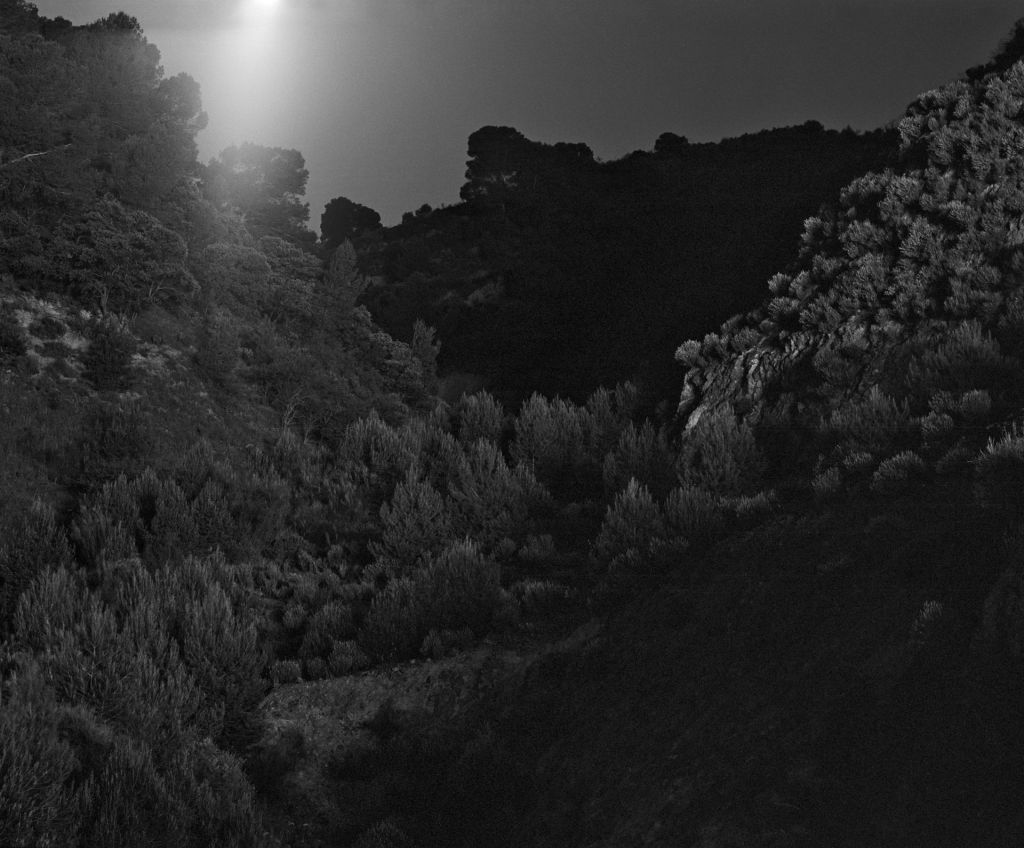
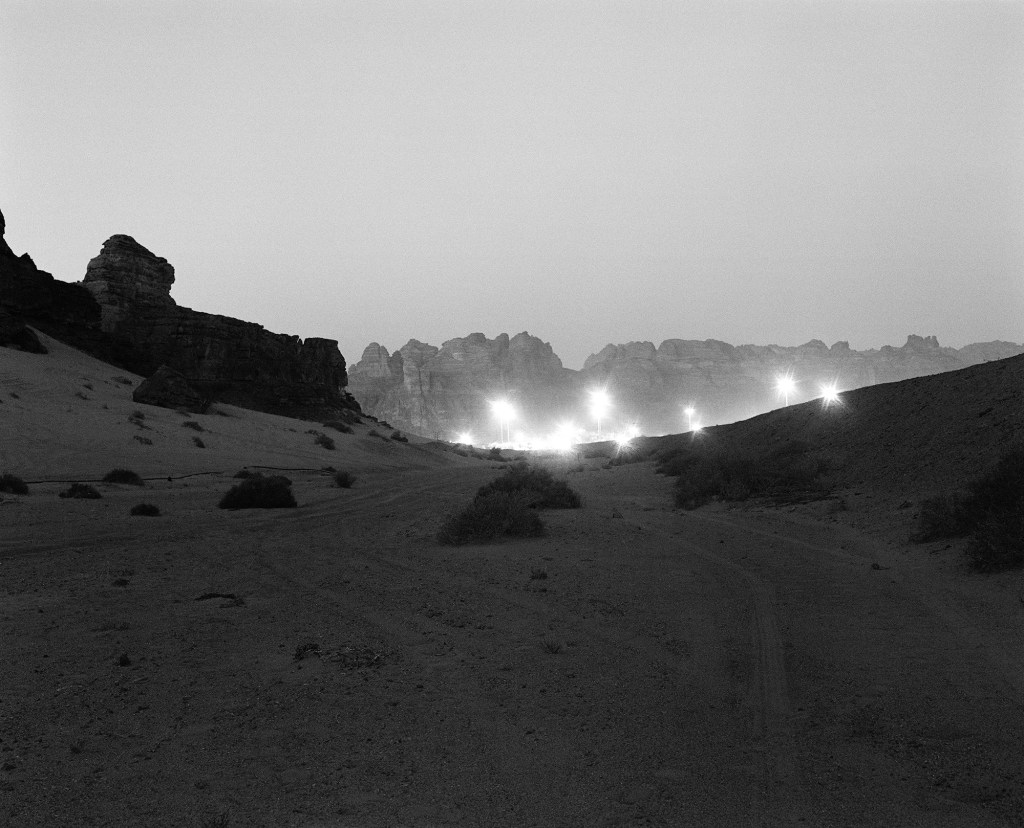
When her first book, Sequester, was released in 2014, The Guardian’s photography critic, Sean O’Hagan, wrote that the volume was “laden with an inordinate sense of silence. Her monochrome landscapes, made using long exposures at dusk or early morning, alert us in their meditative way not just to the thereness, but also to what James Joyce called the ‘whatness’ of things.” He continued: “One senses that, for Awoiska van der Molen, photography is like a metaphysical quest, a journey to the essence of things. Her images take me back to Nan Shepherd’s classic book, The Living Mountain, which recounts, in luminous prose, the Scottish writer’s lifelong fascination with the Cairngorms as a physical and spiritual landscape. In it, she writes of her solitary walking and looking: ‘It is a journey into Being: for as I penetrate more deeply into the mountain’s life, I penetrate also into my own. For an hour I am beyond desire… I am not out of myself, but in myself. I am. To know Being, that is the final grace accorded from the mountain.’ That grace exists, too, in these quiet photographs of a world both desolate and beautiful.”

Since then, for Awoiska, born in Groningen, the Netherlands, in 1972, her career has been on a constant rise. Sequester (Fw:Books, 2014) was shortlisted for the Aperture/Paris Photo award, followed by the Deutsche Börse Photography Foundation Prize in 2017 and the Prix Pictet in 2019. In the meantime, she published three other books: Blanco (Fw:Books, 2017), The Living Mountain (Fw:Books, 2019), and The Humanness of Our Lonely Selves (Fw:Books, 2024), the latter again selected for Aperture/Paris Photo. Today, her photographs are part of the collections of the Stedelijk Museum in Amsterdam, the Victoria & Albert Museum in London, the De Young Museum in San Francisco, and the Museum of Photography in Seoul.

“I didn’t want to become an artist. I grew up in what I would call a disharmonious and chaotic family, with my mother a painter and my grandfather a sculptor. I wanted a normal life, a normal job,” she tells Il Foglio. “I started a Tourism school because I wanted to travel, but I quit after two years. I enrolled in art school, studying architecture, thinking I would find a job in an office. But even that didn’t work out.” At twenty-five, she found herself without a clear direction. While working as a waitress, she took a course in photography and darkroom printing. There, she finally realized she had found “the right thing for her” and decided to return to art school to study photography. “I had the chance to work in solitude, having control over the entire process. It was just me, the camera, the chemicals, and the things in front of me.”

During her studies, she stumbled upon a book by Wim Wenders, Written In The West, in which the German director recounted his location scouting in the United States for Paris, Texas. “I wasn’t so much struck by the American landscapes, but by an interview where Wenders explained that what he was looking for was ‘the end of the world, where everything is finally silent.’ I wondered what it would mean for me, in the Netherlands, such an urbanized place, to go in search of the same thing.” She began a series of portraits of young Dutch people living in the North, near the dikes, far from the rest of the world. Awoiska asked herself, “What are they doing there? Why aren’t they looking for anything else?” This became her graduation project. But what next? What else was there to photograph?

“There are many artists who move from one project to another with great ease. They have an idea, they realize it, and then they move on to another. But for me, it doesn’t work that way. I don’t love the term ‘project,’ which is so overused. I’ve always been more interested in understanding the inner drive, the intrinsic motivation that leads me to create images. I tend to go where things take me.” So, during her Master’s in photography in Breda, she found herself traveling by train along the northern coast of Germany, which, in her thoughts, was again a kind of “end of the world.” There, she found a group of artisans engaged in rebuilding a medieval shipwreck. “Unlike my previous subjects,” she recalls, “these men and women didn’t worry about their appearance or how they would look in photos. I noted in my journal that they seemed ‘without vanity’ and ‘uninfluenced by the outside world.’ It was a kind of epiphany that strengthened the common thread present in all my subsequent works.” So, it wasn’t about portraying people in particular situations, but about something that had that characteristic of purity or, perhaps, imperturbability. Or maybe the right term is “sprezzatura.” In fact, after that trip, she started focusing on urban landscapes, photographing them from the outside and the inside. “I was looking for the same experience I had with the German artisans: places that seemed untouched by the outside world. I realized that those buildings, especially at night, offered me support. I felt them, in some way, rooted. Something I could lean on. In the daytime tumult of the city, photographing them helped me find peace and feel more rooted myself.”

For six years, she photographed nothing else: industrial buildings, suburban street corners, anonymous interiors, old armchairs, radiators. All nocturnal images, where the absence of people suggested a sense of quiet. Then, one day, while looking back at some of these images, she noticed a patch of black earth on which one of these houses stood. It was a photograph taken a year earlier, but in that moment she thought, “That’s where I need to be.” This marked the beginning of her great landscape period, which would occupy Awoiska van der Molen for the next decade and take its first stable form in 2014 with Sequester, as we mentioned.

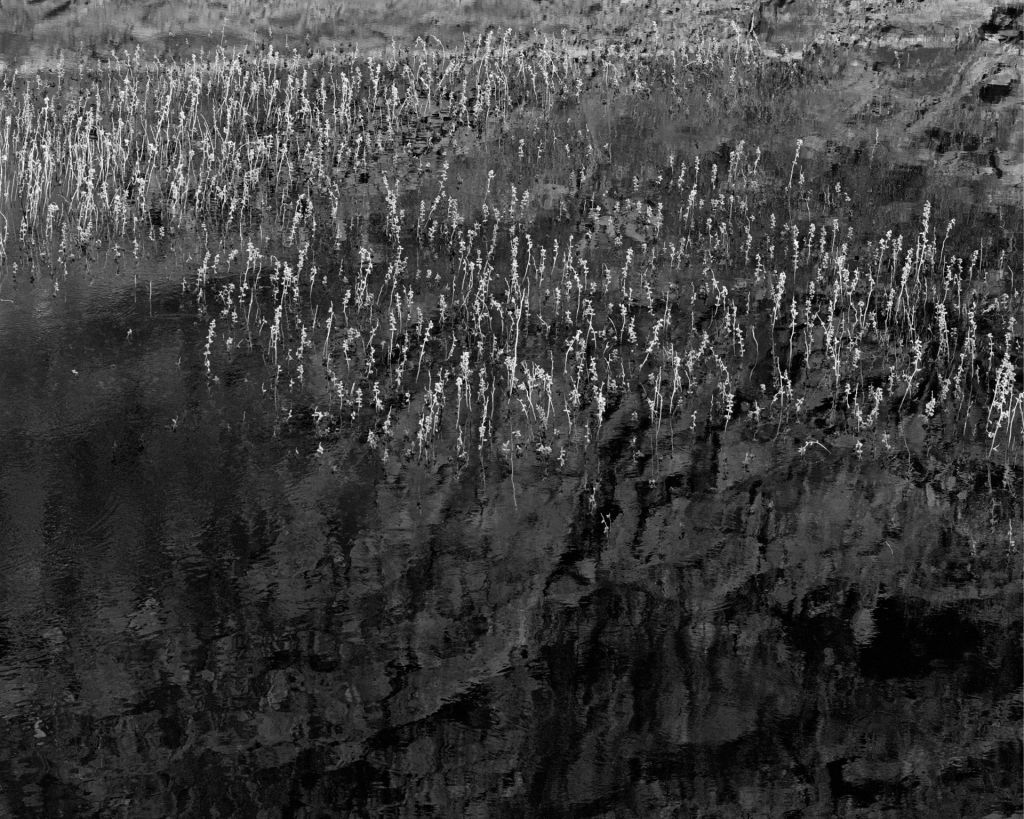
Of that book, Stanley Wolukau-Wanambwa, one of the sharpest and most elegant pens in contemporary photography criticism, wrote: “The photographs describe surfaces, fissures, and rolling expanses of an unspecified landscape, taken with long exposures on nights of profound shadow, when each scene is illuminated by the light of a distant moon. What we see in each image is therefore the accumulated compression of many minutes or hours of light traveling across a dark scene, so that ravines, trees, rock faces, leaves, and slopes are lit by a light that casts no shadows in the darkness surrounding them.” He continues: “Amidst all this darkness, these images are animated by life, and by a sense of its spread into the imperceptible depths of shadow, where the silhouettes of leaves transform into spores with rough and blurred edges. Trees seem to reach for the light, while the jagged pattern of shadow and light animates the surfaces of the grass, and in the diaphanous shimmer of this nocturnal light, we feel like explorers of a deep and pristine ocean.”

Van der Molen has traveled across Europe in her Fiat Marea, stopping in safe places and sleeping in the back seat. She has been everywhere, she says, “from Spain to Crete, passing through Norway.” In her book, no location is specified, because it is not a work about places. Instead, she explains: “I only take the camera out of my bag when, in a place, I feel a connection between my ephemeral and transient self and what is eternal and solid. In these places I photograph, what I feel is a deep sense of rootedness. Photography is the result of this connection, of this experience. I’m not documenting the landscape: I’m photographing what I perceive by being in nature. The place we come from.” It’s one thing to say it, another is to create convincing images that can convey the same experience to the viewer. The artist says that after an entire year of work, there were only five or six “good” photographs. And, working with analog, you only find out if a shot was successful weeks later. It’s so easy to fall into the temptation of the rhetoric of the sublime that comes from romantic painting, she explains: “It’s like photographing a person smiling. Everyone likes a beautiful smile. But is it really the expression that says the most about us? In landscape photography, something analogous is the sky, where the eye can get lost in the depths. My attempt, however, is not to let the gaze escape.” It’s almost the search for a centripetal rather than centrifugal force. An invitation to an immersion.

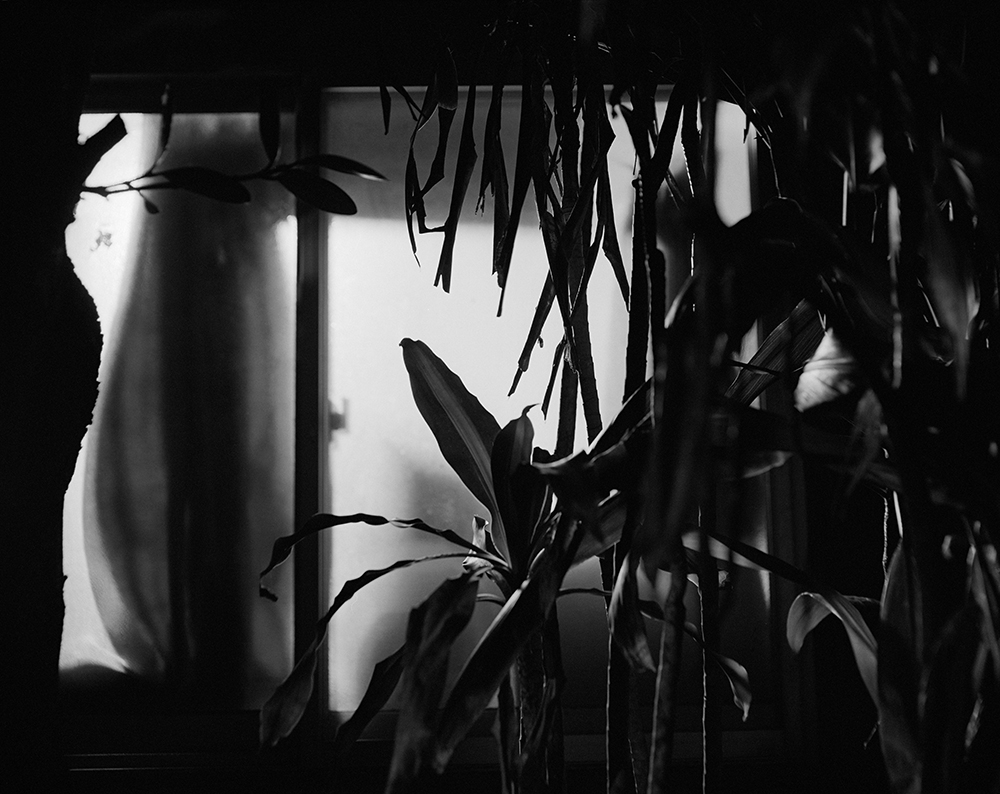
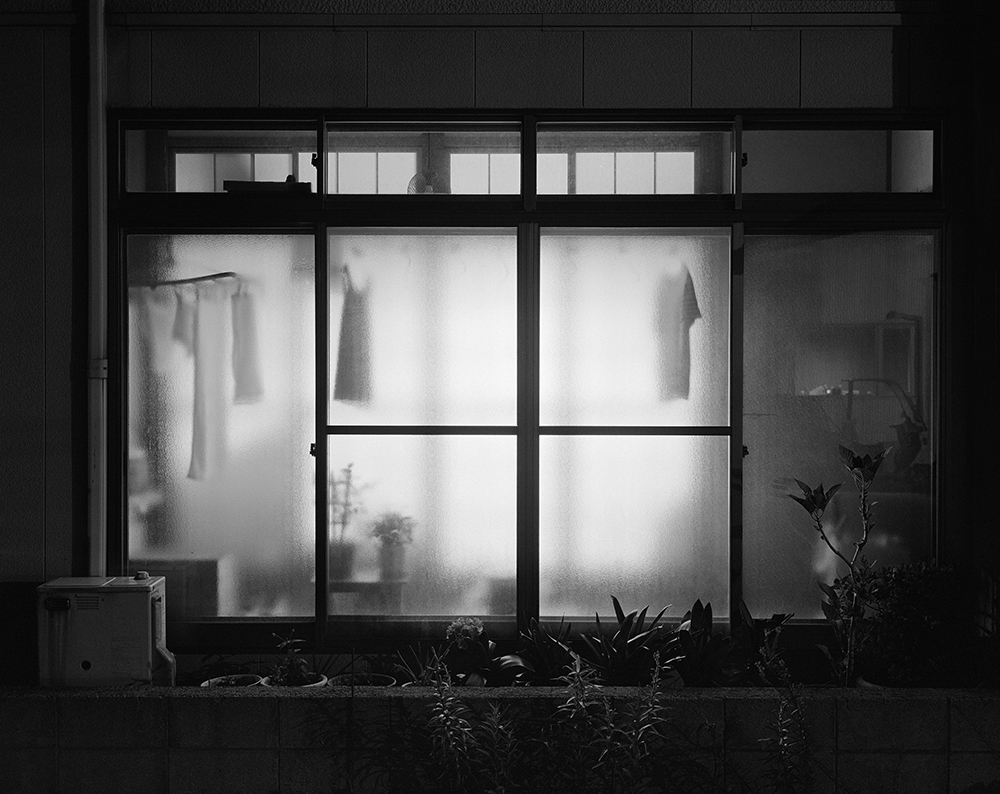
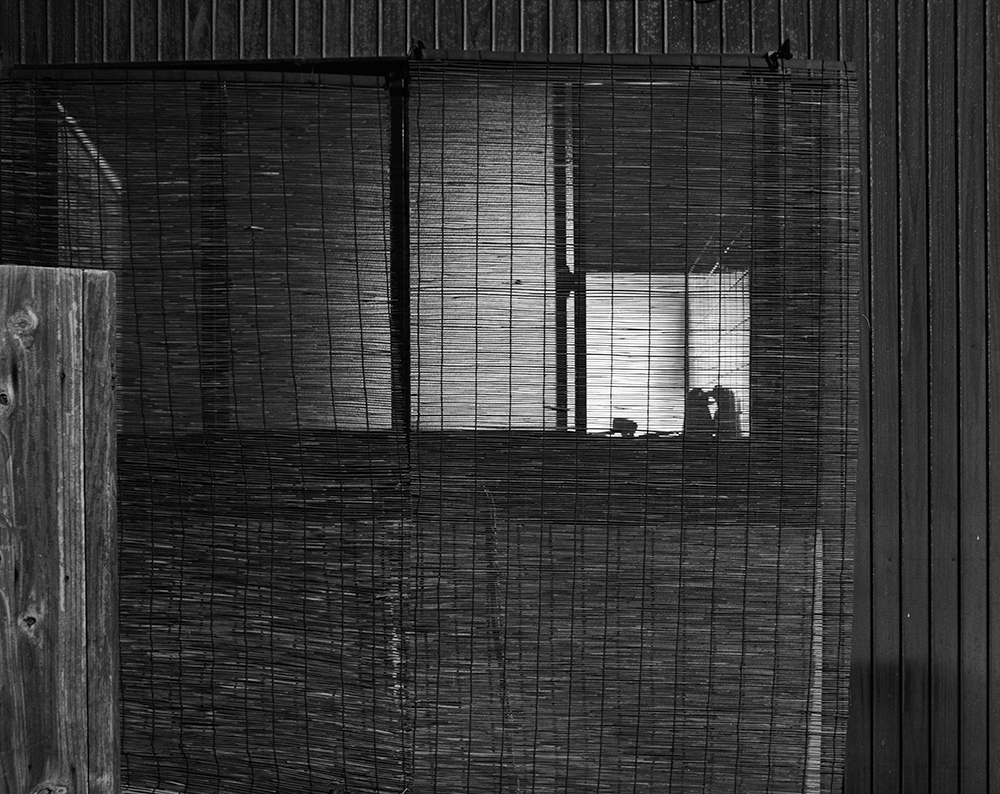
Then, at a certain point, after ten years of work, Awoiska realized she was repeating herself. “I learned a lot about myself during that period, and perhaps that’s why I no longer felt the need to continue that search.” So, while in Japan looking for new landscape images, she happened to photograph, at night, the grid of orthogonal lines drawn by the windows of a traditional Japanese house. The opaque panes prevented a view of the interior but returned a soft light, discreetly illuminating the darkness of the street. Back in Amsterdam, she looked at the image and said to herself, “No, too pretty.” But the following year, she returned to Kyoto to photograph nature and made a few more images with the same kind of subject. “But in the third year, I went again knowing that I would only photograph the windows. I didn’t know yet why or what I would do with them. I just knew that was what interested me. But there are those situations where you have no idea why you’re doing something, you just do it in response to what’s happening. It’s horrible to hear, but these are moments when you feel happy.” As in one of her photographs, Awoiska’s story is made of lights emerging from the deepest blacks. If I think back to the first time I photographed a window, in 2015, I realize it was a period when I felt lonely. Over time that personal experience passed, but it made me aware of an epidemic of loneliness that was afflicting a country like Japan and, ultimately, our entire society. Thus, as had happened with the nocturnal landscape, the photographs of the windows became a kind of psychological space for the artist to explore. Those luminescent panes become a kind of separating membrane, a defensive barrier, but also a breach in a closed world. “The more time passes, the more I think that this kind of loneliness is at the root of many difficulties, not just personal ones. I think that certain political behaviors, cultural choices based on fear, ultimately grow from this feeling of isolation and lack of connection.”

It would be wrong to create a cause-and-effect connection, because it’s never like that in van der Molen’s work. But perhaps it’s no coincidence that from the mysterious images of the grid of squares/windows captured from a medium distance, the artist began to get closer to the glass, framing the objects leaning against the opaque panes. They resemble bodies pushing outwards. “I was surprised by these new images. They had a new intimate, even sensual, quality. And I asked myself what they were saying about me. Was there perhaps a desire for greater intimacy?” The book that resulted from this is titled The Humanness of Our Lonely Selves and is a unique object, bound as a leporello with the photographs of the windows and a 16-page insert with the images of the glass. A design object in itself, it sold out in just two months.

Awoiska only understands herself and her work in retrospect. Today, she thinks back to the cover of Sequester, a photo she initially discarded because it was “too pretty.” A year later, she recounts, upon re-examining the negative, she changed her mind: “It seemed like a Japanese drawing to me, with flowers at the edges and the center empty—a space that in Japan would be called ‘Ma.’ I had never used it before; I considered it ‘their’ concept, not mine. But I realized that in that image there was also the meaning of darkness in my work: a black hole on the border between heaven and hell, life and death, beginning and end.” She shares this because, with the window series, things seem to have reversed: “In the center, there is a bright white, surrounded by darkness. I don’t want to cross that white space; I prefer to stay in that darkness which for me is like a warm blanket. Even if the windows can be born from a feeling of loneliness, I don’t try to interpret too much. Yet, comparing the covers of these two books, I see an interesting, almost ironic, inversion. An unexpected reversal.”

Il Foglio, August 27, 2025

Awoiska van der Molen

Awoiska van der Molen

Awoiska van der Molen

Awoiska van der Molen

Awoiska van der Molen

Awoiska van der Molen

Awoiska van der Molen

Awoiska van der Molen

Jacopo Benassi: The Punk Who Crashed Art Basel

Jacopo Benassi

by Luca Fiore

“Please, mention Sergio Fregoso. It matters to me.” That is Jacopo Benassi’s only request, one he never misses the chance to repeat in every interview, always citing the photographer from La Spezia whom he regards as his mentor. “More than photography itself,” he explains, “he taught me how to look.” He recalls La Spezia in the 1980s, when he used to hang out at the Kronstadt squatted social center, and it was Fregoso who introduced him to amateur photography—but with a “much more intellectual perspective. He was the one who made me discover Ando Gilardi…”

On the website of the Sergio Fregoso Archive, a phrase stands out in black type on a white background, visually modest yet arresting: “I don’t want to shed the air of home, the smell of my city. Moment after moment, without pause, I want to contain it all on my film, which is my skin, my sensitive surface.” Looking at the photographs of this man, born in 1927 in La Spezia’s working-class Umberto I neighborhood, a founding member of the AV 70 Group—bringing the language of images into schools and the city’s outskirts—one encounters flat, color images, mostly of windows. Nothing could be further from Benassi’s poetics. And yet, in every interview, that plea resurfaces: “Please, mention him.”

Jacopo Benassi was also born in La Spezia, in 1970. Last year, the online magazine Artribune named him “Artist of the Year” (notably: artist, not photographer). Massimo Minini, the doyen of Italian gallerists, brought him in June to the epicenter of the contemporary art world: Art Basel, the most important fair on the planet. Not bad for someone with a turbulent punk, anarchist, and disobedient past. (He admits: “Today it almost makes me laugh to say I do counterculture. And yet, deep down, underground, my spirit still resists ignorance and banality.”)

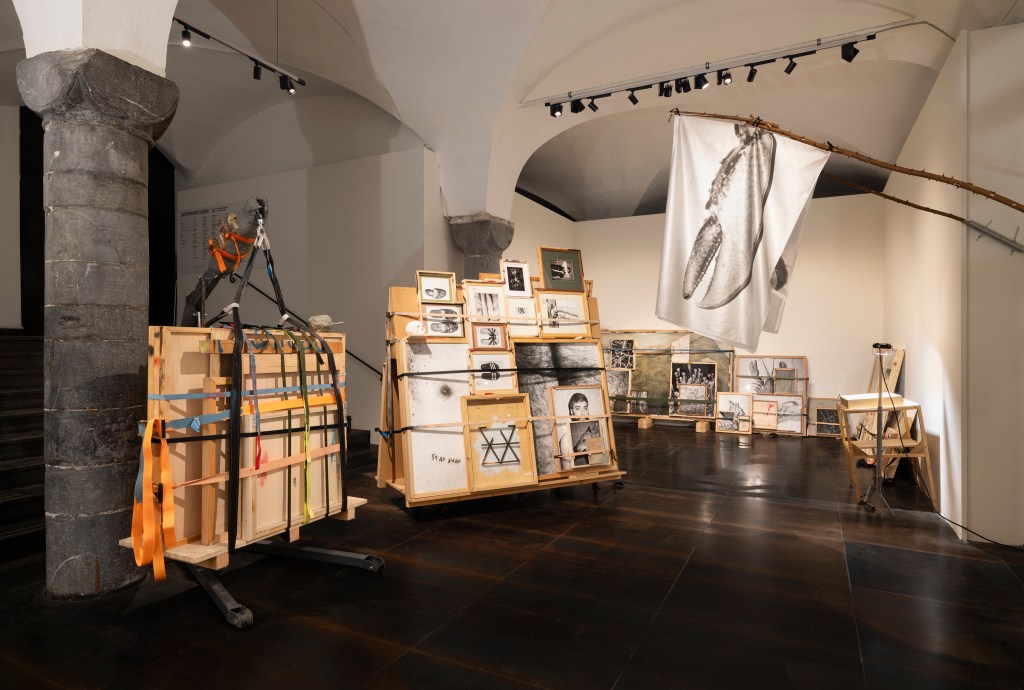
I meet Benassi in a ground-floor room of the Palazzo Ducale in Genoa. There, in June, he had moved his studio, working thanks to a residency organized by Blu–Breeding and Learning Unit, made possible by ministry funds from Strategia Fotografia. It was during those days that he created the core of works concluding the exhibition Jacopo Benassi. Libero!, curated by Francesco Zanot, on view at Palazzo Ducale until September 14. Beforehand we meet at a bar. Black pants, black T-shirt. Plastic slides with white stripes. At his side is Khan, a lanky Berlin-based musician, half Turkish, half Finnish, wearing a shirt that reads “Beuys Beuys Beuys.” A double homage: to the German shaman-artist and to the unforgettable hit by Italy’s own Sabrina Salerno. That evening, one of the musical performances that have long been central to Benassi’s practice is scheduled.

He begins his story from the very start: squats, music, political activism. He draws, paints, photographs. He works as a mechanic. His friend Renzo “Benzo” Davetti, frontman of the punk band Fall Out, once told him: “You can make art even if you’re a factory worker.” In 1989, Kronstadt hosted an exhibition by the collective “Arterie barbare.” He was there too: “We were a bunch of misfits.” For the occasion he showed a one-and-a-half by two-meter painting depicting a Caravaggesque deposition of Christ pierced with giant forks: “Something deliberately blasphemous. Even though my devoutly Catholic mother took it and hung it in her bedroom.”

The first turning point—or one of the artist’s many fresh starts—came in 1996. That was the year of his coming out, when he publicly declared his homosexuality and discovered his “normal light,” the flash, which became his signature. “Maybe it was coincidence, but it happened in the same weeks, and it was the end of a repressed nightmare. One day I was at a friend’s house and I realized this light was mine. From that moment, I couldn’t look at my images without flash anymore. It’s a huge renunciation of photography, really, because it means giving up on beautiful images. You can’t photograph the sky anymore, you can’t capture crowded scenes or the people in front will be burnt out and harsh shadows will cover whoever’s behind. The flash flattens everything.” With digital, for purely chromatic reasons, his images became exclusively black and white. “With color I couldn’t achieve the flattening effect I was looking for.”

His skewed, raw images—mostly of bodies—brought him to Milan in 2002, where he worked extensively in editorial photography. He published in GQ and Rolling Stone. But after four years, something felt wrong: “My photographs were becoming ‘beautiful.’ I was looking for the perfect frame. I was using expensive lenses. I was starting to give up the flash. Some of my images were beginning to look like Gabriele Basilico’s. I was losing myself. One day they told me to take my portfolio to Vogue. But I never went. Instead, I returned to La Spezia and opened a club with some friends.”

That club was Btomic, punk at its core. Experimental. A place to play music, drink, print T-shirts and fanzines. Peeling walls, a bohemian atmosphere. It was there that Benassi first took the stage. He played music, but it was the camera that dictated the dramaturgy. The performance was made to be photographed, yet it stood on its own as an event. The artist slapped the audience with his flash and asked them to do the same. “I’m not an actor, nor a musician, nor a dancer. I started because I felt I had to. There’s no script, it’s almost all improvisation. I think a bit about Fluxus, about the breaking of the score that Giuseppe Chiari talked about. Only later do I decide if and how to use the images created in those moments.”

But after 2020, Benassi’s practice took an irreversible turn, leading him to where he is now. “At the Leica space in Milan, for the first time, I cut through the glass. I stepped outside of photography—meaning that temple of amateur photography gave me the chance to enter a contemporary world. It was almost a painterly gesture, almost a tribute to Fontana, to look inside the emerging image.” From there, the momentum kept building: Museo Pecci in Prato, Fondazione Carispezia, GAM in Turin, Galleria Minini in Milan, Mai36 Gallery in Zurich. Benassi expanded his language: writing on walls, burning frames, strapping photos together with industrial belts, collecting objects, making sculptures. An aesthetic that at times recalls the “DIY” ethos of Swiss artist Thomas Hirschhorn, who made sculptures out of brown packing tape. “I’ve realized I’m an imperfect person, so I work on imperfection. In photography, with brushes, in everything—even in performance I let myself be who I really am. I don’t strive for perfection, because I wouldn’t be able to. I’ve perfected myself to the point of now being number one at making mistakes.”

It was during this period that his mother passed away. Benassi had to clear out his parents’ home, sorting through boxes and revisiting his childhood—the good and the bad. He came across his old school reports: “They said I was intelligent but got distracted easily. And that’s who I still am today. I lose focus immediately. It’s part of my character. My imperfection.” In his parents’ bedroom he found his youthful painting of the Deposition. Taking it down, he saw the shadow the canvas had left on the wall, like a shroud imprint. He photographed it. That image of the dirty wall was then assembled to almost entirely cover the “forked Christ” painting, alongside a smaller photo of the nightstand where his father slept, marked with cigarette burns from smokes left lit before falling asleep. A sacred work, shown this year at the Museo Diocesano in Milan as a counterpoint to a Deposition by Tintoretto. A meditation on love, intimacy, mourning, memory. Because, as the band Baustelle sings: “Il tempo ci sfugge / Ma il segno del tempo rimane” (Time escapes us / But the mark of time remains).

The Genoa exhibition is full of photographs of butterflies. A cow’s portrait. A lobster. A monkey. Skulls. Flip-flops. Countless flip-flops. One afternoon in his temporary Palazzo Ducale studio, Benassi receives a package containing a pair of Playstation-branded slides. He reacts as if he had received a priceless gift. I ask him what they mean to him: “They’re my obsession. I realized I was gay when I first saw them as a child, and for years I avoided wearing them—I even showered in socks—out of fear of being exposed. They were so intimate, tied to nakedness, that showing them terrified me. Now I’ve metabolized them, and I integrate them into my works as my most intimate portraits, transforming that fear into art.”

The exhibition unfolds in clusters of framed photographs, where subjects dialogue by shape or content, forming what one might call “visual rhymes.” But what strikes most in Genoa is the space taken by painting, to which Benassi has returned. “I started painting like a photojournalist: fast, imperfect, because I don’t have the patience for thorough study. It allowed me to break free from traditional photography. I paint to enjoy myself deeply, creating works about my city where the human figure no longer appears, leaving room for nature to reclaim space.” Most works are displayed resting on the floor, as if the visitor had arrived the day before the opening. Almost an invitation to share in the provisional condition that pervades Benassi’s practice.

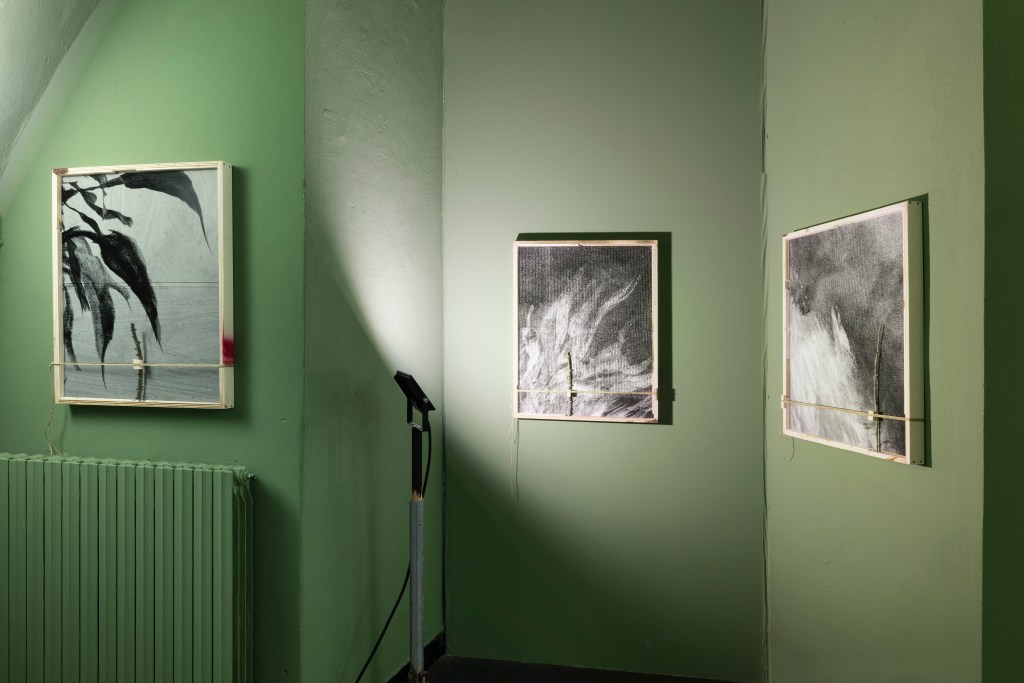
Another recurring theme is rose thorns. Photographed, but also sculpted, coexisting with the images. Benassi explains: “Today the thorns are my defense, a wall I raise, a real political barricade that protects me, though it forces me to be careful not to hurt myself. In my work, they symbolize roses that refuse to bloom, flowers striking in protest against wars, a reflection of a world on fire. They are the deep portrait of who I am today, a mix of hardness and joy.”

This, perhaps, is the key to reading Benassi’s entire body of work: the pairing of opposites. Severity/humor is just one of its many forms. Behind the visual noise—atonal, like dodecaphony (badly made frames, tape, casual brushstrokes, mounds of clay)—lurks a strong classical rigor. A very punk approach: in late-1970s England, the Sex Pistols were nothing but the flip side of Queen Elizabeth. Aesthetically, Sid Vicious and company wouldn’t have existed without the monarchy’s flawless image. And probably, the reverse was also true.

The exhibition route ends in a tunnel-like labyrinth filled with sculptures—sometimes obscenely self-mocking—objects, and writings that reflect the unsystematic, chaotic work of the Genoa residency. Emerging from the tunnel, one finds oneself in the museum bathrooms, where Benassi exhibits works made for Villa Croce, the city’s ill-fated contemporary art museum. These are photographs of his paintings depicting cut flowers, battered leaves, skies glimpsed from the villa’s garden. “I find it ironic and liberating to paint skies and then photograph them with a flash, prompting reflection on what lies behind an image. Today I feel free from any framework photography imposes, and this painting is a continuous evolution of my language.”

Benassi is the classic case who drives photography purists mad. It’s the eternal rivalry dating back to the early 20th century: pictorialists, who wink at the figurative arts as if photography weren’t art enough, versus modernists, who insist the medium can be art in its own right—though condemning themselves to isolation and marginality. Benassi has sided with the former. But, like all sensible people, he knows rigid frameworks kill intelligence. And outside Palazzo Ducale, he has sprayed a phrase of delicious ambiguity in red paint: “Benassi against the condemnation of photography.”

Il Foglio, August 20, 2025

Jacopo Benassi
© Andrea Rossetti

Jacopo Benassi
© Andrea Rossetti

Jacopo Benassi
© Andrea Rossetti

Jacopo Benassi
© Andrea Rossetti

Jacopo Benassi
© Andrea Rossetti

Jacopo Benassi
© Andrea Rossetti

Jacopo Benassi
© Andrea Rossetti

Batia Suter: The “Epic of the Gaze” That Reveals the Secret Life of Forgotten Images

Parallel Encyclopedia BatiaSuter

by Luca Fiore

One day in the mid-2000s, Batia Suter received an email from someone asking about the relationship between her work and Aby Warburg’s Bilderatlas Mnemosyne. The sender had seen a draft of what would later become Parallel Encyclopedia, her first book, published in 2007 and now considered legendary. In her Amsterdam studio, the Swiss artist had to Google the name of the great German scholar—she had no idea who he was. It took only a few seconds for her to realise the near-overlap between their projects. Today, she tells Il Foglio it was a shock that took her two weeks to recover from. “What was the point of continuing such an immense effort if someone had done the same thing a century earlier?” She ordered books, read, studied. What unfolded before her was the fascinating and mysterious world of the German art historian and critic—“Hamburg at heart, Jewish by blood, Florentine in soul”—who, during his lifetime, amassed a collection of 65,000 books and 8,000 photographs of artworks. In the last years of his life, he began working on an unfinished project: panels grouping images of artworks from all eras to show how certain iconographic themes in Western culture repeat over time. A utopian and marvellous undertaking. A new way of studying art history through photographic reproductions. An adventure abruptly cut short in 1929 by a heart attack.

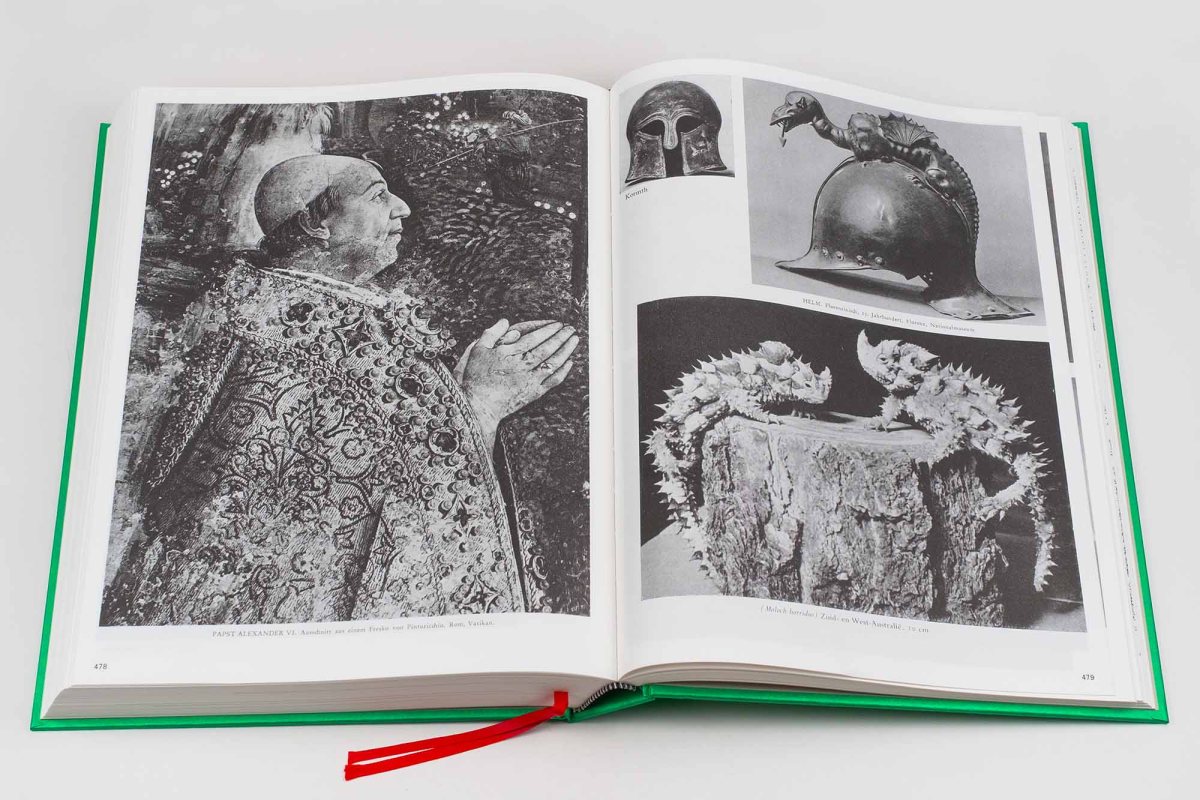
Instead of being paralysed by the comparison, Batia found in Warburg a companion along the way. “I had found someone who was familiar with my way of thinking. I began to feel him as a brother, in who he was and in the way he researched. Back then, he had to order images from all over the world, spending a lot of money. I, on the other hand, had the privilege of simply scanning them from the books I collected. Of course, he was interested in Greek culture, the Renaissance, the workings of the human body. I’m not very good at building theories. Mine is more an attempt to make high culture and low culture collide.” Indeed, Parallel Encyclopedia—a 600-page volume created over five years of intense, obsessive work—is less a tool for study and analysis than an epic of the gaze. Monumental in its encyclopaedic scope, it seems to play with, if not poke fun at, the rationalism of Diderot and company. Yet it contains an immense love for the power of images: their ability to speak their own language and to converse with one another, generating unexpected new meanings.

Nearly twenty years after the publication of Parallel Encyclopedia, Batia Suter is a prominent name in the world of photography. Few, like her, have worked so convincingly and radically with archival research—a field that has become one of the most beloved and developed strands in contemporary photography. Alongside her publications, Suter has translated her research into monumental installations using her image collections. She was a finalist for the prestigious Deutsche Börse Photography Prize in 2018; that same year, she exhibited at Le Bal in Paris, one of the most important photography venues. This year, she won the Swiss Design Award and is present with a solo exhibition at the Rencontres de la Photographie in Arles, titled Octahydra. In the current display of the Stedelijk Museum’s permanent collection in Amsterdam, her installation drawn from Parallel Encyclopedia is on view—80 books, open and overlapping, so that their photographs engage in visual dialogue.

Suter’s passion for images began early, at the age of 14. That’s when she started carrying a camera with her everywhere. She would spend hours developing and printing film rolls in the darkroom. She enrolled at the School of Design in Zurich, then transferred to study at the Academy of Fine Arts in Arnhem, the Netherlands. “I began painting and drawing by enlarging my photographs. I would project the images and trace them—a very physical and intense process. But it was also stressful—I had to work at night to have the darkness needed for projection, and I needed large spaces. I realised I couldn’t go on like that until I was eighty. Even then, I wasn’t interested so much in the technique—whether painting or photography—as in understanding images and their effect on me.” After the academy, she enrolled in a master’s program in typography. It was the late 1990s, and Batia had no experience with computers, but in that course she discovered two programs that would irreversibly shape her career: Photoshop and QuarkXPress. The first for working on scanned images, the second for laying them out on the pages of a potential book. “That’s when I started collecting second-hand books. I began scanning all the images that interested me. I would print them on A4 sheets and lay them out on the floor. I worked in an open space, and lots of people would pass by. At a certain point, they started stopping and asking for copies of the images that had caught their attention.”

That’s when Batia realised something fundamental: her thinking moved through images. Not only that—everyone has their own favourites depending on their past and interests. Yet there are some images that appeal to everyone. “There are photographs that relate to something we have in common. There’s something in them with a particular power, able to captivate us.” This became the starting point for her research. What are these images? Why are some timeless? She wanted to understand. Her passion for images became like a drug—a kind of addiction. And when she began working with page-layout software, she felt a new sense of freedom. The ability to experiment—more easily than ever before—by juxtaposing, swapping, and inverting her collected material opened a frontier of exploration that seemed endless. She had finally found her tool.

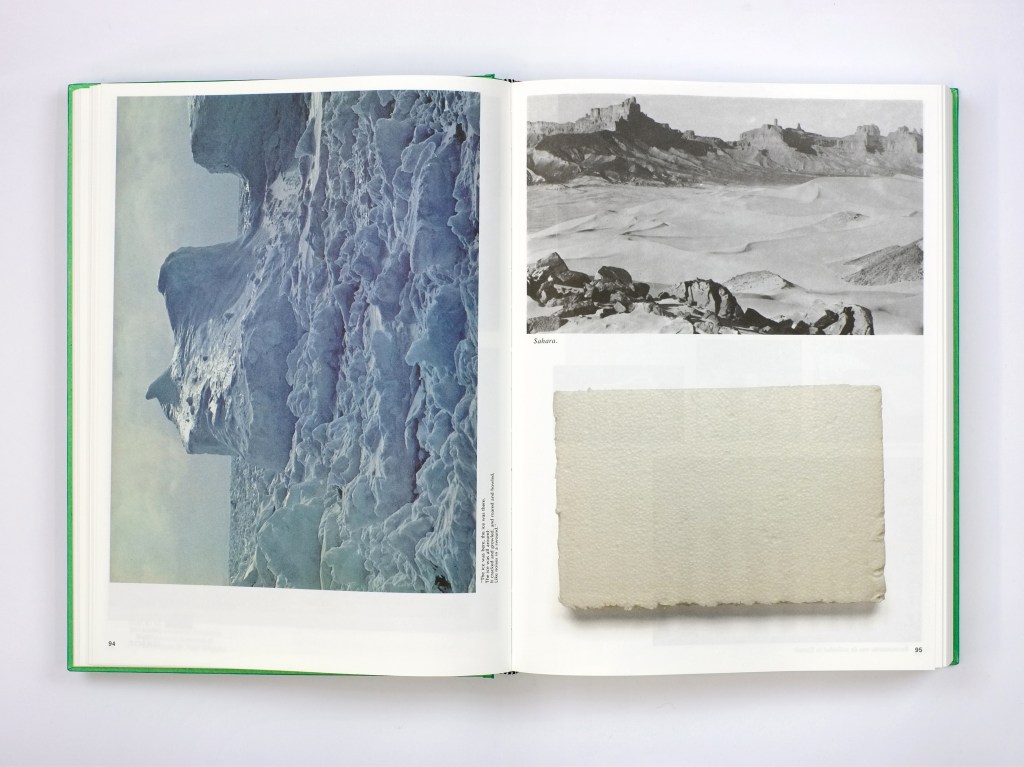
The first spread of Parallel Encyclopedia presents works by Julian Stanczak, Marina Apollonio, Richard Anuszkiewicz, Marcello Morandini, Tadasky, and Mosuho Ohno—all artists linked to the Op Art movement. These are striking geometries designed to enchant or deceive the eye. Turning the page, we find images of plankton, their microscopic marine forms arranged in geometries recalling those just seen. In the same spread, however, there is also a test chart used to calibrate a camera’s greyscale, made of circles, lines, and triangles. Forms echo one another. Later, there are photographs of planets, seashells, everyday utensils. A few pages on, enlargements of snowflakes and ancient cameos inlaid with human figures. The further you go, the more you are drawn into a narrative of visual analogies and shared meanings. Without any sense of rupture, on page 50 we are confronted with atomic explosions, American aircraft carriers, road accidents. On page 300 we see an eighteenth-century stool whose legs, in the next spread, rhyme with those of oxen pulling a plough. This opens an entire section devoted to horses: engravings, paintings by Velázquez and Simone Martini. There’s even a photograph of a tiger, with its trainer, resting calmly on the back of an elephant. Buster Keaton next to a medieval miniature. Dürer and an Assyrian sculpture. African art, X-rays, commercial catalogues. Centripetal and centrifugal force. Tintoretto and Yves Klein, Giotto and Walker Evans. A fascinating journey, a flow with no narration, yet one that holds attention like the plot of a thriller. Where will the next page lead?

After her encounter with Aby Warburg, another unexpected meeting shaped Batia Suter’s path. “My mother is a psychologist. Once, while I was talking to her in her studio, my eye fell on Man and His Symbols by Carl Gustav Jung. I picked it up and started reading.” For the artist, it was another shock: “Again, his way of thinking about images was very close to mine. He talks about ‘Urbilder’—primordial images developed by the unconscious and common to all humanity.” Jung studied dreams, fantasies, and religious symbols to show the recurrence of certain universal imaginative forms. “It’s a very powerful idea—that human beings all react the same way to certain visual information. It’s something natural. And for me, that’s very clear. I’m convinced that such a thing exists: at a primitive level, we are stimulated by certain subjects and images and by their qualities.” And yet Suter felt something was off: “I knew I didn’t want to go in a psychological or spiritual direction. I had to step back, stop, to understand better what I was looking for.” Again, the crisis became an opportunity for a fresh start, and Suter returned to immersing herself in her world of photographs, working to refine her language so that the invisible thread binding her compositions would become ever more transparent to the viewer. But in the end, what kind of language is it? “It’s similar to the language of dreams. It’s fast, associative, non-rational. I create unexpected connections between images to generate new meanings. I’m not trying to explain everything verbally, but to provoke a visual experience. A language that operates beyond words, touching something more fundamental in human experience.”

Nine years after Parallel Encyclopedia, in 2016, Suter released Parallel Encyclopedia #2. Same format, same method, same number of pages. But unlike so many film sequels, this second volume stands on its own. The artist introduces colour—sparingly. The layout is slightly more elaborate. There is perhaps more humour. But again, the flow of thousands of images manages to embrace all human knowledge, from the micro to the macro, from the ancient to the contemporary. From this volume—as from the others that followed, particularly Radial Grammar (2018)—came installations in which Suter allowed images to interact with space. They could take the form of large-scale prints, slideshows, projections. “Installations allow me to explore physical space, to walk among the images. Here, the images become almost like a ‘skin’ of the wall, interacting with the architecture.” She conceives these operations as “extractions” of one or more chapters from her books—extensions of her editorial projects. If the experience of a book is intimate and repeatable, its “spatial staging” becomes something physical, where the viewer confronts images larger than their own body, able to be examined up close or from afar. The same is happening these weeks in the dark spaces of the Roman cryptoporticus in the historic centre of Arles, where Suter has been invited to present Octahydra for the Rencontres de la Photographie. It is a projection-based work reflecting, on one side, on architectural forms, and on the other, on images of food containers whose rhythmic, architectural patterns evoke structures of defence and protection.

Suter’s is a language that eludes immediate rationality, yet is universally understandable. Like music, in a way. The images she gathers, through a kind of ancestral pull, are not mere representations but words in a discourse grasped almost unconsciously. As she herself admits, we live in a moment when—overwhelmed by a constant flow of visual stimuli—“reflection is almost impossible.” And these images she uses, drawn from the past—a past arriving to us through the printed page—appear perhaps as the last handholds to keep us from drifting away, in a context where it is ever harder to distinguish what is true from what is not.

Il Foglio, August 12, 2025

Parallel Encyclopedia BatiaSuter

Parallel Encyclopedia BatiaSuter

Parallel Encyclopedia BatiaSuter

Parallel Encyclopedia BatiaSuter

Parallel Encyclopedia BatiaSuter