by Luca Fiore
“Just as they [the Greeks] taught that all knowing is a recollecting, modern philosophy will teach that all life is a repetition. Repetition and recollection are the same movement, except in opposite directions, for what is recollected has been, is repeated backward, whereas genuine repetition is recollected forward. Repetition, therefore, if it is possible, makes a person happy, whereas recollection makes them unhappy.” This quote by Constantin Constantius, a pseudonym of Søren Kierkegaard, is the only text featured in LotsOfLots (MACK, 2025), the latest book by American photographer Jason Fulford. It needs to be read several times. And even on the third or fourth reading, you may still not be sure you’ve really understood it.
Fulford is one of the brightest minds in contemporary photography. He’s a kind of Brian Eno of the art invented by Niépce, Daguerre, and Talbot: he explores new directions on his own and helps others bring out the best in their work. He produces enigmatic and fascinating images, but his real strength lies in how he makes photographs speak to each other. It’s the art of editing: when you place two seemingly unrelated images side by side and something new emerges. In this, he is—if not the very best—certainly among the best around. Fellow photographers often turn to him for advice. In some cases, he’s been instrumental to the success of others’ work (the most notable example being ZZYZX by Gregory Halpern). He believes photographers fall into two categories: sculptors and gatherers. The former start with a clear idea and seek to express it through images. He, instead, identifies with the second type: he shoots intuitively, without a specific reason, aside from the choice of subject. For him, photographing is like collecting words—a visual vocabulary that he later tries to organize through editing, creating meaning, even if ambiguous. With this process, he has made books that are very different from one another and unlike anything by anyone else: Raising Frogs for $$$, The Mushroom Collector, Picture Summer with Kodak Film, and The Heart Is a Sandwich. And yet his latest release, LotsOfLots, is something else entirely—and feels like the most “Fulfordian” work of all: a summing-up of thirty years of photography.

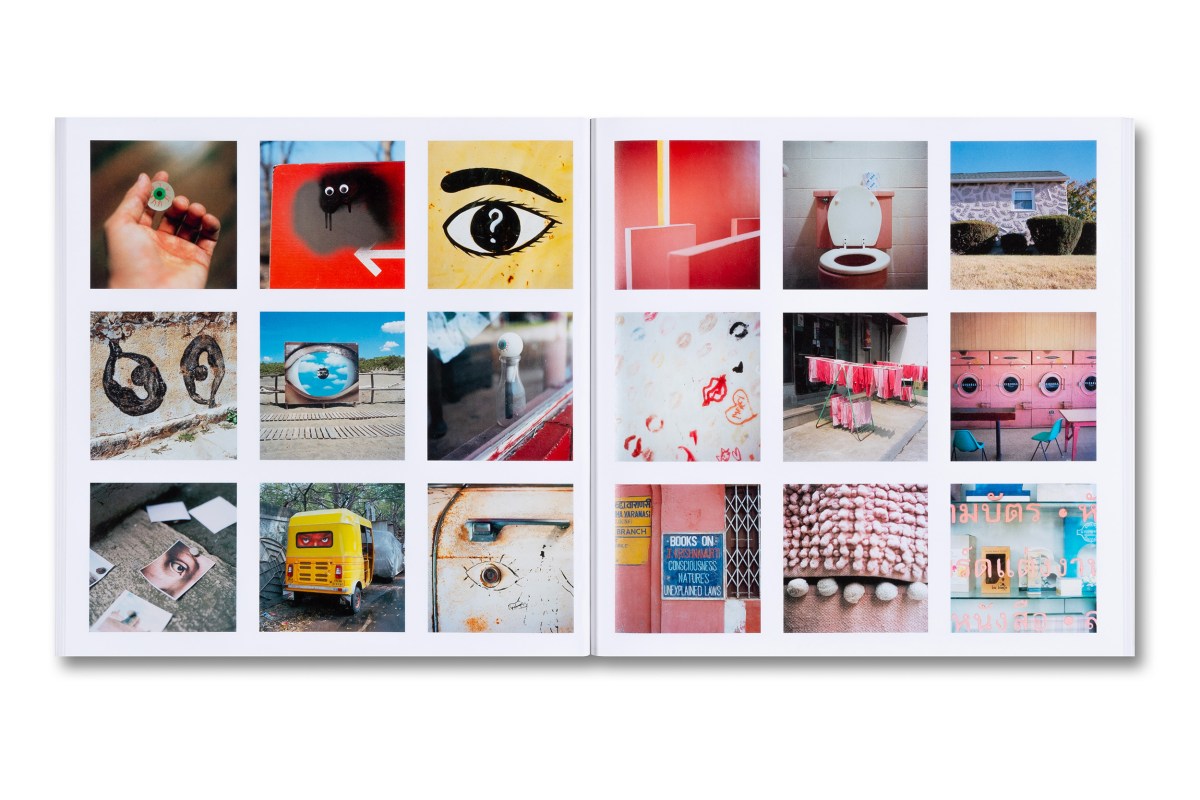
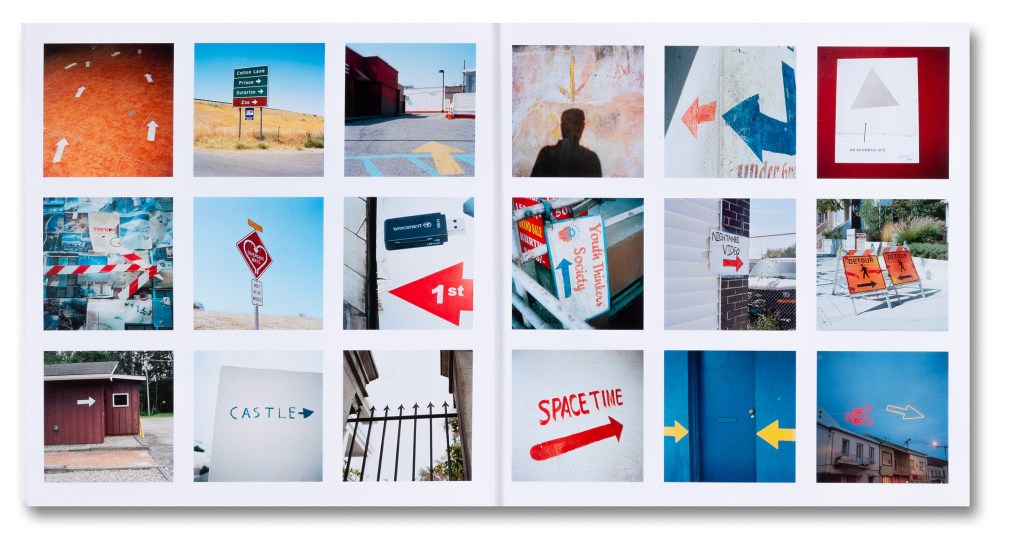
The format, design, and structure pay homage to a photography book published by Sol Lewitt in 1977, titled PhotoGrids. That book was a collection of Lewitt’s photographs arranged in grids of nine images per page. They depicted architectural elements: doors, gates, floors, manhole covers. Each grid presented a typology. Similarly, Fulford worked through his archive to create 76 grids, totaling 684 photographs. As he explains: “I had never used this way of showing my work before. I’ve always aimed for open associations. Here, the structure is very simple—it almost feels like a children’s book. Some themes are elementary—for example, images where red is the dominant color. In other cases, the themes are more subtle, like ‘wet’ or ‘not wet,’ or ‘not perfectly straight.’ What I like about this method is that when you apply a categorization system to an archive, the results are often surprising.”
It’s something, he notes, like what Canadian writer Sheila Heti did with Alphabetical Diaries, where she reorganized her diary entries alphabetically by the first word of each entry rather than chronologically. The result is that a book review might be followed by a reflection on her father’s death, which in turn is paired with a note on what she ate that day. “It’s a combination that feels much more faithful to how life actually works, made up of scheduled events, unexpected things, quirky details, things tied to the body or the mind. That’s what happens in my book too.”
The first grid in the book gathers images that all feature one or more arrows. It’s a classic theme in American photographic tradition—just think of some of Walker Evans’s iconic Polaroids (which, perhaps, also inspired their recurrence in the work of Guido Guidi). Fulford shows arrows painted haphazardly on a floor, embedded in road signs, made with red-and-white tape stuck to a shop window, or placed atop an iron fence. Later on, we encounter a grid dedicated to the symbol “X”: iron pipes, pine branches, slashes on the canvas of an abandoned painting, the crossed legs of a Buddha statue. A few pages further, we see nine photos themed around sunset: on a beach, on the open sea, seen through frosted glass, or as red neon letters spelling “Sunset Lounge.”
Fulford’s game is a cultured one, operating on multiple levels: “First, there’s the level of the grid, which can be seen as a self-contained work of art. The book, in that sense, is a sequence of 76 complete works. But then, within each image, there’s a world of its own—full of small visual puzzles. And there’s also the aspect that relates to me personally, because each of the shots was taken in a specific moment of my life.”
It’s fascinating how a rigid, mathematical structure—a grid of nine images—combined with a loose, idiosyncratic method, can ultimately speak about life: encounters, surprises, epiphanies, comic or serious moments (like when the portal of Carlo Scarpa’s Brion Tomb appears in a grid dedicated to chains). “The goal of each of my books is to create something you want to come back to. I can’t explain exactly how the game works, but I know when it’s working. It’s like a kind of chain reaction that propagates thought.”
When asked whether, after all these years of thinking about editing, he ever finds himself, while looking through the viewfinder of his Hasselblad, imagining how a picture might be used later, Fulford is firm: “Even now, it all happens in the moment. I never think about what’s going to come next. That’s the goal of life in general: to wake up every morning and keep looking at the world with alertness.”
When editing a book, he says, the aim is to keep the viewer engaged through the entire sequence. “I think about rhythm, about how to begin something and end something else. It’s a way to keep the reader in an active state of looking. It’s human nature to drift off—no one can stay fully attentive all the time. But I believe we should strive for that. I really love that quote by Louis Pasteur: ‘Chance favors the prepared mind.’ I couldn’t put it better.”
Fulford’s photography might seem anything but autobiographical. And yet LotsOfLots has become a way to grapple, in a very personal manner, with his own biography. “Digging into my archive like this made me think about past versions of myself. As we live, we change. And the images I took serve as markers of those previous selves. I look at a photo I made in Thailand and remember what I was working on at the time, what I was learning, what I was seeing for the first time. All those past versions of me contributed to who I am now. The Jasons of the past have left me these images, and now I get to do something new with them.”
All 684 photographs from LotsOfLots, printed as a single monumental sheet, are on view for the first time in Milan, at Micamera, until May 3.

 Luca Fiore | Writing on Contemporary Art and Photography