by Luca Fiore
Vasantha Yogananthan is the golden boy of French photography. Born in Grenoble in 1985 to a Sri Lankan father and a French mother, he is now one of the most compelling voices on the international scene. Mystery Street, his latest body of work, published in 2022 by Chose Commune, was exhibited at the Fondation Henri Cartier-Bresson in Paris and the International Center of Photography in New York. In 2023, one of the images from the project was chosen as the poster for Paris Photo, the most important photography fair in the world. His work is represented by The Photographers’ Gallery, the UK’s first public gallery dedicated to photography, founded in 1971. Last summer, Les Rencontres d’Arles dedicated a solo exhibition to him: Le Passé Composé.
Yogananthan is self-taught. He first picked up a camera at 16 and has never put it down since. After graduating with a degree in History from Grenoble, he cut his teeth as an editor at a photo agency in Paris. Then, in 2009, he took the leap and devoted himself full-time to his personal work. His first project was titled Piémanson, after the name of the last wild beach in Europe, where thousands of people would spend their summers camped out, creating a sort of utopian city. “I was trying to find my voice as an artist and had in mind the documentary photography of Paul Strand and Chris Killip. I was after that same clarity and precision, which doesn’t need gimmicks to captivate the viewer.” For four years, Vasantha returned to the Camargue and, using a large-format camera, made color images of the camp and its inhabitants in the soft light of dawn and dusk. Once the work on Piémanson was finished, he decided to head to India. He didn’t know it then, but it would be an adventure that would last eight years and lead him to publish seven books.
“Everyone thinks I went East in search of my roots, but that’s not the case,” the artist explains. “The truth is, I’m one hundred percent French, both culturally and in lifestyle. My father arrived in France as a child, and at that time, immigrants were forbidden from speaking their native language to their children.” And yet, the Yogananthan household was full of books on Indian art, which fascinated Vasantha as a boy. “I was drawn to that kind of imagery, so different from anything you could see in the museums of my city. The trip to India probably came from the desire to understand better a visual language that felt both familiar and foreign to me.”
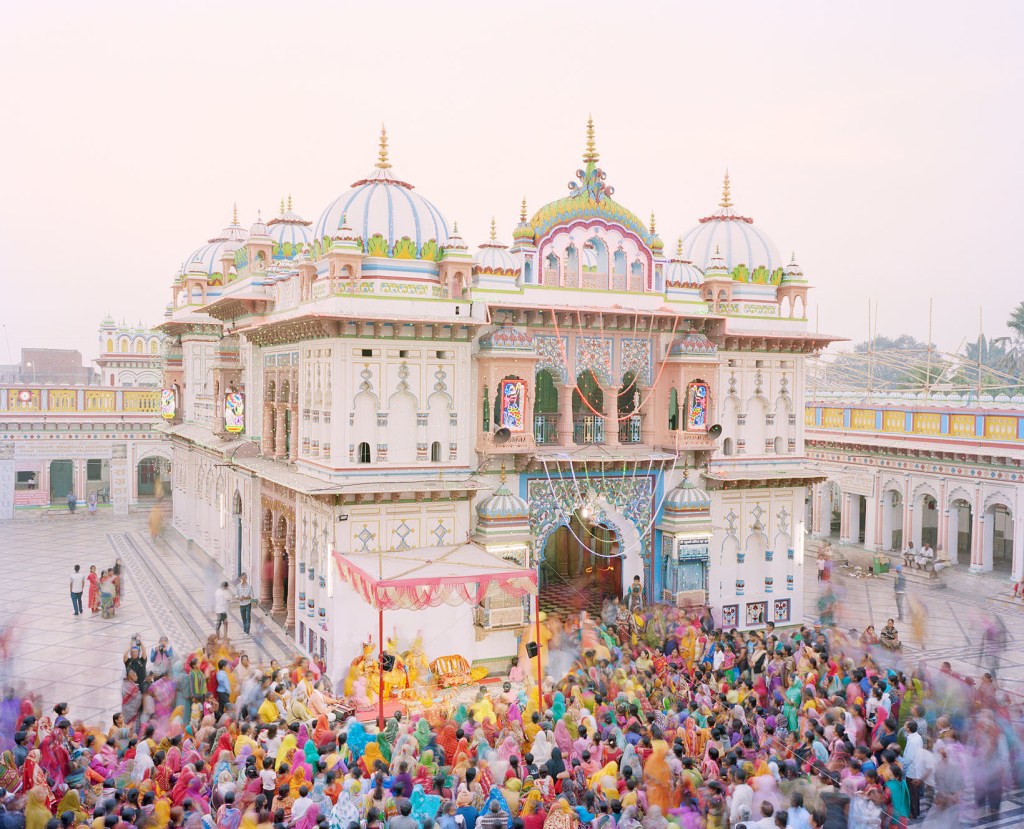
He packed many books of history and literature for the trip. Among them was the Rāmāyana, the ancient epic poem that is a pillar of Indian culture. He began reading it and discussing it with the people he met: “Everyone I spoke with referred to the story in a very interesting and personal way.” Something clicked for him, and he decided that his images would be his own version of the Rāmāyana. That is, the work on India wouldn’t be a documentary effort but a work of imagination. His journey thus took a new direction, as he began visiting the towns, villages, and small cities mentioned in the poem. This led to the first three books—chapters in a project titled A Myth of Two Souls: Early Times, The Promise, and Exile. These are ethereal landscapes, scenes of everyday life, men, women, and children of contemporary India. The photographs alternate with a text that narrates the mythical story of Prince Rama. The palette of the images is made up of pastel colors. Many of the images are staged. Sometimes the portraits echo the look of vintage photographs—black-and-white images hand-colored. “Halfway through the project, I wondered whether I had exhausted the material and should stop,” Yogananthan continues. “It could have easily remained a trilogy, but I realized the work wasn’t finished yet.” So four more chapters and corresponding books were born: Dankara, Howling Winds, Afterlife, and Amma.
By the end of his ten-year Indian journey, the photographer’s approach had been completely transformed: “As I delved deeper into the work, I realized that a documentary approach couldn’t capture what I had before me, or the experience I was having.” It’s a conclusion shared by several photographers who come from photojournalism—two names among many: Magnum Photos members Gregory Halpern and Carolyn Drake. “To talk about the real world, you can’t just document. If what you do is too close to reality, you fail. What you get is a document tied to a place and a moment in time. I’m not saying that’s not interesting or doesn’t have value. But for me, it’s not enough.” Vasantha gives the example of another major figure in contemporary photography, the British photographer Paul Graham: “If you look at A Shimmer of Possibility, it becomes very clear. Apparently, he’s documenting a slice of American life—for example, a man walking to the supermarket. It’s a Cartesian approach. Sure, it speaks of society and its problems. It tells a piece of daily life. And yet it’s not just that—it manages to say something more.”
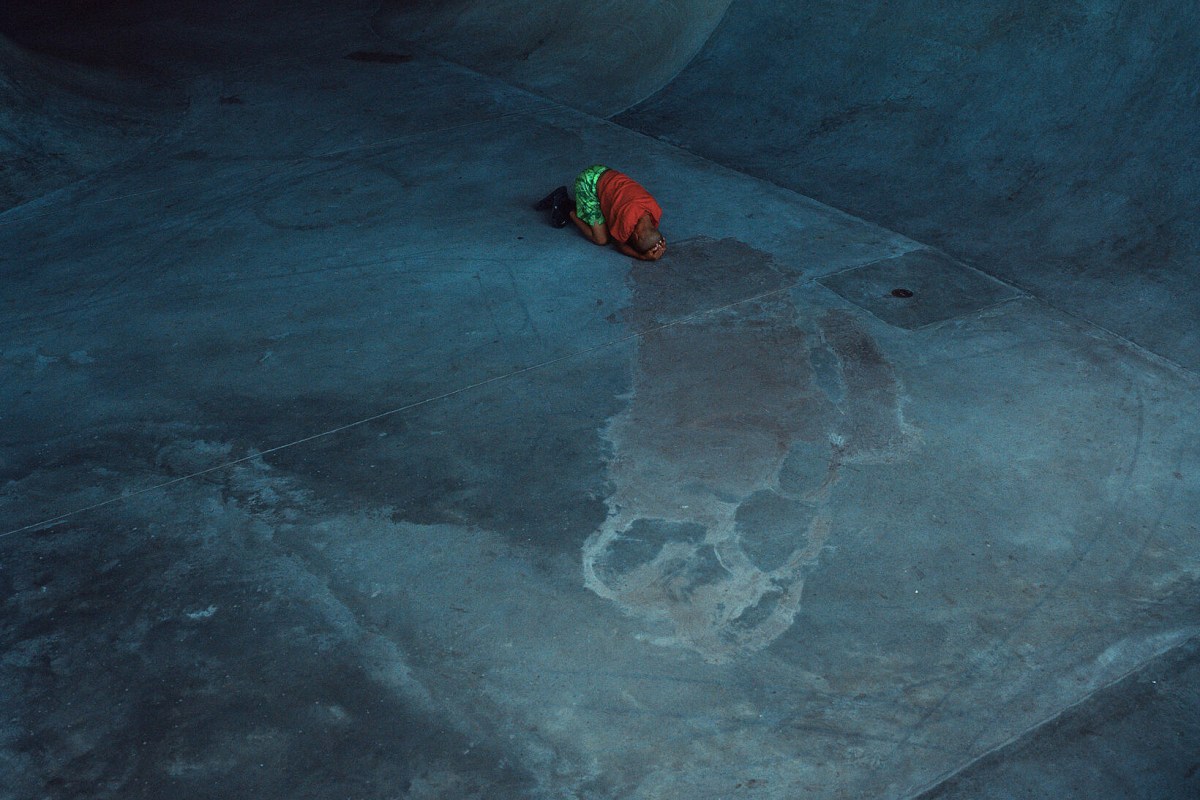
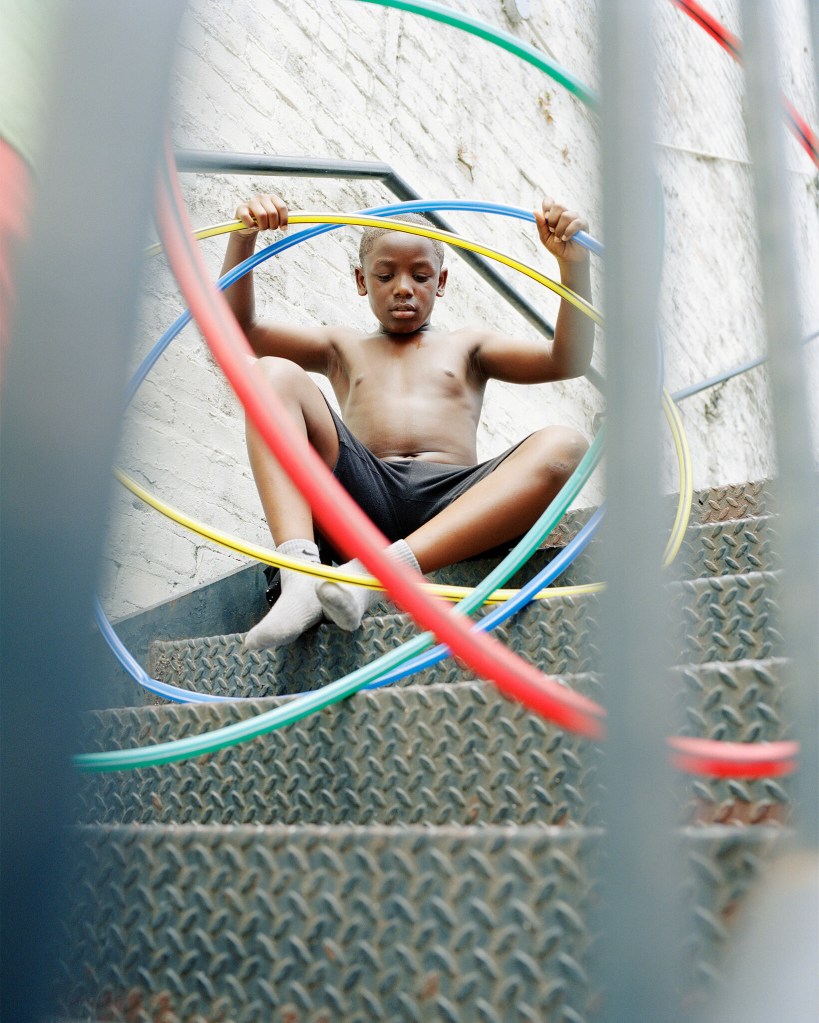
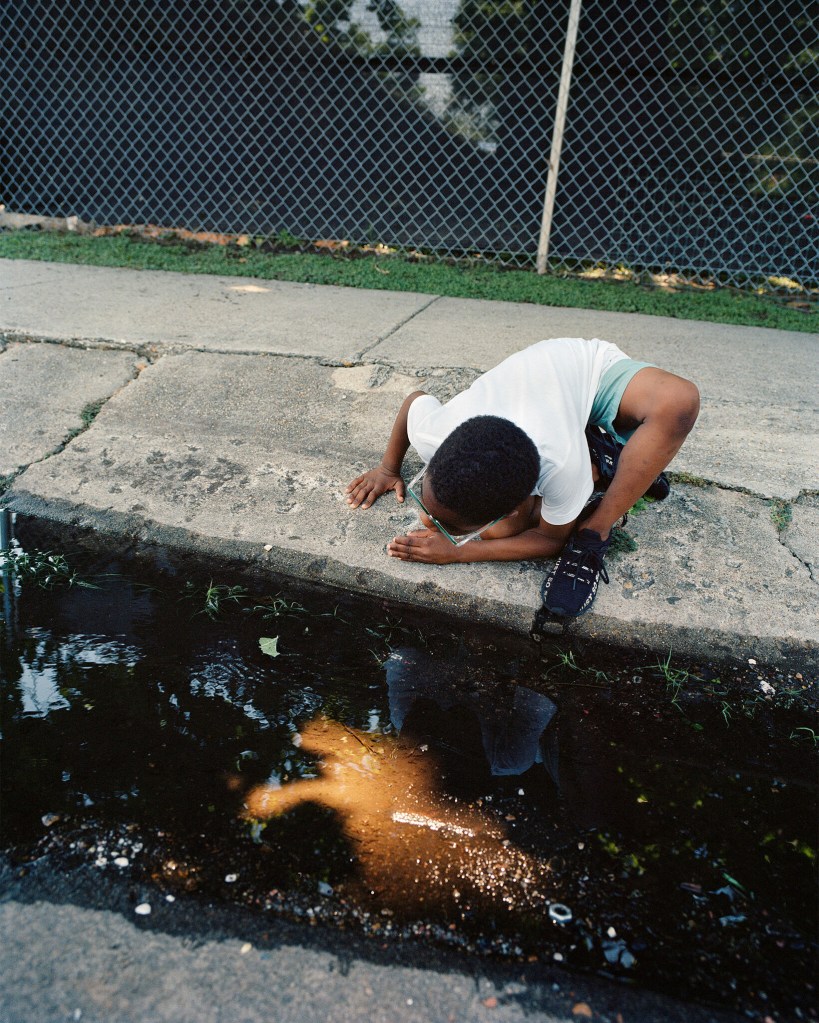
Looking at Mystery Street, his latest book, Yogananthan’s work seems to have taken yet another step. It is no longer a long-term project, but rather the result of a three-month residency funded by the Fondation d’Entreprise Hermès, which invites French photographers to work in the United States, and American photographers to develop projects in France. Vasantha chose to go to New Orleans with an idea he’d had for some time: working with children. For the first time, he did not use a large-format view camera, but a medium-format one, which can be used without a tripod. “When I tell colleagues what camera and lenses I used, they don’t believe me. Technically, shooting handheld at such close distances is very difficult. You risk coming back with nothing. But I did it on purpose. I wanted to go there with the wrong equipment to force myself out of my comfort zone.” The result is not a project about the city, but about the experience of childhood. Games, running, being outdoors. The artist’s gaze avoids the typical sentimentality of images of children, and yet it is far from impassive. There is energy, physicality, the freshness of a gang of kids roaming the streets. There is no ambition to analyze the social or urban wounds of a city that had to recover after Hurricane Katrina. But there is something more: it offers the possibility to feel what, once we grow up, we know will never come back. “It may sound banal, but the question I ask myself while working is: how can I speak about my experience of the world? The challenge is to create images that are both specific and universal. Rooted in a particular reality, yet timeless.”
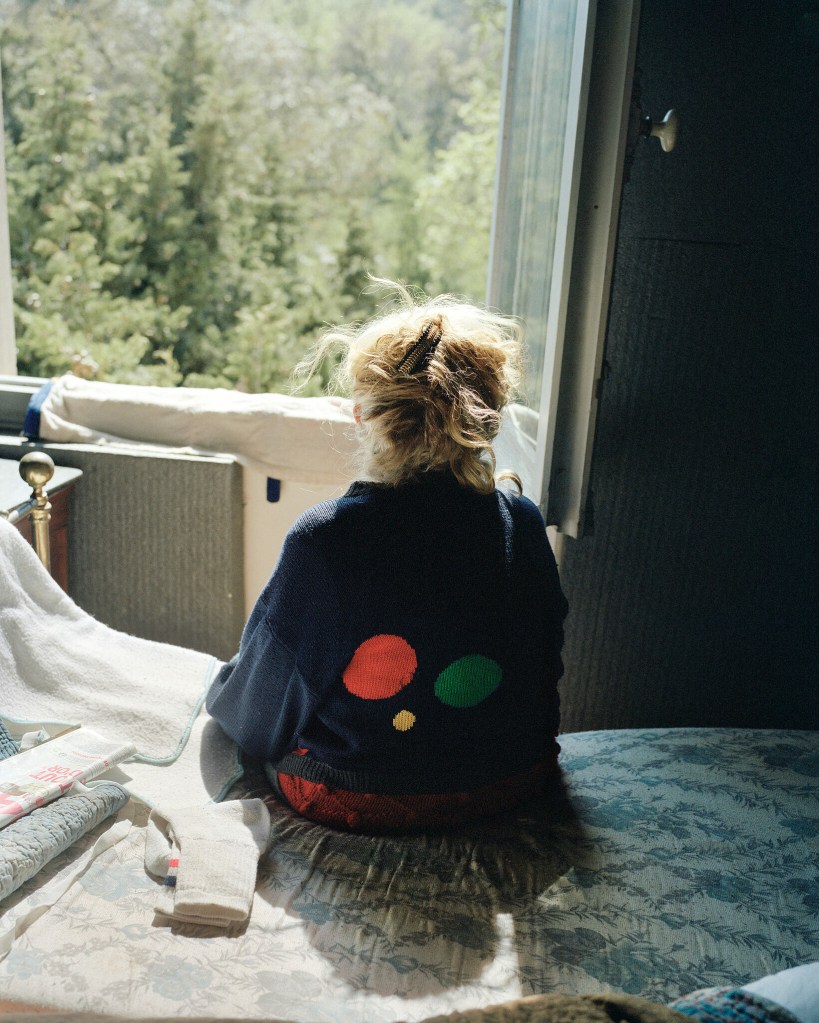
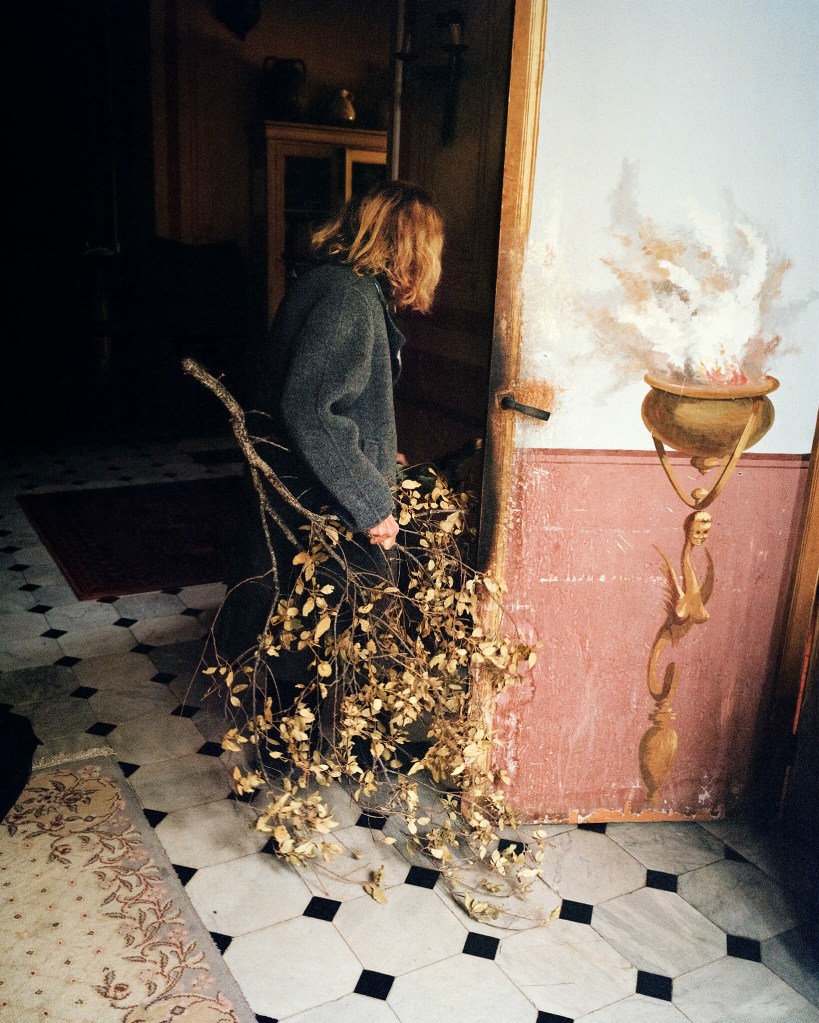
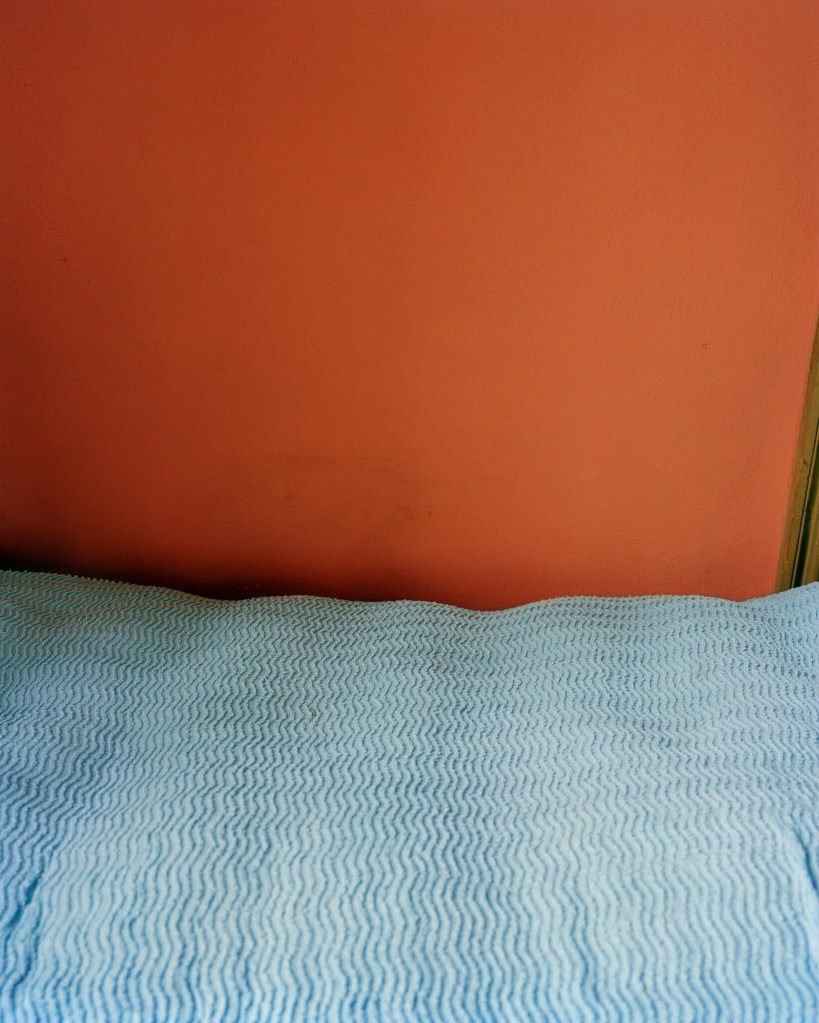
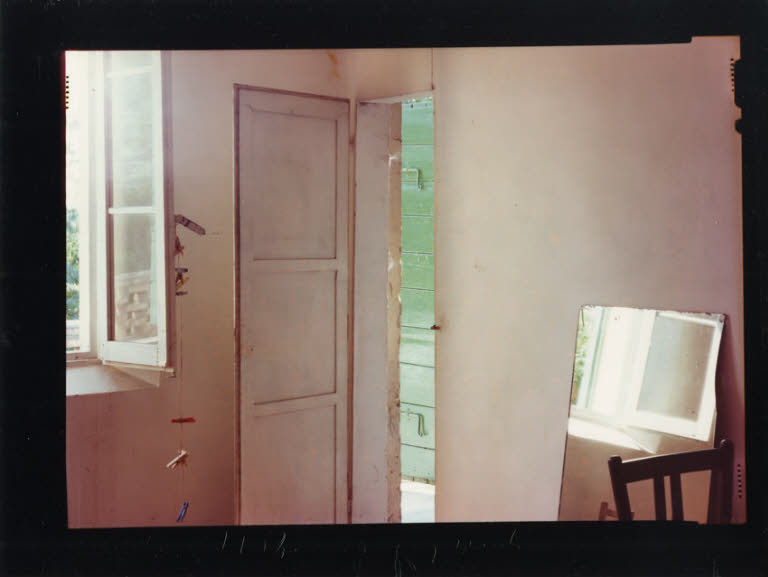
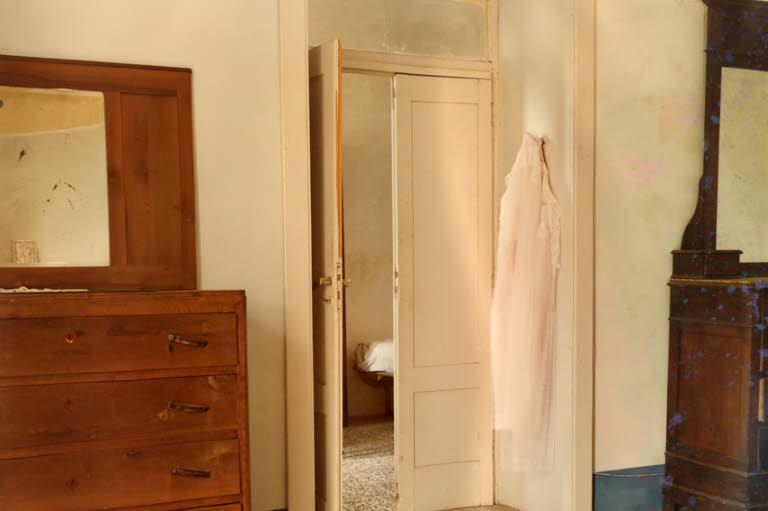
His latest project, Le Passé Composé, marks the beginning of another long-term journey, this time close to home, in Provence (the photographer now lives in Marseille). Here, the artist focuses on an elderly woman who lives in a near-fairytale house. The lights, colors, and atmospheres tell a story that is as real as it is a product of the photographer’s imagination. And yet so real… In literature, where invention has always reigned supreme, if the subject matter is real, we call it “non-fiction.” Photography, a much younger discipline, built its status on its privileged relationship with reality. Now, however, some want to use it as the written word has long been used—where, to truly express the truth of things, the stories must be invented. What name should we give to this kind of practice? This—and much more—is what Vasantha Yogananthan will discuss at Gallerie d’Italia, on Tuesday, January 28 at 6 PM.







 Luca Fiore | Writing on Contemporary Art and Photography